(First published in Shindig! magazine #169, November 2025)
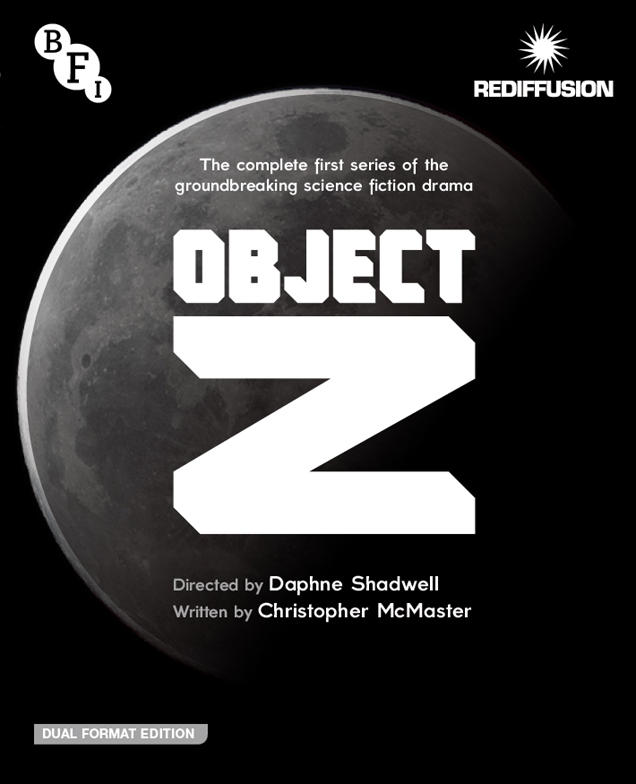
CATCHING SOME Z’S
In October 1965, Associated Rediffusion TV launched a new science fiction series firmly designed to capitalise on the Dalek-driven success of DOCTOR WHO. And while the interstellar voyages of OBJECT Z aren’t quite as famous as the adventures of the nation’s favourite Time Lord, this tense tale of alien invasion has now made its way to a BFI Blu-ray. BOB FISCHER is still watching the skies
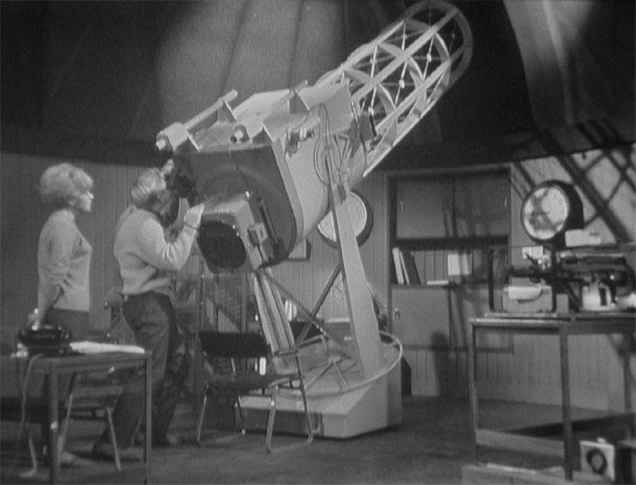
“We’ve been sending signals into space, haven’t we?” ponders square-jawed TV reporter Peter Barry, ambling around the resolutely analogue control room of Abernethy Observatory. “You never know, someone or something might pick them up…”
So begins Episode One of Object Z, a hugely enjoyable six-part thriller starring future Are You Being Served? lothario Trevor Bannister as Barry, a smooth technology journalist whose off-the-cuff remark proves to be dangerously prophetic. Visiting the observatory on a recce for his weekly TV show The Latest in Science, Barry finds head stargazer Dr Ramsay (Ralph Nossek) and his two youthful assistants in a minor flap over the sudden appearance of a mysterious bright object, 1800 light years from Earth but swiftly growing closer.
“The only nova I’m familiar with is a bossa nova,” quips Barry, and it’s hard not to imagine Captain Peacock raising a sardonic eyebrow. But this is serious stuff, and we dive straight into the first commercial break with a shocking revelation: “It’s heading straight for us!” exclaims fresh-faced observatory underling Robert Duncan (Denys Peek), as a brassy parp of stock music puts the fear of God into a nation of grubby schoolkids already nibbling nervously on their arctic roll.
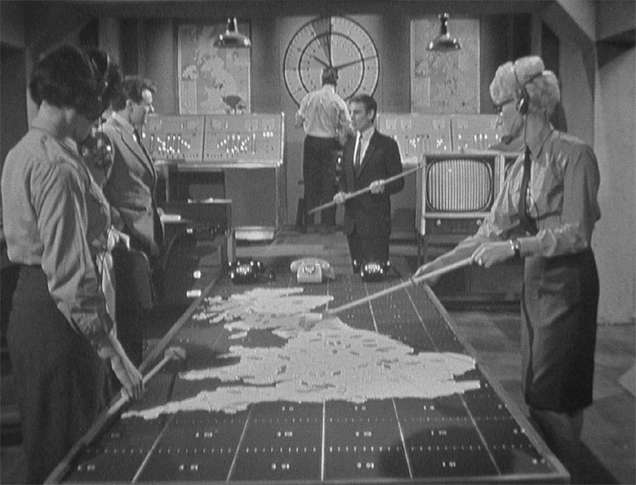
So far, so textbook TV science fiction. But what feels at first like typical kiddie-friendly fayre swiftly enters darker territory. Soon, we are introduced to beleaguered Prime Minister Sir John Chandos (Julian Somers) who is given some starkly brutal scientific advice: in six weeks time, the freshly-named “Object Z” will score a direct hit on Earth, and the impact will likely destroy almost the entire human race.
Object Z was written by Christopher McMaster, already forging a career as a prolific director of Coronation Street, and he adeptly laces the tension with grim humour straight from the snug of the Rovers Return. Advised by the government to build pointless shelters in their gardens, two fag-smoking charladies remain utterly unconvinced. “It’s all a plot,” says one. “Worn out, Albert is. After a long day with the Gas Board, he then has to go out and dig”. She’s every inch the apocalyptic Ena Sharples.
Similarly, lovers of the basic 1960s nuts’n’bolts approach to TV drama will find rustic charm in abundance. These opening episodes in particular are a riot of grainy stock footage, painted scenery boards and a merciless approach to line fluffs: one poor actor makes an absolute hash of his delivery and even breaks character to apologise to his co-stars. To his clear surprise, the cameras continue rolling and his cock-up is now immortalised forever for future generations to enjoy.
Despite such delights, however, the darkness deepens. When Barry and his perky TV assistant Diana Winters (Celia Bannerman) return from covering a failed Australian attempt to deflect Object Z with a rocket, they find law and order crumbling and British TV signals hijacked by far-right agitator Keeler (played by Arthur White, the real-life older brother of David Jason) who is capitalising on growing public discord to swell support for his neo-fascist “Action Party”.
“The British race was born to rule, and this crisis was sent by provenance,” he rants, stopping just short of goose-stepping around Trafalgar Square as sporadic violence erupts amongst an assembled crowd of thousands. It’s a captivating performance from White, who exudes a twitchy, sweat-dappled mania, taking clear inspiration from both Peter Sellers’ 1964 performance in Dr Strangelove and the chilling footage from 1930s Nuremberg rallies that, only two decades on from the end of the war, would still have been fresh in the memories of many adult viewers.
Certainly his presence feels incongruous in a series aimed squarely at younger viewers, with every episode broadcast at 5.25pm on autumnal Tuesday afternoons. Showing on BBC1 at roughly the same time? Episodes of The Magic Roundabout. Take your choice, kids: you can either have Zebedee bouncing up and down alongside Ermintrude the Cow, or a doomed Prime Minister revealing that official government shelters will only allow 10% of the British population to survive the oncoming cataclysm, and that a modern-day Oswald Mosley is poised to seize control of the survivors.
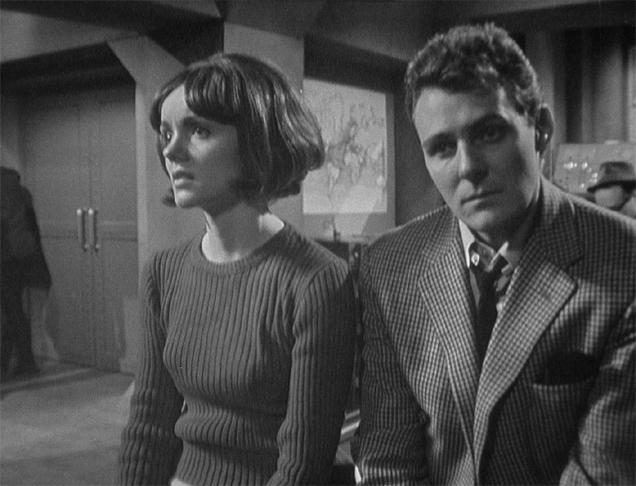
But if Keeler is the dark heart of the series, then Barry and Winters provide warm embers of humanity. As the seconds to impact tick inexorably away, they are trembling and terrified, with both Bannister and Bannerman delivering understated but supremely moving performances. The most touching little moment of the scene, though? Two supporting artists, who – in the final seconds – clasp each other in a silent embrace, barely registered by the camera. It’s a tiny but heartbreaking gesture.
Then, unpredictably, the series turns on a sixpence. If the opening three episodes provide tense Cold War thrills with obvious roots in the superior B-Movies of the era (1961’s The Day the Earth Caught Fire is a clear influence), then the closing three instalments are more traditional teatime drama, a slightly sillier halfway house between 1950s Quatermass and early 1970s Doctor Who. A reprieved and suddenly united globe is now faced with the prospect of imminent alien invasion, and TV communications from the extraterrestrial beasties themselves – all beady eyes and blobby bits – feel for all the world like they should be intercepted by a frilly-shirted Jon Pertwee, rubbing his neck and snapping tersely at the Brigadier.
Still, the final episode crams in two more cracking plot twists, an unexpected Middle-Eastern detour, an unlikely cameo for TV stalwart Milton Johns and a ripping cliffhanger that (we presume) leads into the show’s even-more-obscure 1966 sequel, Object Z Returns. Sadly, that second series no longer exists in the Associated Rediffusion archives. But, thanks to the sterling efforts of the British Film Institute, these original six episodes are firmly back in our orbit for the first time in almost sixty years.
Object Z is out now on BFI Blu-ray/DVD (Dual Format Edition), available from usual retailers and the BFI Shop.
Shindig! is a magazine dedicated to the stranger corners of psych, prog and acid-folk. Check it out here…
https://www.shindig-magazine.com/
Support the Haunted Generation website with a Ko-fi donation… thanks!
https://ko-fi.com/hauntedgen
 The Haunted Generation