(First published in Issue 125 of Electronic Sound magazine, May 2025)
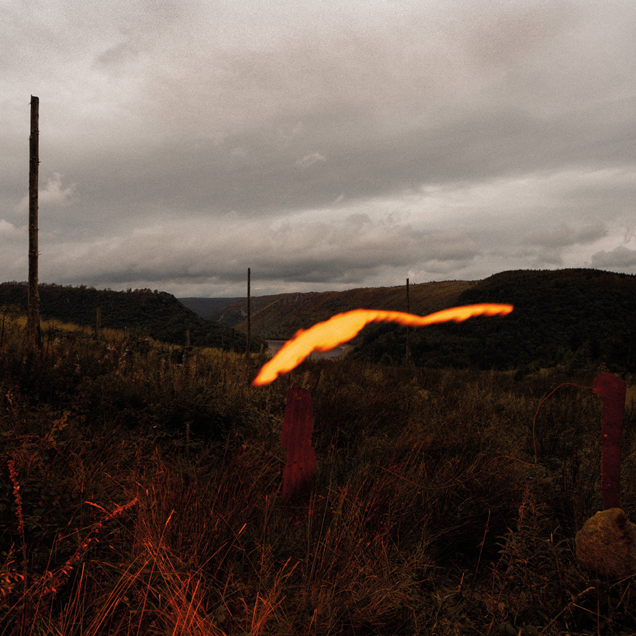
QUADE
The Foel Tower
(AD93)
On the edge of a reservoir in a remote Welsh valley stands the green-roofed Foel Tower, a stone monument to Victorian innovation, its clanking valves and cylinders pumping water on a 70-mile journey towards the urban sprawl of Birmingham. Nearby, in a converted stone barn, four childhood friends from Bristol gather before a log fire and begin their own personal industrial revolution – working on their second album.
Soon, unlikely links will be forged.
The connections begin with ‘Beckett’, a pensive lament for piano, acoustic bass and electronic squall. Frontman Barney Matthews sounds troubled. “If I don’t come back / Don’t you see it as a loss / Their world is not a patch on our own,” he sings, his voice a haunted murmur. On ‘See Unit’ the malaise runs deeper. “I am all I ought to be / And I have no standing,” he whispers, amid slabs of guitar noise and an eyebrow-raising assault of drums from Tom Connolly and Leo Fini respectively.
It has been, they concede, a troubled few years for all four band members. And the isolation, they claim, was a concerted attempt to emulate the simple seclusion of 19th century farmers in the same Welsh valley. But here’s the rub: those 19th century farmers were ultimately evicted to build the reservoir. And the Foel Tower itself. And that tension between pastoral simplicity and angst-ridden modernity is echoed throughout the album.
So ‘Nannerth Ganol’, named after the remote retreat where the album was created, sees Connolly’s rustic violin subsumed by Matt Griffiths’ dark electronica. And ‘Canada Geese’ ascends from acoustic serenity into jagged shards of string-soaked noise, the kind of glorious racket that the band’s beloved Velvet Underground once made their trademark. It’s a spirit of sonic experimentalism that marks a distinct progression from their already impressive 2023 debut, Nacre.
Eight-minute closing track ‘Black Kites’, meanwhile, suggests catharsis of sorts. “Now’s the time for self-expression” sings Matthews. “Now’s the time for a search for meaning”. And just when it seems the album is fading into a crepuscular truce, Connolly’s keening, folk-infused violin leads us to an explosive, sun-dappled dawn. It’s a touching conclusion to an album that effortlessly alternates light with shade, and is never afraid to dwell in the grey shadows between.
Album available here:
https://quadebanduk.bandcamp.com/album/the-foel-tower
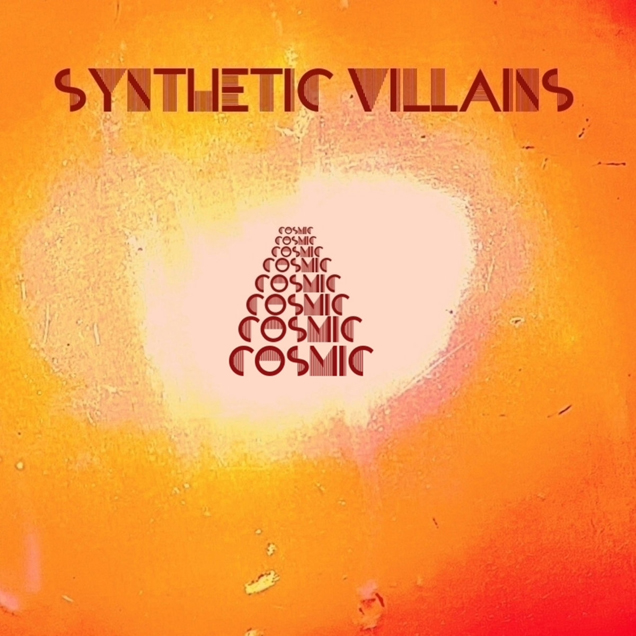
SYNTHETIC VILLAINS
Cosmic
(Flood Of Sound)
“I was born in 1976,” explains Lancaster’s own suburban spaceman, Richard Turner. “When I was growing up, sci-fi and space was everywhere”. Still in thrall to this golden age of square-jawed star-hopping, Turner has created a steely, electronic homage to an era when real-life astronauts and fictional Time Lords alike competed to conquer the cosmos. The mood is perfectly pitched between fact and fantasy, with the likes of ‘654321 Now’ providing crackly, cod-NASA countdowns into wobbly omnichord anthems like ‘I Spy With Alma’s Giant Eye’.
Turner cites the Star Wars sound effects created by Ben Burtt as a major influence, alongside the early electronic soundtracks that once saw Bebe and Louis Barron blacklisted by Hollywood bigwigs. His album is a loving combination of the two, often evoking the feel of some forgotten, experimental Radio 4 drama. The highlight? The parpy synths of ‘Circumstellar Evidence’, the perfect soundtrack to a generation of grubby 1980s urchins space-walking to the corner shop for a Rocket Lolly and the latest Doctor Who Weekly.
Album available here:
https://syntheticvillains.bandcamp.com/album/cosmic
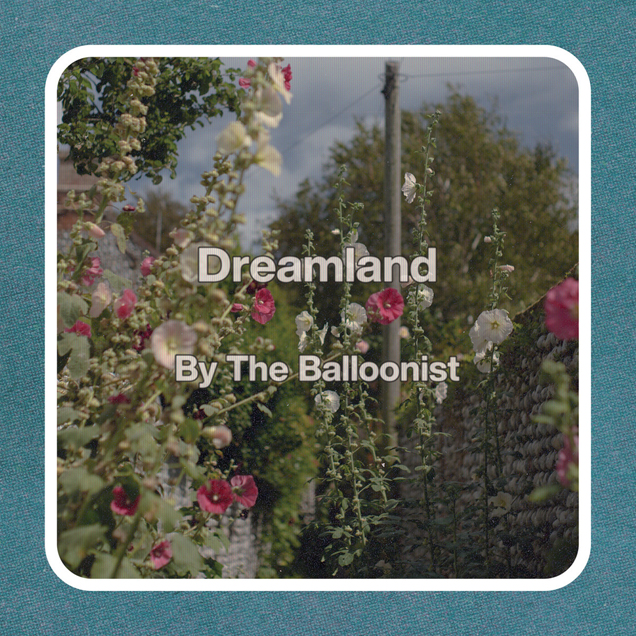
THE BALLOONIST
Dreamland
(Wayside & Woodland)
The hottest of summer days can take on dream-like qualities, with cornfields whispering and liquid tarmac shimmering in the sun. Ben Holton’s third album as The Balloonist captures the feeling with gloopy precision. Opening track ‘Look At Us Then’ is a gentle breeze of backwards guitars, while ‘Headphone World’ adds muffled beats and echoes of the carefree 1980s pop that once crackled from walnut-mounted car radios.
The Balloonist has always been Holton’s own creaky time machine, transporting us to half-remembered school holidays, but the recent loss of his father lends an extra layer of poignancy here. On ‘Meadow Melting’ a mellifluous guitar lollops through a woozy heat haze, while ‘Through The Canopy’ is a hissy reverie of lazy, languid synths. And the chiming melodies of ‘Back To The House’, wrapped around heartbreaking cassette recordings of a forty-year-old family conversation, will echo with anyone whose own dreams of childhood bliss are now tainted by the bitter sting of loss.
Album available here:
https://waysideandwoodlandrecordings.bandcamp.com/album/dreamland
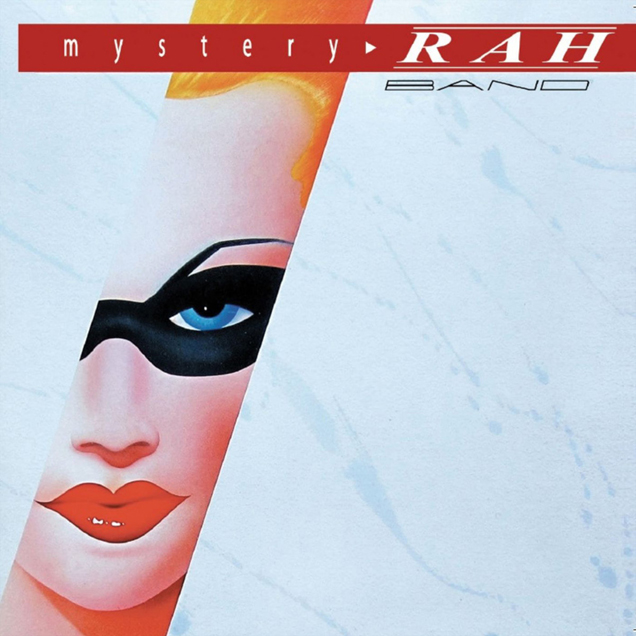
THE RAH BAND
Mystery
(Shock Music)
“I’m sorry, but I’m afraid we have lost contact with Mars 247 at this time”. In 1985, almost a decade after previous hit single ‘The Crunch’, The RAH Band hit the Top 10 again with ‘Clouds Across The Moon’, a splendidly arch earworm about the perils of interplanetary romance. Irresistibly catchy, it remains the perfect introduction to this album of immaculate synth-funk, now reissued for its fortieth anniversary.
The RAH Band is the ongoing brainchild of Richard Anthony Hewson, one-time Beatles string arranger turned early synth adopter. With his then-wife Liz providing warmly unaffected vocals, Hewson crafted an elegant album of mid-1980s grooves. The likes of ‘Are You Satisfied (Funka Nova)’ and ‘The Shadow Of Your Love’ echo the funky explorations of Hewson’s one-time collaborator Herbie Hancock, combining crisply contemporary beats with fluid jazz lines. Pete King’s saxophone work, in particular, is outstanding. It’s a smooth, cocktail-sipping lounge lizard of an album.
Album available here:
https://therahband.bandcamp.com/album/mystery
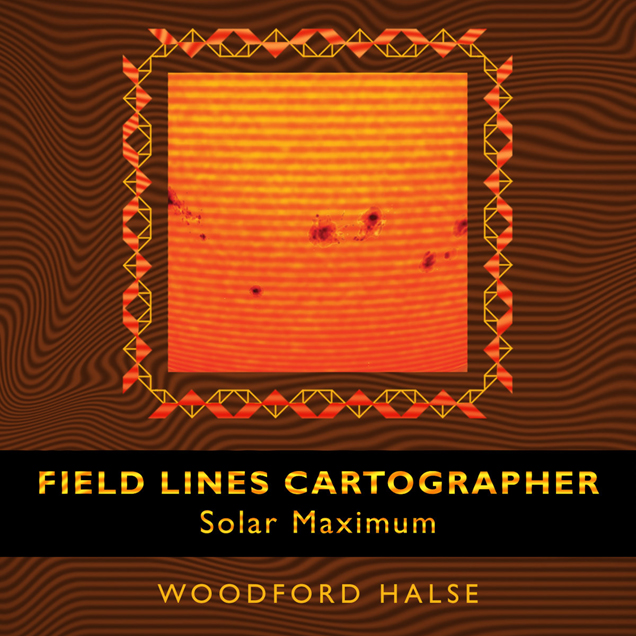
FIELD LINES CARTOGRAPHER
Solar Maximum
(Woodford Halse)
It’s a brave Lancastrian who attempts a concept album about the enduring powers of the sun, but Mark Burford’s modular exploration of “solar flares, sunspots, irradiance and radio flux” is suitably warming. ‘Ionic Wind’ – stop tittering – is a graceful throb of subdued power, ‘Polar Reversal’ a twinkling ambient delight. The closing 21-minute title track, meanwhile, is a triple movement of elegant pulses, building to a rousing climax of coruscating gamma rays. Put away that raincoat and break open the Factor 50.
Album available here:
https://fieldlinescartographer.bandcamp.com/album/wf-95-solar-maximum
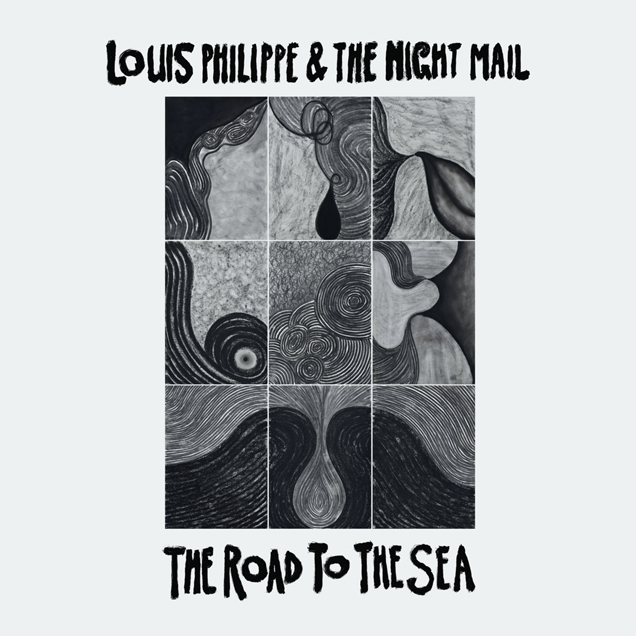
LOUIS PHILIPPE AND THE NIGHT MAIL
The Road To The Sea
(Tapete)
Forty years after becoming house writer for cult imprint Él Records, Louis Philippe is still crafting breezily baroque pop nuggets. His second album with The Night Mail – an ensemble expertly helmed by Acid Jazz scenester and Paul Weller sidekick Andy Lewis – is a riot of Latin beats, 1960s strings and unhurried choruses. ‘Pictures Of Anna’ is a love letter couched in Sgt Pepper whimsy, ‘To The Sea’ a harmony-drenched waltz that suggests a battered copy of Pet Sounds was never far from the studio stereo. A beguiling collection of bittersweet charms.
Album available here:
https://louisphilippe1.bandcamp.com/album/the-road-to-the-sea
Electronic Sound – “the house magazine for plugged in people everywhere” – is published monthly, and available here:
https://electronicsound.co.uk/
Support the Haunted Generation website with a Ko-fi donation… thanks!
https://ko-fi.com/hauntedgen

