Jazz-fuelled schoolboys with tea chests stuck on their heads! Keith Chegwin defeating the Sheriff of Nottingham! And even a chillingly psychotic Robin Askwith, freshly escaped from a maximum security prison. The fifth Children’s Film Foundation Bumper Box, now available from the BFI, is the usual joyous kaleidoscope of high 20th century strangeness and fuzzy, school hall memories. From 1951 to 1985, the CFF produced a staggering quantity of films specifically designed for children, and nine of them feature on this excellent new DVD box set – a release overseen, as ever, by BFI producer Vic Pratt.
I sat down with Vic on a quiet Friday morning to discuss this latest collection of CFF gems, and as ever his enthusiasm for these films was both boundless and infectious. Vic is also, it’s fair to say, a man who knows more than most about the history of performing circus budgies…

Here’s how the conversation went:
Bob: The fourth CFF Bumper box set, released a year ago, had a very fantastical feel – there were dragons and time machines and even Eric Sykes trapped inside a 1980s computer game! This fifth set feels a bit more grounded – these are films about crime and espionage and wartime derring-do. Was it a deliberate move to provide that contrast?
Vic: I’d like to say I’d devoted that much care and attention to it! [Laughs] Basically there are loads and loads of CFF films, so me and Trevona Thomson [Vic’s BFI colleague] both watch them. Vone really gets kids’ films. So I might watch a film, pass it over to her, and if she says ‘Yes!’ then I know it’s a good ‘un. So it’s not a conscious thematic swing, it’s more a case of making sure we have a nice mix of themes from across the decades. We like to cover a range, from the earliest films to the most recent ones, and see how the way that kids were depicted on film changed over the decades. And also to see the changes in the kind of entertainment that adults thought kids would like. So it’s not thematic – I kind of like the fact that they don’t follow any agenda or brief. We get some real variety, and variety is what I go for, I guess.
We’ve talked about about your history with CFF films – not least your terror of Mr Horatio Knibbles! So I know you saw many of these films during your childhood – are you able to draw on that knowledge and include some of your personal favourites?
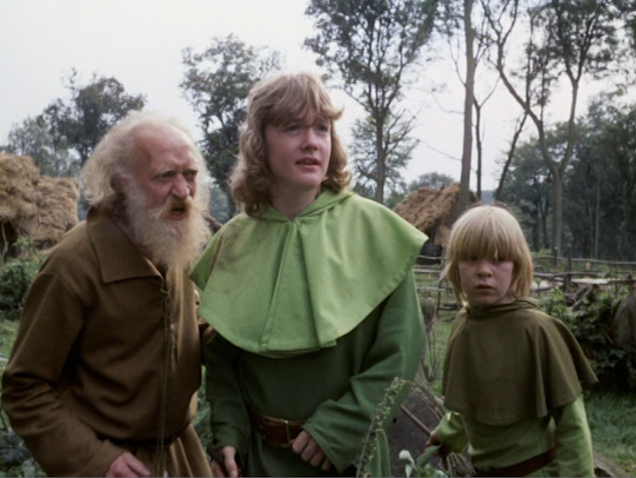
Yes, absolutely! When I say at work ‘Can we put another CFF box set out?’, they say ‘What, there are still some films left?’ But there are nearly two hundred of them. The CFF made so many films, and the quality of them is very consistent. Most of them are at least quite good, and a lot of them are really good – and some are brilliant! In terms of films where you think ‘Oh my God, that’s boring and dull and rubbish’… there are very few like that. So we’ve got a really good pool of stuff to choose from. And for every Robin Hood Junior – a film a lot of people are very familiar with – there are plenty of others that are more obscure. I have the old CFF catalogue, issued in the 1980s, and it lists them all. And I go through it thinking ‘I don’t remember that one!’
So in this box set, we’ve The Rescue Squad, a bizarre film where the kids are trying to get their model aeroplane back from the top of a tower. I had no idea it even existed, but when I watched it I thought ‘Wow, this is really strange’ – it’s got a Dada quality. A really odd film. And if we pull out films like that, films that nobody has seen, that hopefully means more people will buy the set. Because they might have seen a pirate version of Robin Hood Junior on Youtube, but they won’t have seen films like The Rescue Squad. I had to get the BFI archive to pull out the print and scan it!
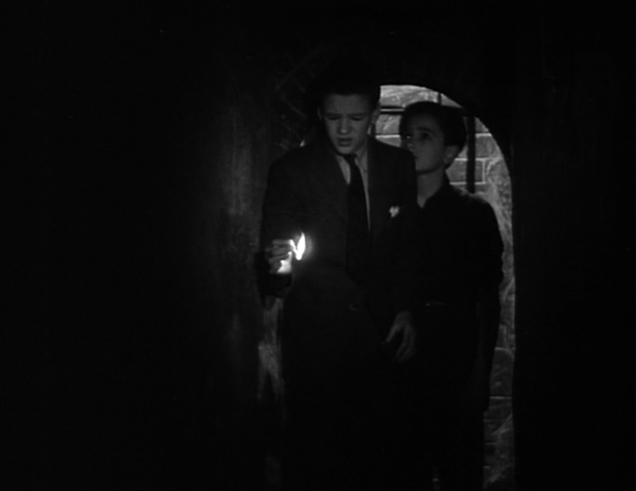
Let’s talk through the films on this set in a bit more detail. We start with The Secret Tunnel, from 1947 – about a stolen Rembrandt being retrieved by some rather posh teenagers in suits. This must be one of the earliest films you’ve ever included on these box sets?
It’s absolutely the earliest film.
Is this the CFF before the CFF really existed?
Yes, it’s the CEF. Children’s Entertainment Film. There’s a book – Good Company, by Mary Field – where she details her experiments with kids’ films, working with Lord Rank. In 1946 they started the CEF, with Mary devising and developing the whole idea of wholesome cinema for kids. I had a long discussion with Anna Home – the custodian of the CFF catalogue – and with our rights department, to establish whether CEF films are part of the CFF catalogue, and this is the first time we’ve been able to include one on a DVD. Until now, the earliest films we’ve been able to include on the DVDs were from around 1952, but now there are a whole range of earlier films that we can draw on for these box sets.
One of the delights of watching these sets is catching actors at the very start of their careers, actors who often went on to become a lot more famous. I watched Circus Friends, from 1956, and I knew I’d seen the young girl lead somewhere before, but I just couldn’t place her. It was only when the end credits rolled that I realised it was Carol White, from Poor Cow!
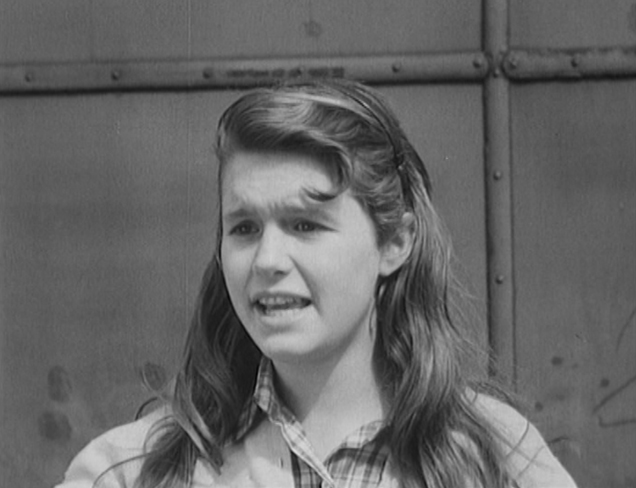
Yeah, and I also love how these films can send you back to some corresponding moment in your own life. That one very much reminded me of seeing the circus arriving on Hounslow Heath in about 1976 or ’77. In those days, circuses had animals, but more often than not it would be a fairly fleabitten array. It wouldn’t be dancing bears, it would be a sad old lion plodding about. And they’d give you an extra ticket to see the menagerie… do you remember this, Bob?
I do. I used to go to the circus at Preston Park in Stockton-on-Tees because I absolutely adored the clowns. Ignore anything you ever hear about children being scared of clowns – it never happened. I loved them.
Yes, I love the clowns, too. The circus has always been a big thing for me. My girlfriend Deborah is obsessed with it too, and Zippo’s Circus always comes and plays on Blackheath, which is near to where we live. So we always go! Norman Barrett, who I referenced in the booklet for this box set, used to be the ringmaster, and he had an amazing act with performing budgies – they’d drive little cars. There’s a clip of Youtube of him doing it – it was a great act, with budgies firing cannons and riding bicycles. Brilliant. Sorry, I’m waffling here!
Not at all, waffle is my stock-in-trade. There’s an interest little snippet in that booklet, actually. You mention that, when the CFF logo came up at Saturday morning cinema clubs, there were often groans from the kids in the audience because CFF films were considered to be a bit stuffy and worthy. In those early days in particular, did the CFF have a problem connecting with working class kids?
Yeah – I know it’s true because my Dad told me! He used to go to Saturday morning picture clubs, and if it was Roy Rogers or The Three Stooges the kids would go ‘Hooray!!!!’ But when the CFF logo appeared it was ‘Urrrrrrgh’. They really thought it was too posh for them.
But it’s interesting… I’ve found from reading press clippings that it wasn’t plain sailing with middle class kids, either. In those first few years, Mary Field took a lot of flack from the middle class press. The kids weren’t connecting, and the posh press didn’t think we should be making these kinds of films at all.
Really? Why?
They thought the Americans knew about commercial cinema and the Europeans knew about intellectual cinema, and that the British film industry was just a poor relation. And sadly, I think that attitude still lingers on today. Any indigenous cinema is sometimes not celebrated within its own nation as much as it should be.
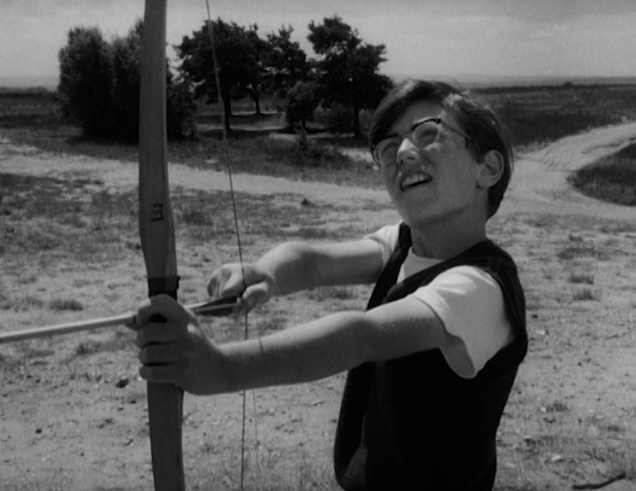
You’ve already mentioned a film on this box set that I think straddles both approaches really nicely – The Rescue Squad, from 1963. On the face of it, it’s just a jolly wheeze about some kids trying to get their model aeroplane back. But it has such a weird, arty sensibility. It reminded me a bit of The Running, Jumping And Standing Still Film.
Yeah, totally! I hadn’t thought of that. People in fields doing weird stuff…
And a boy roaming around everywhere with a tea chest stuck on his head!
Yeah, that’s great. It made me think of Jacques Tati and Mon Oncle, with that jazzy soundtrack. But you’re quite right, it’s also very Goon-ish. There’s a very strange edge to those 1960s films, and you also start to see kids from different backgrounds being amalgamated into the CFF. It coincides with Mary Field leaving, really – there was a desire to bring the whole thing more up-to-date. Also, there were changes in the child employment laws, so lots more kids could get involved, and the CFF made a distinct effort to be more diverse and more inclusive. Which was way ahead of its time in terms of cinema in general.
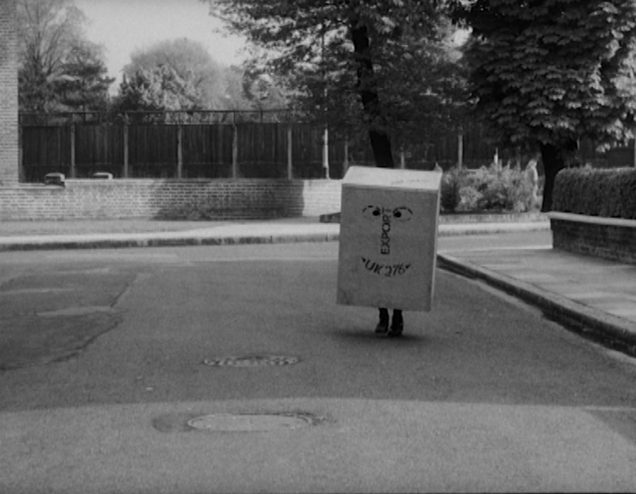
There seemed to be a distinct effort to bring a whiff of the avant-garde into children’s entertainment, too. Not just from the CFF, but across the board – a feeling that it was absolutely healthy to expose kids to film and TV and music that was quite experimental. I’ve just been writing something comparing the European and the British attitudes to cutting-edge electronic sound and musique concrète. On the continent, it was a highbrow form of intellectual art, but in the UK we put it on Doctor Who on Saturday teatimes.
Totally, and Tristram Cary is on this box set. He did the music for Daylight Robbery, from 1964. He made sounds in a really bizarre way – he created a collage of the sounds of the cars and aeroplanes in the background, and turned them into this really spooky and atmospheric piece. You talk about musique concrète, this is literally concrete music! It’s so apt for the tall, empty buildings we see in this film. It gives everything a weird, blowy sensibility – it’s so perfectly matched.
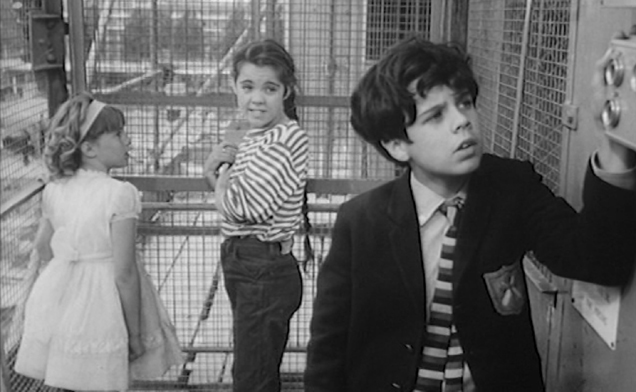
Daylight Robbery takes the same approach to The Rescue Squad – it’s a very simple story about a bunch of kids trapped high up in a concrete building while a robbery is taking place, but it’s shot so artfully. It’s almost like a German expressionist film.
Yeah, they zoom in and out all the time! It gives you an amazing sense of how big that building really is. And, in contrast to so much cinema from that time, it was all shot entirely on location. They were actually up there. It gives the film a real power, and – as you say – they’re slipping this into a conventional Saturday morning cinema club.
Was that a deliberate move from the CFF in the mid-1960s?
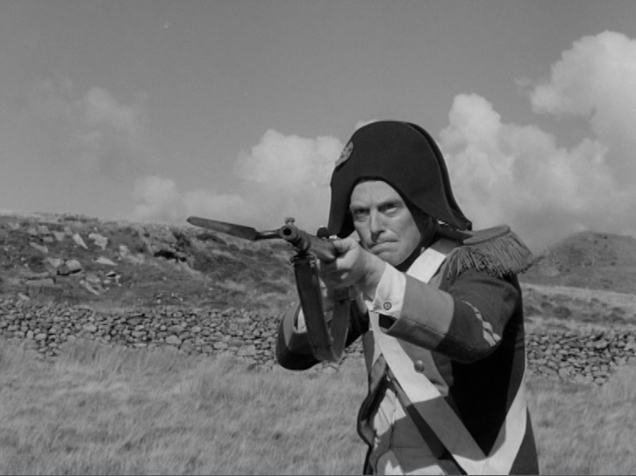
Yes, I think the CFF very much wanted to challenge kids and give them things that would stretch their imaginations. I’m thinking of another film on this set, The Piper’s Tune, from 1962. That has a very powerful anti-war theme. It was directed by Muriel Box, a great and very underrated female director, who had very liberal and profound anti-war views. There are some quite hardcore pacifist ideologies in that film, delivered in a really entertaining way. It just goes to show they were really trying to stretch the envelope and challenge the kids.
And in previous sets, we’ve had films like The Sea Children and Mr Selkie, where the kids have been eco-warriors, hassling the people in power and giving the finger to the man, way before it was cool to be seen doing that. And that’s great, right? I was just watching some episodes of Vision On the other day. Did you ever watch that, Bob?
I did – I was very small, but I loved it.
I was just struck by how there was a moment in our culture when kids were being given some pretty right-on stuff in the guise of harmless entertainment. There were some really powerful ideas in there. Tony Hart was painting a mural, and when he turned it around it was Che Guevera on the wall! In the middle of Vision On! Another episode was all about the notion of time, and it had some really bleak things to say about impermanence. And all this stuff was very much an aspect of the CFF’s outlook, too – the idea that just because you’re a kid, it doesn’t mean that you’re dumb. And that young people probably have a fresher take on life than old fuddy-duddies who are set in their ways and have become corrupt.
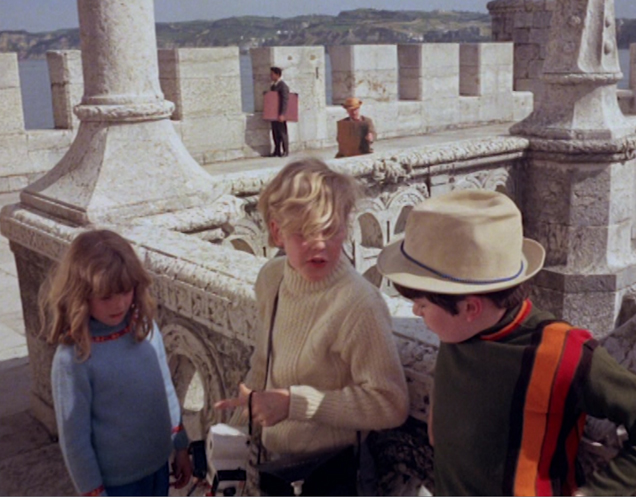
All At Sea is quite an eye-opener, a tale of international art-smuggling uncovered by a party of school kids on an international cruise! There can’t have been many school trips in the late 1960s that went to Spain, Portugal and Morocco…
Yeah, bloody hell man!
I was at school in the 1980s and we went to Whitby.
And we went to Swanage. I wrote in the booklet about what happened to me – I threw some toffee out of the window and they made me go outside and pick it up. These were testing times…
What’s even more amazing is that the CFF actually went to Spain, Portugal and Morroco. This was all filmed on location…
It’s pretty incredible! Yeah, it was very rare for the CFF to go abroad. I guess, in this case, they were offered the opportunity by the cruise company and they made the most of it. Usually, the reason they went on location was because they hadn’t got any money, so they had to film in the streets and out in the fields – which, when we watch these films now, is one of the great things about them! But in this case, someone must have said ‘Come on our boat – it’ll be great publicity for the cruise company and you can make a film’. It’s got a very 1960s James Bond espionage feel, which is something the CFF did very well, especially when they got into colour. But good lord – the teachers in that film are a bit laissez-faire about child care! They’re all on a coach trip around some random city and they just say ‘The kids have gone missing, but that’s OK… we’ll just drive off without them’.
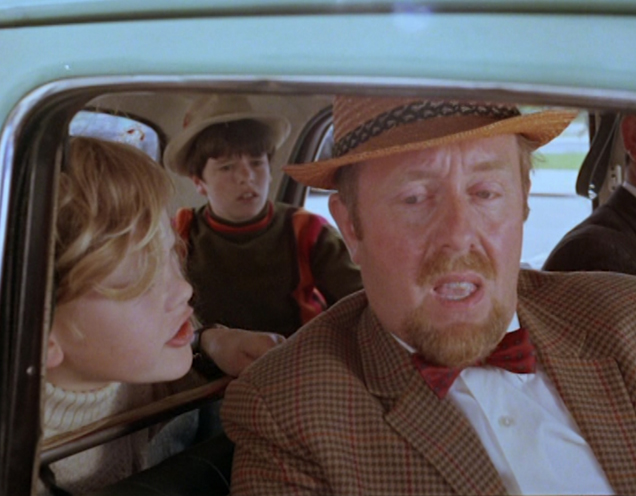
Or, indeed, let some random passenger on the cruise ship take a little party of them for a walk around Tangiers…
[Laughs] I mean, fair enough – it is the farmer from Worzel Gummidge! But yes, the parental consent forms may not have been signed.
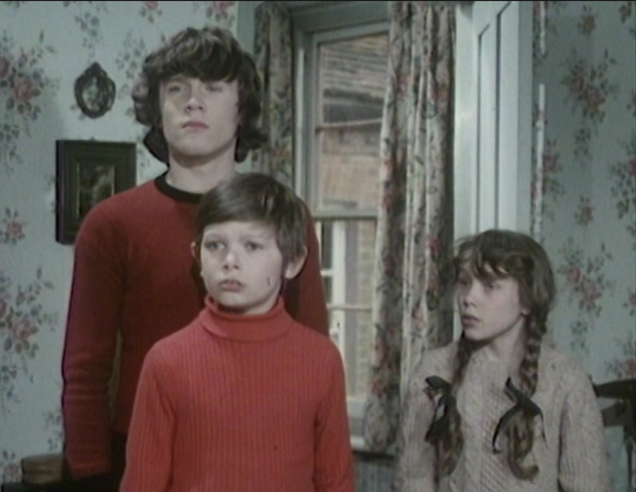
There’s always at least one film on these sets that really strikes a chord with me and gets under my skin, and in this case it’s The Hostages, from 1975. A brilliant film about two prisoners on the run who take a trio of kids hostage in a remote farmhouse.
It’s so downbeat, isn’t it?
It’s like The Sweeney.
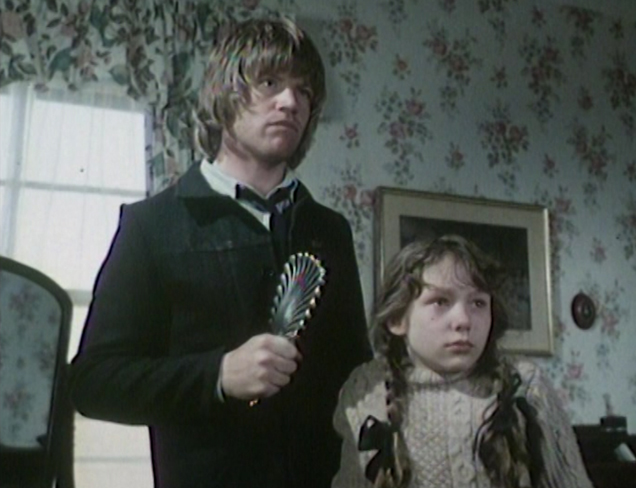
I went to Robin Askwith’s live show the other day – he’s written something for the booklet. And I said to him again how good he is in this film, and how genuinely nasty he is in this role. The scene where he trashes the parents’ bedroom… flipping heck, if I was a kid of six or seven then the idea of Mummy’s bedroom mirror being smashed would be my ultimate horror. And he’s so good because he’s playing absolutely the reverse of his type at the time. The Hostages was made between the first and second Confessions films, and he flips all that on its head. The kids are great as well, and it’s shot in such a sombre, autumnal way, with slow panoramas across the fields. It’s a pretty powerful piece.
A little word of admiration for Stephen Garlick, who plays the oldest child? He appeared in so many films and TV shows as a child in the 1970s, and he’s always great. A really good young actor.
Totally. When the CFF spotted a good ‘un, they used them over and over. You see a lot of the same kids coming back again and again.
Can I ask a really geeky football question as well? There’s a scene in The Hostages where a car radio is switched on, and we hear the football results – including a 3-0 win for QPR, at home to Leeds United. This isn’t a result that happened in real life in any of the seasons leading up to this film being made, and the uncredited announcer sounds suspiciously like Robin Askwith – who I know is a massive QPR fan…
It is definitely him!
So did Robin Askwith invent a thumping QPR victory over Leeds to slip into this film?
I couldn’t say for sure, but I think it’s at least 99% certain! Yeah, he voiced all the radio bits in The Hostages.
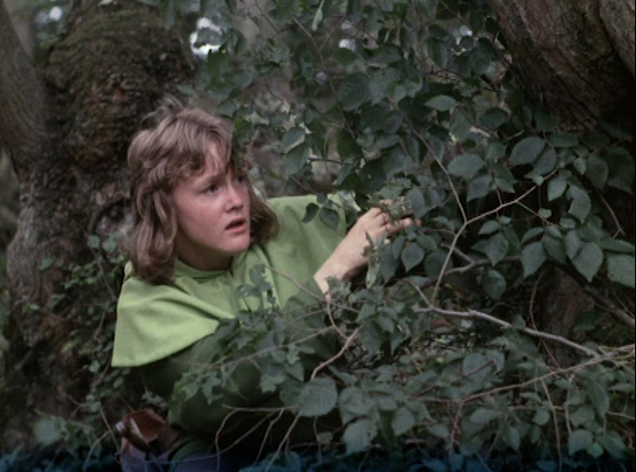
Let’s move onto Robin Hood Junior, starring the great Keith Chegwin. I’m guessing, from what you said earlier, that this is a CFF film that you actually watched as a child?
Yes, I saw it at school, they showed it in the hall. In those days, schools could hire 16mm prints of CFF films, and that’s how I saw this one – around the time Cheggers had made it big on The Multi-Coloured Swap Shop. The thing about Cheggers… you don’t have to like him as an actor, but as an enthusiastic amateur you have to respect his energy and gumption. He was slightly akin to John Noakes, he’d just throw himself into everything with such enthusiasm that, even if you didn’t appreciate the quality, you could still admire the quantity. On Swap Shop, he was the one who went out every week in the pouring rain in his cagoul! So, let’s be honest here – he’s not a great actor. But as usual with the CFF they surrounded him with really good performers.
Cheggers’ acting CV in the 1970s is pretty impressive, mind…
He’s in Polanski’s Macbeth! I read up on him a bit, and he talked about having altercations with Polanski because he kept falling off his horse. He’d just blagged his way onto the film, saying he could ride a horse when he couldn’t! But learning to ride on Macbeth at least meant he could do it on Robin Hood Junior. He was in various pop groups as well… he was asked to be the singer in Kenny. ‘Do The Bump’!
Really?
Yeah, there was a real attempt to launch him and his brother as some kind of pop act. I did a commentary once, and ended up researching his life!
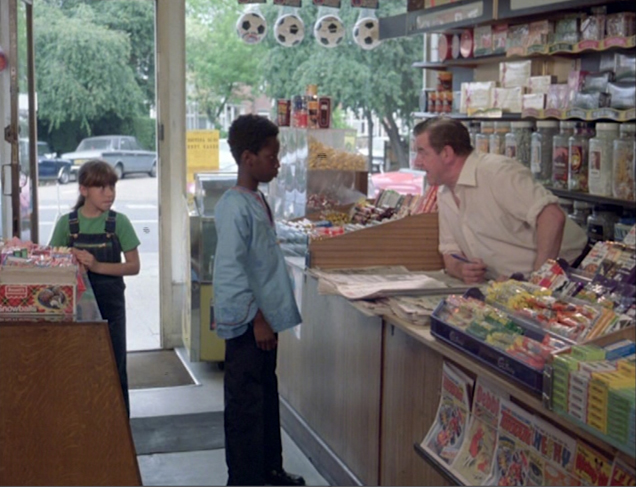
The final film on this set, The Boy Who Never Was, has some wonderful location footage. I remember the first time we ever spoke was on the radio in 2012, and it transpired we’d both done the same thing watching a 1967 CFF film called Operation Third Form – we’d freeze-framed a scene filmed outside a newsagents’ shop so we could look at the comics on the rack! The Boy Who Never Was goes even further – it has sensational scenes actually filmed inside a 1979 newsagents’ shop… did you do the same thing again?
Yeah! That’s a particularly poignant scene for me because it was shot exactly where I grew up. It’s St Margaret’s and Isleworth… exactly my area. Underfunding in the NHS means that the hospital there still looks exactly the same as it did in the film! And seeing those shops and newsagents and Watneys pubs just brought it all back. But when I saw the comics rack, with Tornado on there… wow. Tornado didn’t last long – it was meant to be another 2000AD, but it never really took off. And seeing the sweets and the books on the spinning rack… these are the kind of pop culture wonders that you can only find in CFF films. Again, they didn’t have any money for a set, so they just went into a random newsagents. ‘Would you mind if we just came in here and made a film for two minutes?’ ‘Yeah, alright…’
The Boy Who Wasn’t There came out in 1980. That latter period of the CFF is a real treasure trove, isn’t it?
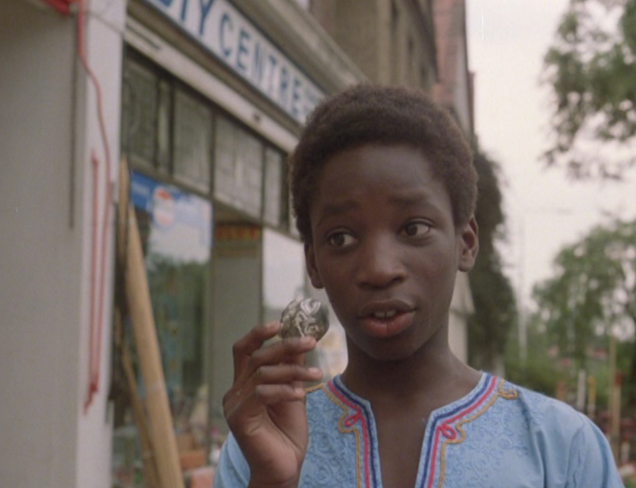
Yeah. I always want to include one from that last period, and it’s a bit harder because the pickings were getting thinner by then. They were only really doing a handful of productions. But that’s a film I really like, its got loads of good cultural stuff and I like the way Gordon Hagan – who plays this amazing double role – is really eccentric. And he has the coolest shirts. I also like the way he takes the mickey out of a girl in the street, who has a pre-conception of Africans all being interested in Witch Doctors and the like. He takes advantage of that to sell her some sort of story about a magic stone, and it reminded me of what Don Warrington used to do in Rising Damp – sending up Rigsby’s outmoded Western views. It’s terrific.
The more CFF films I watch, the more they feel almost like an alternate dimension British film industry. The CFF existed for forty years, producing hundreds of films in every conceivable genre, and often featuring really big household names. But unless you were of exactly the right age when these films were released, you might never have heard of them.
And even if you were the right age you might never have heard of them. Every time I look at the catalogue, I say ‘I don’t remember that one…’. It really is a world of its own, with a Middle Earth level of complexity. Everyone was working for minimum rates, so there was no real need to make a profit on these films, and they could be a bit chancey and experimental. And that really paid off. So you might come along to these box sets in the hope of some nostalgia, but it’s possible get into these films on their own merits. You don’t have to be a greying old fuddy duddy like me… not you of course, Bob! There are lots of things in these films with real intrinsic value.
As ever, the real deep dive on this set comes from the short CFF films you’ve included. This is the second box set in a row to include an episode of The Chiffy Kids, a CFF series about a 1970s Famous Five-type gang. This time, they’re doing a bit of psychedelic – sorry, psychodrastic – decorating. Which probably felt a bit passe even in 1976, but I like slightly outdated pop culture references in films and TV shows!
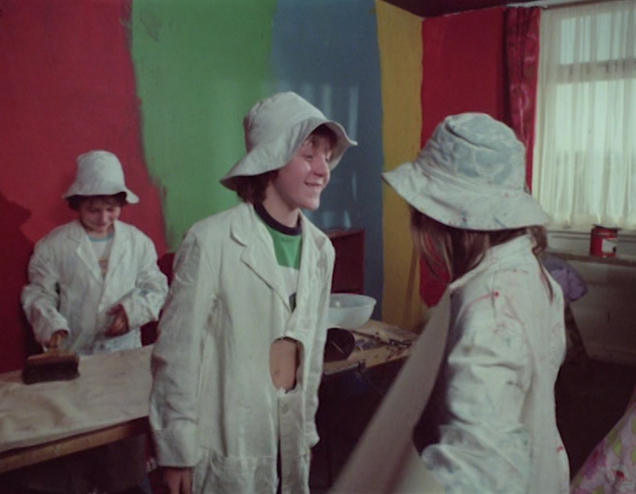
So do I! You’re thinking ‘Hang on… which era are we actually seeing here?’ It just gives you a sense of how slow the cultural shift can be. And it still happens now – you’ll be watching EastEnders and there’ll be a reference to something that was cool and radical five years ago. Again, I guess it all just reflects what adults thought was palatable for kids at a certain time.
I always like watching Terry and June getting concerned about “punk rockers”. In 1987…
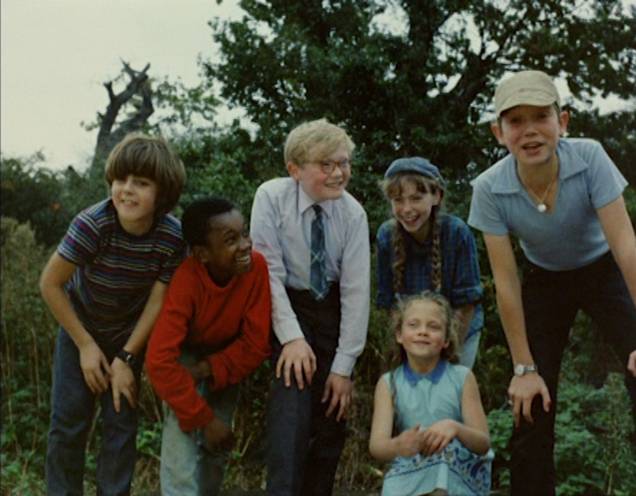
Totally! And have you seen the rival series on this set? The Magnificent Six And A Half?
Yes! And I didn’t realise until I read your booklet that it was a precursor to Here Come The Double Deckers on TV…
Yes, the CFF came up with the idea, then sold it to American TV. A lot of people working on Here Come The Double Deckers had worked for the CFF – including the writer, John Tully.
The profile of CFF films has risen quite a bit recently, not only with the release of these box sets but also with the Talking Pictures channel regularly including them in their schedules. I’m guessing that’s something you welcome?
Totally! Seeing as we license the films to them… [Laughs]
Ha! I guess people might watch CFF films on Talking Pictures, then decide to splash out on the box sets.
Of course, and vice versa. There’s one particular Jack Wild film that somebody is constantly asking me to include on a box set – Danny The Dragon, it’s an H.R Pufnstuf-inspired serial. But it’s been on Talking Pictures already, and I prefer to debut these films on the discs if we can. And if you buy the discs, you’ll also get these films looking as best as they can – the BFI technical department are very much geared towards making this material look as good as possible. So we’re still in there, championing the physical disc.
I’ve been counting up, and I reckon – since the BFI started releasing CFF films in 2012 – that you’re responsible for getting 63 full features available to buy. That must be a source of great pride for you?
Well, a lot of other people are responsible for them too. I wasn’t running the CFF side of things back then, so I bestow the laurels on my predecessors, too! But I’m really glad we’re still doing them, there are so many really good CFF films. They really are the gifts that keep giving.
So are there more Bumper Box Sets to come?
I hope so! This one is selling well. So while I can’t say for sure, I certainly hope we’ll do another one. I keep thinking ‘Maybe this will be the last box set I get to do…’, but I’ve still got lots of lists, and people are still asking for their favourites. And I do genuinely encourage people to get in touch and ask for what they want. On this new box set, one or two of the films on there were especially requested by people who wrote in. Someone asked if we could get any of the really early CEF films, and I said ‘I’ll give it a go’ – and we did! So now there are another 20 or 30 films from that period that we could potentially draw on. There’s still more to do.
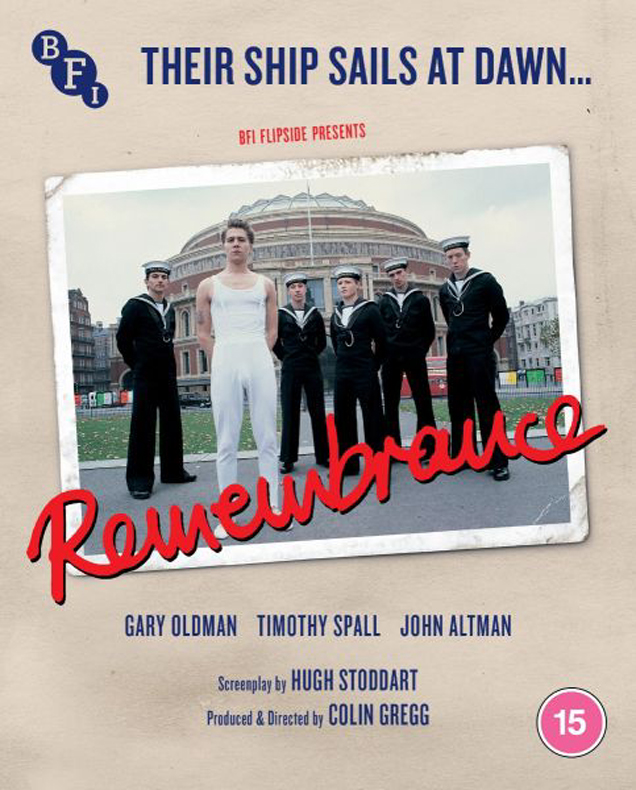
And while you’re here… you oversee the BFI’s wonderful Flipside range as well, showcasing lost or overlooked British films. Your next release is out soon – Remembrance, a 1982 drama about a bunch of sailors on shore leave, starring Gary Oldman, Timothy Spall and John Altman! I hadn’t heard of it at all, but I guess that’s kind of the point of Flipside…
Yeah, that’s the USP! To get films out there that people have forgotten about. So you might not know the film, but it has lots of people in it that that you will know. I think it’s a really good time capsule from that era – as well as the naval aspect, it’s about being a young man at that time, and the route de passage through that phase in your life.
And the future of Flipside on physical media is secure as well?
I hope so! So long as we can keep licensing films, there are plenty of obscure films still to do. We can chase after some of them for years before we actually get to do them, but there are certainly other films in the pipeline.
Great news – cheers Vic, and thanks as ever.
A total pleasure, thanks for caring enough to ask!
Huge thanks, as ever, to Vic for his time and enthusiasm.
The Children’s Film Foundation Bumper Box Vol 5 is available here:
https://shop.bfi.org.uk/childrens-film-foundation-bumper-box-vol-5.html
And Remembrace is available here:
https://shop.bfi.org.uk/remembrance-flipside-048-blu-ray.html
Support the Haunted Generation website with a Ko-fi donation… thanks!
https://ko-fi.com/hauntedgen

