First published in Issue 87 of Electronic Sound magazine, March 2022:
TRIP ADVISOR
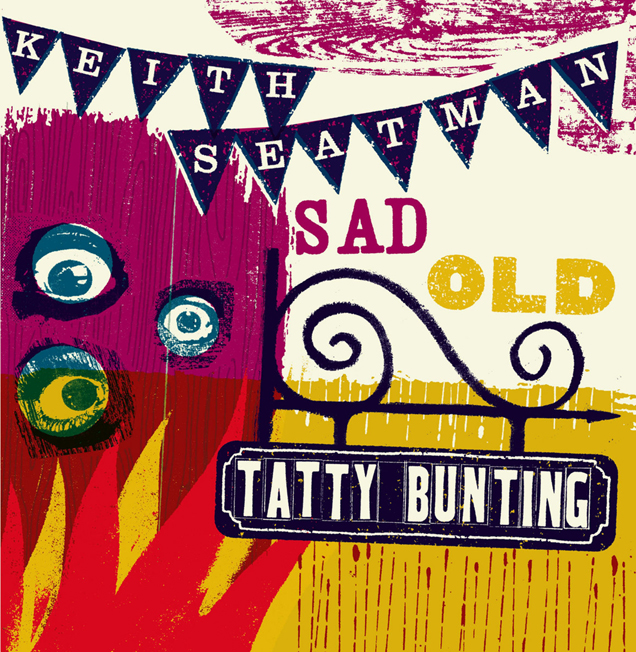
There is nobody quite like Keith Seatman. His new album Sad Old Tatty Bunting is a psychedelic joyride through a parallel universe England, a dreamlike realm of alchemists, scarecrows and gnome-filled gated communities. Passports out, everyone, for a one-way journey to Seatmanworld
Words: Bob Fischer
“I started to get up early, going for walks, and I wanted to see how far I could get walking straight down the middle of the road, ” remembers Keith Seatman of his 2020 lockdown. “You get a weird perspective doing that. You can see both sides of the street, as opposed to just one of them, and I suddenly noticed some old bunting outside a pub. I must have walked past it a thousand times, but I’d never seen it before. And it was really faded: the red flags were pink, and the yellow flags looked like old, piss-stained cloth. I just found it fascinating that it had been left there to rot. A symbol from some long-lost celebration that no-one had taken down.
“I was talking to Doug about it, and I told him I’d seen this ‘sad old tatty bunting’. And he said ‘Tatty Bunting sounds like the name of a scarecrow…’
A conversation with Keith can be a rollercoaster. An alarmingly wobbly rollercoaster in a Victorian seaside resort with shuttered-up beach huts and sinister Jack Tar dummies. He’s utterly charming, but he operates in his own distinct and dreamlike little world, a pocket parallel universe captured perfectly in the beautiful psychedelic whirl of increasingly hallucinogenic albums. 2020’s Time To Dream But Never Seen was infused with the off-kilter, off-season weirdness of his Hampshire home town, Southsea. A Victorian seaside resort with shuttered-up beach huts and sinister… etc. Funny, that. 2022’s follow-up, Sad Old Tatty Bunting, delves even further down the rabbit hole. It’s Syd Barrett stuck on the Ghost Train, going round and round for eternity. “Doug” is poet and singer Douglas E Powell, who appears on both albums. If Keith is the Sheriff of Seatmanworld, Doug is the deputy. They’re here to clean up this town, probably with a big stick and a battered box of Omo.
The pair of them, he tells me, go walking in the South Downs with Jim Jupp from Ghost Box Records. Who is also on the album. We make vague, flippant allusions to Last Of The Summer Wine.
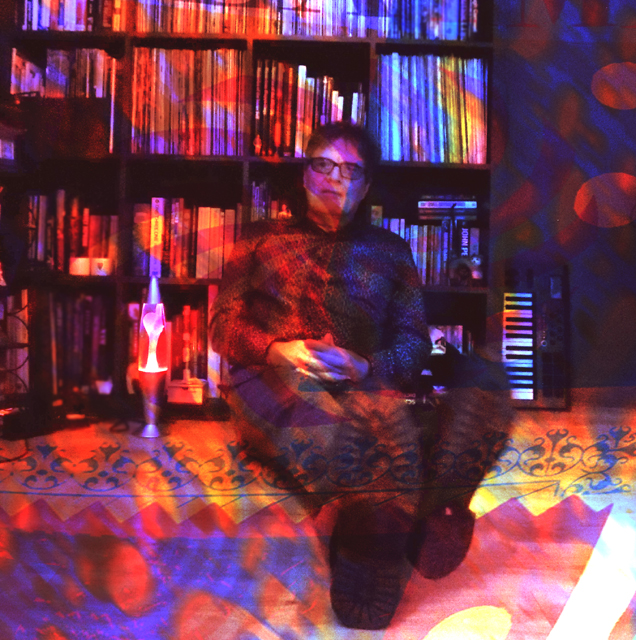
So is Tatty Bunting a scarecrow? Has he made a concept album about the Southsea Worzel Gummidge?
“No, Tatty Bunting could be anything. A person, a book, a place… welcome to Tatty Bunting!I watched loads of episodes of The Good Life during lockdown, which fed into these ideas I had about closed communities. Those new estates on the outside of towns, with their gates. They’re a bit: ‘We’re having a street party! Why haven’t you put your bunting up?’ ‘Erm… because I don’t want to…’
“So the album also became about those places. I was reading one of Stuart Maconie’s books at the time, Adventures On The High Teas. About Middle England. And he talks about ‘the gnome zone’ – those estates where all the lawns are cut perfectly, and everyone has their gnomes out.”
Ah! Well, ‘The Gnome Zone’ is a track on the album. That, at least, is one mystery solved. Other titles seem to namecheck the more esoteric inhabitants of Seatmanworld. I tell him I’m going to throw them at him, and I want him to say the first thing that comes into his head. Get on the couch, Keith – I’m your twisted, phoney psychoanalyst. I’ve got a Richard III wig and a German accent, like Peter Sellers in What’s New, Pussycat?. Sellers was from Southsea as well.
What’s ‘The Grand Alchemist’s Parade’?
“That’s just a strange parade that I imagined. There’s the closed community of Tatty Bunting, and one day this fucking mad procession comes through. Full of misfits and oddities, with this old alchemist sitting up on a chair, waving at everyone. He’s got robes and a big old beard, and every curtain in the street is going absolutely barmy. They’re all there, cutting the grass, then everything flies open and this herd of people come through playing strange music. Again, with lots of bunting hanging off everything…”
‘Mrs Lawes & The Late Mr Pomfrey’?
“They’re solicitors. They were practising as a couple, but Mr Pomfrey passed away. And they never took the brass plate down.”
‘Jumpy’s Playroom’?
“The best playroom ever. Nothing modern, no X-Boxes. We’re talking real old tat. The same tat that’s in my head and in your head. This beaten-up old room, filled with boxes of junkshop crap. Every box you open, something falls out and plays a tune. I tell you what would definitely be in there… those funny little monkeys with the cymbals.”
And are you Jumpy?
“I’m always Jumpy.”
The albums, I suggest, are the mental fall-out from his childhood. The weird 1970s childhood we all shared: Lieutenant Pigeon, inappropriate sitcoms, the Three-Day Week and ‘Stranger Danger’. An age when children were evicted from the parental home on Saturday mornings and not expected to be seen again until teatime. There’s even a track called ‘In The Fields Round The Back’.
“Council estates were always built out of town, with woods and fields behind them,” he nods. “And when we were growing up, we’d say to our parents ‘We’re going out to the woods for the day’. And they’d say: ‘Get home before dark, because Little Jimmy went there years ago and he never came back. He fell off a tree and his head exploded’. And, of course, there never was a Little Jimmy. But the stories survived for decades.”
We grew up in a nebulous age, didn’t we? And your albums encapsulate that feeling magnificently. There were secrets. Dark secrets. Boarded-up houses we were warned not to play beside. Locked spare bedrooms and out-of-bounds attics.
“Absolutely. My grandad lived in quite a big flat, and there was a room that myself and my sister were never allowed to go in. I peeked in there once, and everything was just covered in cloths and drapes. And we’d dare each other. ‘You go in… no, you go in…’ He got quite uppity with us once. And when he passed away, we discovered there was nothing spectacular in there. It was just a room full of old junk. So… why?”
Was music a big part of this oddness, then? The albums positively reek of British weirdness; the tail end of Toytown psychedelia and the whirl of prog rock organs. Brickies with beer bellies wearing eyeliner and capes.

“My older sister used to make mad mixtapes for me,” he recalls. “She put random music and odd sounds on them that she thought I’d like. Snippets of tracks. Weird squeaky voices from Gong albums, and Pink Floyd’s ‘Bike’. Anything that was a bit quirky. And then we used to make our own recordings. If you held the play button halfway down when you taped something, it sped up. So we used to do that with the piano in the front room.”
“And one of the mates I used to go wandering around with – let’s call him Billy – was a couple of years older than me. He was very much into The Residents, and I was listening to Syd Barrett. This was about 1979, I was in my last days at school. One day, he said to me: ‘We need to form a band and record an album’. So he came round my house, and my bedroom was set up with a little toy organ, some cymbals and a really fuzzy Wilson guitar. And two cassette machines to dub things backwards and forwards. We were called The Marilyn Monroes. We recorded an album in one night and sold all 30 copies locally. It was called Oop Boop De Boop. My dad came up at ten o’clock and said ‘Right, pack it in now…’”

These strange experiments eventually coalesced into a band, The Psylons. They were darkly psychedelic, with frontman Keith a barking, baritone Ian Curtis soundalike. And they very nearly made it. 1986 release ‘Run To The Stranger’ was Single of the Week in the NME, and reached No 13 in the Indie Charts. A coup that led to the Holy Grail of post-punk: A Radio 1 session for John Peel. Which, in turn, resulted in interest from one of the hottest British producers of the day, a man fresh from unit-shifting chart success with The Stranglers and The Human League.
“Dale Griffin from Mott The Hoople produced the Peel session,” remembers Keith. “Buffin! A genuinely lovely guy. We got to Maida Vale and we were a bit: ‘Durr! Where do we set up?’ Chaotic, but in a good way. And he was open to anything. We’d say ‘We want to do a whole track of feedback, and make these strange noises over the top’. And he’d say ‘OK!’. It was a fantastic day. And we nicked some BBC mugs.
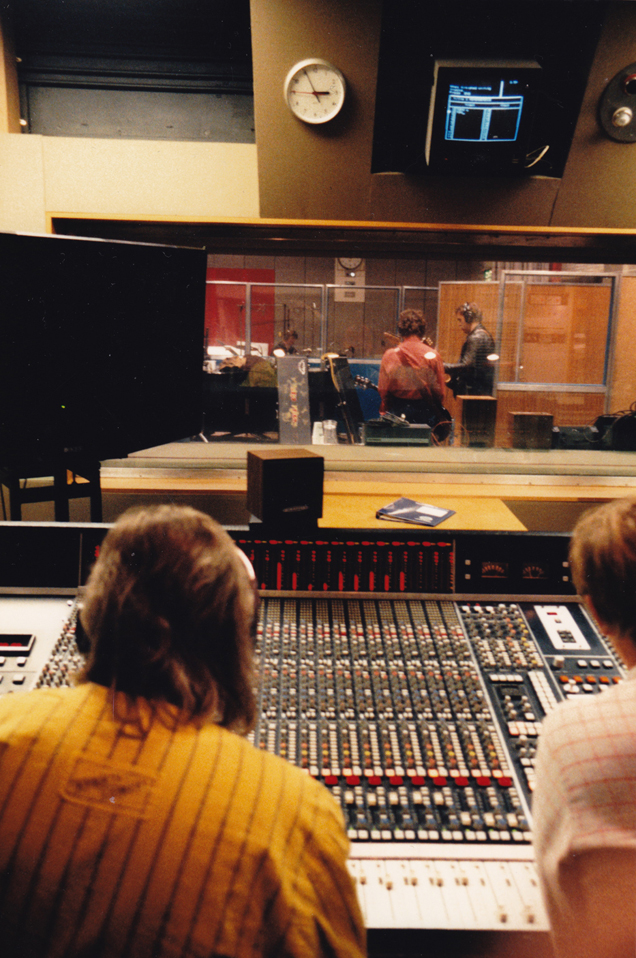
“Then Martin Rushent heard it, and wanted to produce us. It was a bit scary. A weird feeling of: ‘Shit, something’s going to happen’. For a short while, it was spiralling out of control. We got a manager and tried to get a grip… but then it all fell apart.”
The idea of Keith as a TV-friendly 1980s pop star is glorious. There’s a bizarre alternate dimension where he’s leaping around the Cheggers Plays Pop studio with a rubber mallet, egged on by a bus party of cheering cub scouts. And, even on our plane of the multiverse, there was further Radio 1 play from Janice Long and Andy Kershaw. But with further recordings planned, and a tilt at stardom imminent, the mercurial Rushent suddenly dissolved his Genetic Studio and temporarily retired from the industry. The band, baffled by weeks of silence, only found out through an NME news story. They hobbled to a warmly-reviewed 1994 album, Gimp, but the writing was on the wall.
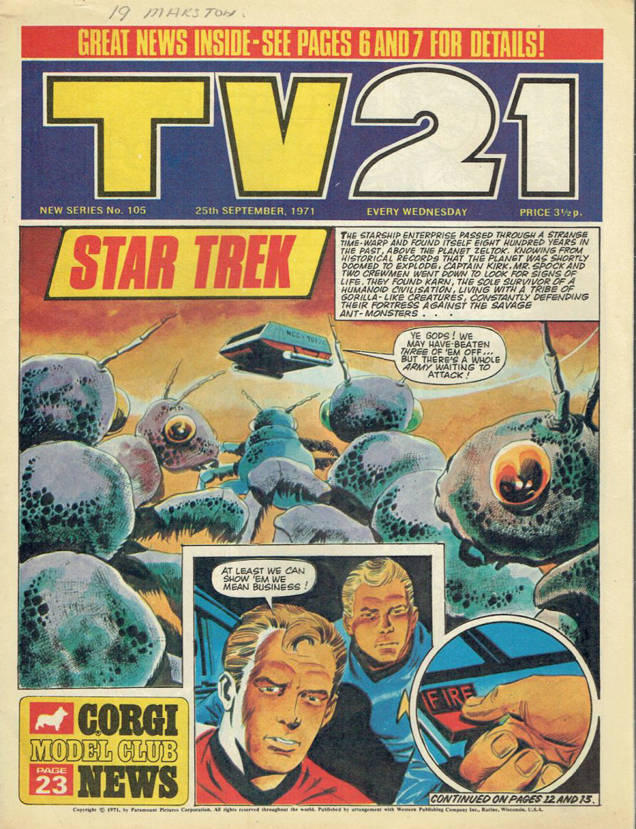
“We’d all started drifting towards different things,” remembers Keith. “And I really didn’t know what to do. I started doing stuff with Simon the bassist and Jack the guitarist. Electronic dance music, really pumping stuff. We were called Seatman Separator. It was the name of an ejector seat in an old TV21 comic that Simon had. Simon was Simon Seatman, Jack was Jack Seatman and I was Keith Seatman. Like the Ramones! And the name stuck.”
“Then I went away for a while. I was a bit lost and didn’t know what to do with myself, but my mate Jez Stevens – who now directs my videos – said ‘You really ought to start doing your own stuff.’ I wasn’t in a bad place, but I was a bit mopey.”
When was this?
“About 2008. So I dived in, and quite enjoyed it. I played safe for a while, then I got braver. ‘Yep, that’s a daft idea… I’m going to do that’. Then the daftness crept in everywhere.”
Interesting, I point out, that he should describe himself as “lost”. I latched onto that, I tell him, when I first found his Bandcamp page. It’s still on his profile there: “Musical oddness and wistful tootling and always slightly lost”. I love that. I like “lost” people. Dreamers that drift off the beaten track, unsure of where to ramble for the best. These are my tribe. Is he still a little lost, I wonder? I’m back in Peter Sellers mode.
“Always…” He pauses and fidgets with his laptop keyboard, perhaps not expecting to self-analyse quite so much. I feel a bit guilty. Then he laughs and shakes his head.
“I just… I can’t describe what I do. I sit down to record something, listen back, and think ‘Nope… that sounds nothing like how I intended. It’s gone off on a weird tangent’. That’s the lost bit, I think. Wandering around in this strange oddness.
“And I’ve always been drawn to odd things. I remember the first Devo album, a mate of mine said ‘You’ll like this’, and I did. It just sounded so daft. And The Cardiacs… some of it is difficult, but some of it is genius. And The Cramps… they live in this strange world of 1950s sci-fi films. I’ve got a big CD box set of theirs, and I was playing it at the weekend while I was doing the housework. Everything is about monsters and aliens. They create a whole world, and yeah… I’d like to visit. And I won’t overstay my welcome.”
His own world, I reiterate, is dreamlike and tantalisingly elusive. Hence Time To Dream But Never Seen? Come on, Keith. Let’s go right down that rabbit hole into your unconscious. Tell me about your most recent dream.
“I had a strange one the other night. I was in a warehouse and I couldn’t get out. There was a phone lying around and I dialled a number, but my fingers wouldn’t hit the buttons properly. Someone kept shouting the number at me, and I kept getting it wrong every single time. I have one or two nightmares a month, and there are always phones in there. Big old-fashioned mobiles.”
Anxiety dream about the ubiquity of modern communication, I reckon. After all, we’re the generation that grew up ‘In The Fields Round The Back’.
“I think you’re probably right!”
And, this time, we both laugh. He pulls down treasures from the shelves behind him: vintage figurines of mutton-chopped Manchester City players (“Francis Lee and Colin Bell… come on, gents”) and a Northern Soul 7” by Yvonne Baker that caught his ear at a recent 50th birthday party. We drift instinctively from semi-formal interview mode to chummy conversation. The addictive scent of Sharpie pens. The US Dracula toys smuggled into 1970s Southsea by a schoolmate whose dad was in the Navy. How Brian Poole from 1980s synth experimentalists Renaldo & The Loaf became an unlikely Marilyn Monroes fan. Then Keith becomes distracted by the sound of a worrying shrieking.
“Sorry, I’ll have to go and let the cat in. She’s outside.”
What’s she called?
“Doris.”
Welcome to Seatmanworld, everyone. Capital City: Tatty Bunting. Population: Expanding with every release. It’s a beautiful place to visit, and I will overstay my welcome.
Sad Old Tatty Bunting is available here:
https://keithseatman-cis.bandcamp.com/album/sad-old-tatty-bunting
Electronic Sound – “the house magazine for plugged in people everywhere” – is published monthly, and available here:
https://electronicsound.co.uk/
Support the Haunted Generation website with a Ko-fi donation… thanks!
https://ko-fi.com/hauntedgen

