(This feature first published in Fortean Times No 443, dated April 2024)

ON THE TRAIL OF THE LIRPA LOOF
In April 1984, BBC1’s magazine show That’s Life pulled off one of the greatest TV April Fool jokes of all time – convincing millions of viewers that London Zoo had taken delivery of a hitherto-unseen and rather oddly-behaved Himalayan animal called the Lirpa Loof. Forty years on, BOB FISCHER tells the full story for the first time – speaking to zoo employees DR BRIAN BERTRAM and DR JOHN KNIGHT, TV director MARTIN O’COLLINS, That’s Life presenter BILL BUCKLEY… and to DAME ESTHER RANTZEN herself.
It’s 1st April 1984, and lead presenter Esther Rantzen is introducing the closing segment of BBC1’s Sunday night magazine programme, That’s Life. “The Lirpa Loof…” she begins, as the studio audience listen attentively. “The little Tibetan animal with a talent for mimicking other animals. We read about him when he came to London Zoo six months ago, when the Chinese gave him to us. But this week he has actually been on show there, for the first time since he was allowed out of quarantine…”

As usual, the show that evening has effortlessly combined serious reportage with splendidly light-hearted fayre. It has looked at the difficulties faced by disabled people in applying for the government’s mobility allowance; it has also taken to the streets to offer hedgehog-flavoured crisps to unsuspecting members of the London public. Only two minutes earlier, co-presenter Bill Buckley has sung a version of ‘Underneath The Arches’ with a disco-dancing pensioner called George. However, there has been little to suggest that the final ten minutes of the programme will be devoted to one of the greatest and most elaborate cryptozoological hoaxes in TV history.
Reporter Gavin Campbell has been despatched to London Zoo. In a pre-filmed location report, we see him spending an extraordinary day with the Lirpa Loof itself. And the nature of the beast? Well, it appears to be a creature previously unseen on British TV. Or, indeed, anywhere else. It’s a hairy, pot-bellied biped standing around four feet tall – although, on our first sighting, it is sedated on a table, undergoing a medical examination from a team of furrowed-browed vets. The report is played throughout with admirable straight faces, and only closer inspection of the creature’s name gives the slightest hint that more mischievous forces are at work. It does, of course, read ‘April Fool’ backwards.
The initial idea for this gloriously ripe prank came, unexpectedly, from London Zoo itself: namely the zoo’s Curator Of Mammals, Dr Brian Bertram. Forty years on, Brian is happily retired and living in Gloucestershire, and he gleefully recalls how the idea arrived from nowhere on a morning journey into work.

“I had an hour’s commute on the train,” remembers Brian. “And I don’t know what brought the idea of the Lirpa Loof to mind, but I know the joke started out being quite small – I just thought it would be nice to put a spoof sign up in the zoo, on an empty enclosure. But our press officer Joan Crammond worked absolute wonders, and she contacted Esther Rantzen with the idea.”
From here, the story is picked up by Esther herself – now, of course, Dame Esther Rantzen after being decorated in the 2015 New Year Honours.
“We had a tradition on That’s Life,” explains Esther. “When the programme transmitted on April 1st, which it did three times, we paid no attention to the insane rule about not pranking anyone after mid-day. Because it’s nonsense – look at Panorama and the spaghetti harvest! Our first April Fool’s joke [In 1979] was a driving dog, and it went really well – we got thousands of complaints from people who said we were a danger, allowing a dog to drive. Which pleased us enormously! And, as Sunday 1st April came towards us once again, we had a phone call from London Zoo. I actually went to see them to discuss it, and I remember meeting very senior curators while they explained the idea. My family have always been great fans of the zoo, and I think my grandmother and grandfather were amongst its first ‘fellows’ – supporters of the zoo.
“So London Zoo came up with the idea of the Lirpa Loof, then we went to work creatively on it.”
The location segment was directed by Martin O’Collins, whose BBC career to date had been largely concerned with filming reports for the BBC’s news and current affairs output.
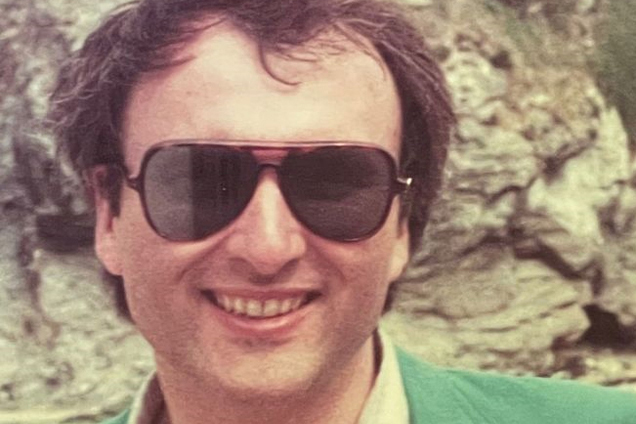
“Esther and I had a conversation and she told me what she wanted,” remembers Martin. “And then I went away and commissioned somebody to make the Lirpa Loof costume. If remember rightly, I went to see a company called Imagineering in Oxfordshire – they had worked a lot on Doctor Who, which I think was why the BBC put me in touch with them.
“When I went back to see what kind of progress they were making, I discovered to my horror that they’d made something that looked great – but the mouth was in a fixed, open position and couldn’t be closed. I said ‘Look, if the mouth is permanently open, it’s going to be unbelievable!’. But they persuaded me it was too expensive to redesign, so I had to go with it. And when we started filming at London Zoo, the message I got from Esther in the cutting room was ‘Why doesn’t its mouth shut?’”
This slack-jawed visage is, nevertheless, perfect for our first glimpse of the Lirpa Loof. Heavily sedated and prostrate, the animal is wheeled on a trolley into a medical chamber for an examination by a veterinary team led by Dr John Knight. “Let’s have a little look at this chap – at least we think it’s a chap!” quips John, giving the Lirpa Loof’s teeth and nether regions a thorough inspection before concluding we are indeed dealing with an “old-ish male”.

“In 1984, I was doing most of the clinical work for London Zoo,” remembers John, now based in Guernsey and still a practising vet. “At the same time, I was working with the WFF, setting up the Giant Panda breeding programme at Wolong in China. When an animal first comes into the zoo, it gets a veterinary check and then is put into quarantine – so all those elements were correct. But I added a few things to the story: blood samples being taken, and also having our Chinese colleagues with us. I’d met several Chinese vets in Wolong, and I’d brought a couple of them over to London to study. So I was able to ask if they’d like to join in and be experts on the Lirpa Loof.”
Amongst their number is the enigmatic Mr Zhou, a youthful-looking Chinese vet interviewed on camera by Gavin Campbell. He convincingly claims the Lirpa Loof was captured “Three years ago… a hunter trapped the animal. There are only two males: one in Chengdu zoo, and another here. We tried to reproduce them, to catch another female animal, but it’s not easy.”
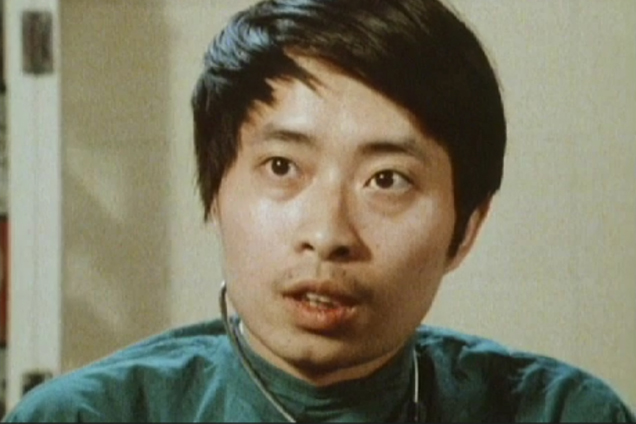
“Dr Zhou was a young vet working on the Giant Panda breeding programme,” smiles John. “And he was very keen – he threw himself into it.”
Medical examination concluded, we finally see the Lirpa Loof on his feet. Here, the contributions of the actor inside that furry costume become a joyous part of the deception. Playing the part of the Lirpa Loof is the legendary Kenny Baker, fresh from his appearances as lovable robot R2D2 in the original Star Wars trilogy. His casting was secured by Martin O’Collins.
“Kenny was a very obvious choice,” says Martin. “And he was terrific – he was in that costume for a ridiculous amount of time. It got to the stage, at the end of the day, when he said ‘I’m not getting in it any more!’. But he’d absolutely given it his all, and I remember Esther telling him afterwards how wonderful she thought he’d been.”

Now conscious, the Lirpa Loof is transferred to a private enclosure and forms an irresistible double act with another esteemed member of the London Zoo team: veteran zookeeper George Callard. “I’ve been here a few years, longer than I care to remember, and I heard of these all those years ago,” fibs George. “I’ve always wanted to see one, and now we’ve got one.”
The Lirpa Loof mimics George’s actions to hilarious effect. He bobs up and down, and even sweeps the floor with a broom. “Don’t get naughty now, there’s a good lad…” smiles the genial zookeeper.
“George was head of the monkey area,” explains John Knight. “That’s where we kept the Giant Pandas, so to some extent it was fairly logical that the Lirpa Loof would go in there. And the positioning of the monkey house was quite convenient for people coming through the front gate. From a filming point of view, it meant you were likely to have the footfall you needed – nobody was pushed that way, it all happened very naturally.”
What is striking throughout the report is the deadpan nature of the interviews. George Callard, John Knight and Dr Zhou all play their parts with impeccable poker faces, as does reporter Gavin Campbell. For Esther Rantzen, taking the comedy seriously was an essential part of her programme’s ethos.

“We had an absolute rule on That’s Life,” recalls Esther. “Which was that we mustn’t think things are funny ourselves. We always played it straight-faced.”
No exceptions could be made for this rule – not even, apparently, for the creator of the Lirpa Loof himself. So although Brian Bertram was interviewed in his London Zoo office, his apparent inability to keep a straight face meant he was left on the cutting room floor.
“I always have a smiley face!” protests Brian. “It’s just my normal expression. So it may have been just a nice way of them saying ‘We didn’t think you were interesting enough’.”
“I apologise to Brian,” smiles Esther. “But we were adamant on That’s Life – you don’t laugh at the jokes, ever. I was involved in the edit of the Lirpa Loof, so I saw it many times before it reached its peak of perfection!”
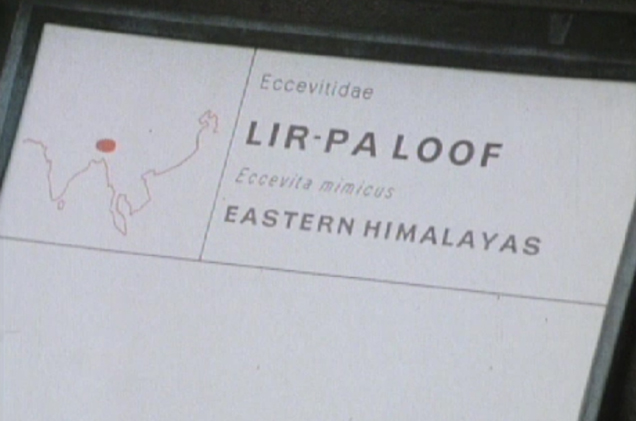
Wheeled in a cage by George Callard past an interested-looking elephant, the Lirpa Loof is finally allowed into an outdoor enclosure, on which is mounted the convincing information sign suggested by Brian Bertram. The Lirpa’s Latin name? Eccevita mimicus. ‘Eccevita’, of course, translating as ‘That’s Life’. A crowd of genuine visitors to the zoo quickly gather, and they are soon joined by popular TV naturalist David Bellamy.
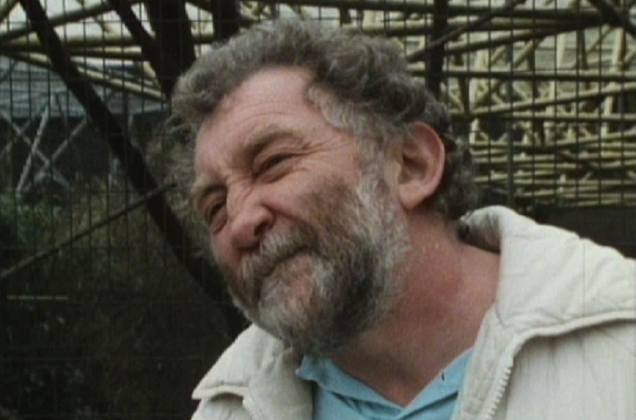
“I think we cast around for a few possible experts,” says Martin O’Collins. “We did approach David Attenborough, but he was tied up with other commitments. David Bellamy was always high on the list, though. Before we did it, we had a conversation where he said it would be first time he’d ever gone on television and said something that wasn’t absolutely correct. And he agonised over it. He saw the joke and thought it was funny, but he could also see that technically he was taking a little bit of a gamble that might backfire on him.”
Bellamy produces a textbook – the portentous-sounding Encyclopaedia of Animal Life – and turns to a page featuring an impressively detailed illustration of the Lirpa Loof. “Ever since I was so high, I’ve owned this book,” he claims. “And here I am for the first time – I’ve seen it! A live one, here in London. And it has these weird purple droppings, with which it seems to mark its territory. The purple seems to be some of the colouration of those rhododendron flowers perhaps coming through…”

This is, quite clearly, an awful lot of backstory. The Himalayan origins? The mimicry? Purple poo from a diet heavy in rhododendron flowers? It’s impossible not to wonder where the more fanciful aspects of the Lirpa Loof’s character were forged. Brian Bertram genially admits he was the man who placed this loveable beastie’s homeland firmly in the remote mountains of Tibet, but he denies responsibility for any further elaboration.
“All I wrote was that the Lirpa Loof was a new animal from the Himalayas,” recalls Brian. “And the reason why I suggested the Himalayas was because ‘Lirpa’ sounded rather like ‘Sherpa’, and I think that word association may have helped unconsciously to give some credibility to the fiction. But the purple poo, and the idea of it mimicking people… that didn’t come from me. I never actually envisaged there would be an animal in the enclosure at all. I suspect it was one of the nice creative people on That’s Life who thought ‘We can make a lot more of this’.”
As her colleagues are keen to emphasise, the ultimate ‘nice creative person’ on That’s Life was Esther Rantzen – the programme’s producer as well as its lead presenter.
“Yes!” confirms Esther. “It was me who came up with the idea that the peculiarities of the Lirpa Loof should be a) it imitates the zoo’s visitors and b) it has purple droppings. And of course BBC Special Effects aren’t phased by anything, so being asked for purple droppings was no problem at all.”

The droppings themselves are gloriously realised, visible in a neatly-stacked steaming pile in the Lirpa Loof’s enclosure. Much to the hilarity of one giggling young visitor: “Purple shi-!” she exclaims, one hand over her face. Kenny Baker, recalls Martin O’Collins, spent several hours in costume in the enclosure, improvising the Lirpa Loof’s reactions to various prompts from unsuspecting members of the public. A party of children encourage the Lirpa Loof to jump up and down and rub its tummy, and a silver-haired American lady makes handwritten notes on a tiny pad, her face frozen in disbelief. “Do you suppose that is what they call the Abominable Snowman?” she asks a passing couple. “It’s the most amazing thing I’ve ever seen in my life.”
The studio segments of That’s Life were recorded before a live audience on the evening of transmission, and their reactions to viewing the Lirpa Loof report are equally fascinating. Bemused – possibly even slightly nervous – giggles build slowly into full-on belly laughs. Presenter Bill Buckley was under no illusion that the audience had quickly caught onto the joke.
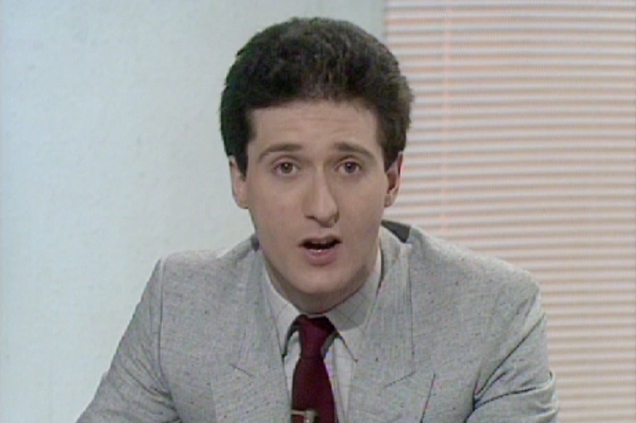
“If they’d actually thought it was real, then they might have laughed a little bit at the Lirpa Loof’s mimicry,” says Bill. “But I think there would have been more of an awed sound. The fact that they were wetting themselves should maybe have been more of a clue to the audience at home.”
Nevertheless, TV viewers were fooled in considerable numbers. “After every show, we would always go out and have a meal,” recalls Martin O’Collins. “And during that meal, Les Wilson the photographer said that he’d been in touch with the BBC and apparently the switchboard was completely jammed. We then heard, during the week, that lots of people were turning up at London Zoo demanding to see the Lirpa Loof – and that they were deeply pissed off when they were told it was an April Fool.”
“Lots of people came on spec to see the Lirpa Loof,” confirms John Knight. “And some were upset because they’d brought busloads of kids! There were a couple of cases like that. We also had lots of enquiries about where people could buy the wonderful book that David Bellamy had.”

Brian Bertam, meanwhile, remembers a couple of specific complaints. “There was a grumpy letter from one chap to the zoo’s director, saying he’d made the journey all the way down to see this animal,” he says. “And there was another rather snooty letter saying that the zoo was meant to be a respectable, reputable scientific institution, and that we shouldn’t be doing silly, frivolous things like this.”
Bill Buckley similarly recalls angry callers contacting That’s Life’s production office – where the phones were frequently answered by the presenters themselves.
“The office was shut on Mondays, because Sunday was our big working day,” recalls Bill. “But on the Tuesday, I remember there were a few calls from people who – the day before – had been to London Zoo to see the Lirpa Loof. There was one teacher who had taken an entire class to see it, and they were not best pleased! How could anybody think that ‘Lirpa Loof’ was a real name? I thought it was very obviously a light-hearted joke. But sure enough, some people clever enough to qualify as schoolteachers did actually believe us.”
The Lirpa Loof’s story was not over. On Sunday 8th April, the next edition of That’s Life ended with a twinkly-eyed apology from Esther Rantzen.
“We have a confession to make,” she tells viewers. “This week, we’ve had all these letters [she lifts up a bulging folder of correspondence]… most of them from Lirpa fans who want to see our film again. Some of them from furious people who made special trips, took time off, travelled hundreds of miles to visit London Zoo and found the Lirpa had strangely disappeared. The zoo had 1000 calls this week, and even the Natural History Museum had 100 calls…”
She then welcomes George Callard into the studio – along with, to the audience’s delight, the Lirpa Loof himself. Together, Esther and George perform a wistful song of regret, with the Lirpa swaying happily along.
“If we told a lie
If we made you sigh
Lirpa Loof and I
We’re sorry
From the bottom of our hearts, dear
We apologise”

Forty years on, is Dame Esther Rantzen surprised that so many people were taken in?
“Certainly not!” she exclaims. “We’d polished our skills in this area with our driving dog. And then a few years afterwards, London Zoo were involved again, in our third April Fool. We invented a really effective skin cream called Dorian, made from rhinoceros spit. Its unique property was to remove all the wrinkles from your face, but unfortunately it transferred them to your bum! We filmed an enormous lorry drawing up at London Zoo to collect the latest consignment… and we filmed the rhinoceros itself, but sadly it didn’t spit. So one of our film directors went to the dub, and made the most disgusting spitting noises I’ve ever heard in my life. Edwina Currie was in that film, saying how concerned she was. And that she would tell the Prime Minister!”
All who have contributed are keen to point out their joy at having worked with Dame Esther, and the enormity of her contributions to the show’s legacy.
“The overriding creative genius behind the show was always Esther,” says Bill Buckley. “She wrote every word you ever heard on the programme, and cut every piece of film you ever saw. My goodness, she was a producer and then some. She was always first in, and always last out – she was incredible”.
And after four decades, does Dame Esther’s apology still stand?
“No remorse,” she smiles. An opinion the Lirpa Loof, drawing on the full extent of his mimicry skills, would doubtless echo with great aplomb.

Picture above shows Dr John Knight in 2024, with the sign from the Lirpa Loof’s enclosure that he kept as as a souvenir. And a slightly truncated version of the Lirpa Loof report can be found here:
https://www.youtube.com/watch?v=QwDwRsfUj6Y
Heartfelt thanks to Dame Esther Rantzen, Bill Buckley, Martin O’Collins, Dr John Knight and Dr Brian Bertram. And to Andrew T Smith, Richard Latto and Mark Braxton for further help and encouragement.
Why not take out a subscription to the Fortean Times? “The World’s Weirdest News” is available here…
https://subscribe.forteantimes.com/
Support the Haunted Generation website with a Ko-fi donation… thanks!
https://ko-fi.com/hauntedgen

