There is an alternative history of the 1990s. Less Oasis and Trainspotting, more ‘Ebeneezer Goode’ and Viz‘s Student Grant. And for many of us, these lesser-trodden footpaths of 1990s nostalgia lead directly to our own bittersweet memories of some unforgiving university campus or other, its concrete towers forever steeped in the Quinoderm waft of lonely teenage melancholy.
Writer Will Maclean has poured his own recollections of early 1990s student culture into his new novel, Solace House. Set during the blazing summer of 1993, it’s a twisting supernatural tale that begins amid the silent corridors of a deserted Hall of Residence before slowly unfurling towards a head-spinning conclusion.
I was delighted to spend a leisurely afternoon discussing the book – and the evolving nature of 1990s nostalgia – with Will himself. Here’s how the conversation went…
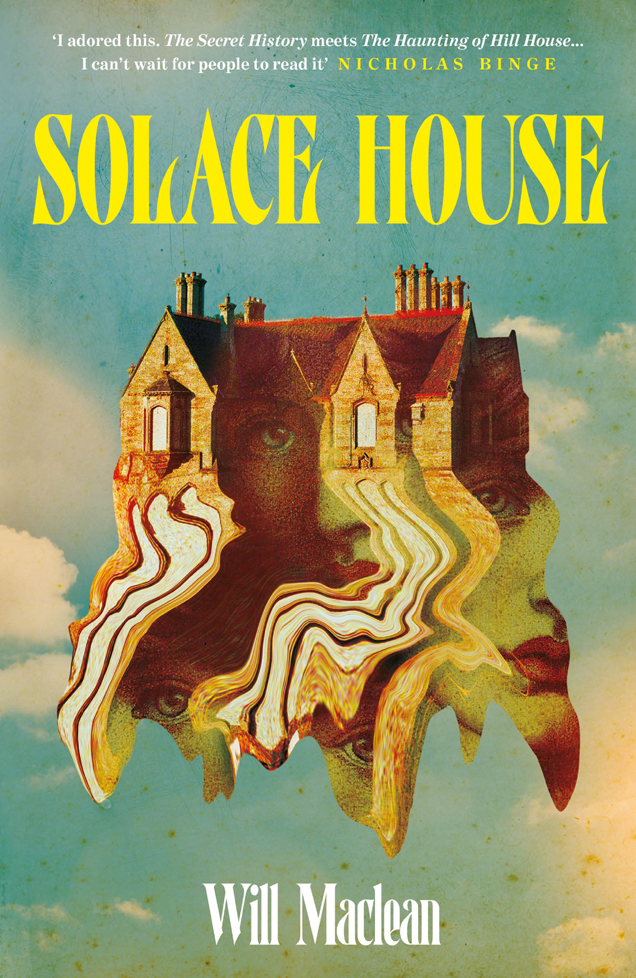
Bob: Let’s start with an obvious question. Can you talk us through the premise of Solace House?
Will: It’s set in 1993, and the main character is called Alex Lane. He’s a 19-year-old student who hasn’t made any plans for the summer – but for reasons that aren’t initially explained, he can’t go home. But he falls on his feet, getting an offer from his university to join a team clearing out a former Edwardian mental asylum called Marshlands. So he does that, with an assumption in the back of his mind that it’s going to be thrillingly creepy – but it’s not at all. It’s just a very boring job. But, in the grounds of the asylum, is a huge, dilapidated Victorian mansion called Solace House.
So Solace House provides the mystery. It was previously owned by a 101-year-old hoarder called Edwin Flayne, and Alex and his friends uncover Flayne’s journals, where he describes a series of strange rituals that may or not lead to a different dimension.
OK, let’s pick this apart bit by bit.
Probably wise.
The 1993 setting is interesting in lots of ways. I have my own theories as to why that particular time period is so fascinating, but you tell me your thoughts first…
No, let’s hear yours. I’d love to hear them.
OK… I think the early 1990s are the very last gasp of grotty, old school analogue Britain, before we all stampeded to join the digital world. By the end of the 1990s, the entire country was going online, getting e-mail addresses and building websites on Geocities. And, as a result, culture – and possibly society – quickly started to fragment. But in the early 1990s, we were all still watching Noel’s House Party on a Saturday night, and we all knew what was at No 1 in the charts. Even if you were 75 and hated pop music, you still knew which songs were in the charts because we still just about had that shared popular culture.
Britain looked completely different as well. In the early 1990s, there were still huge areas of waste land on the outskirts of town centres, and old bombsites left over from the war. But, by the end of the decade, it was all Local Development Corporations and out-of-town retail parks. It suddenly looked like a different country. So for me, the early 1990s had a real fin de siecle feeling. But maybe not in an exciting way – it didn’t feel like a thrusting “white heat of technology” revolution. It felt more reluctant than that. More “Oh God, I suppose we’ve all got to be on the internet now…”
Full marks. I think that encapsulates a lot of it. I was a student at that time as well, and it was a period of my life that looms large in my imagination. But I also wanted to write something about that period because, as you say, it’s an unexplored turning point.
I’ve seen the phrase “a holiday from history” used about the 1990s, and I think there’s some truth in that. It didn’t feel like a particularly dramatic decade.
I think there were certain assumptions made around that time. A feeling of “It’s going to be like this forever now”. We’d always have free market economics, and there’d always be a post-modern culture where you just combined “x” with “y” to get “z”. There was an assumption that nothing would ever move any further forwards.
If you look at something like Terminator 2, from 1991, there’s a bit where John Connor is talking about the global situation and he says “The Russians – they’re our friends now, right?”. So there were those kinds of assumptions, too – that the Berlin Wall had come down and it was suddenly a much more stable world. It looked like we were going to move in a far more progressive direction than we actually did. And that’s pure hauntology, isn’t it? The future that never happened.
There were other things in the early 1990s that felt like they were going to be huge in terms of how they steered things, too, things like New Age consciousness and feminism. It was quite an exciting time for all those ideas, but they were all shut down within about a year and the decade became the 1990s that we now remember.
Which is interesting. I’m always fascinated by how we end up remembering a particular decade, and who actually decides that. We now think of the entire 1990s as being Blur and Oasis and Knebworth and Trainspotting, but all of those things are from the mid-1990s. Both the early and late 1990s feel like totally different terrains.
Even then, I feel like those things were less impactful at the time than we might remember. If you watch episodes of Top of the Pops from the mid-1990s, there’s surprisingly little Britpop in the charts. It’s all Robson and Jerome, Take That and Boyzone.
I watched the 1990 Top of the Pops repeats on BBC4, and they were hilarious because they were so schizophrenic. The charts were pulling in all kinds of different directions at once. There were a lot of 1980s acts who weren’t leaving the stage – like Madonna – but there was also plenty of stuff that now just feels completely random. Enigma, the singing monks! And a lot of David Lynch-inspired stuff, thanks to Twin Peaks. The tail end of rave, as well. It felt like people were desperate to push into a new era, but didn’t really know where to go next.
I think it was the end of an era when it came to student culture, as well.
Absolutely.
And you depict that really well in Solace House. The 1990s was probably the last period when students were genuinely and universally hated. We were essentially seen as pretentious freeloaders – we were actually paid by the government to go to university! Can you imagine a 2026 student being seen as a freeloader? It costs them a bloody fortune to go to university now.
Yes, being a student has become quite a noble act! I would not have been able to go to university had the student grant not existed – it did a good job of getting people from less privileged backgrounds into further education. Which is probably why we’re both sitting here, having this conversation now.
And, as a result, we were despised in town centre pubs all over Britain.
Absolutely. We were “Student Grant” from Viz.
Completely entitled wankers in German army jackets. With that whole culture of drinking cider in grotty Student Unions and putting up Betty Blue posters in the Halls of Residence.
All of that. Although you can probably go too heavy on that kind of flavour… [Laughs]
It was actually like that, though. Then, by the end of the 1990s, the student loan system had become the dominant form of funding, and that kind of lifestyle had basically vanished. Pretty much everyone went into further education – which is great – but often they continued to live at home with their parents, and they studied at their local university. So there isn’t that division any more – everyone becomes a student now, and it feels a little less likely that you’ll be marooned on a concrete campus somewhere miles away from home, in a town where all the locals hate you.
I always quite liked being marooned! But yes, I really wanted to capture something of that feeling.
It comes over really strongly in the opening chapters of the book, when Alex is spending the first week of the summer holidays living completely alone on a deserted campus. Was that something that drew from your own experiences of university? It feels raw.
For various family reasons, yes, I couldn’t really go home from university. So I found myself staying there through the holidays. Christmas and Easter holidays were only four weeks long, so they were fine, but the summer break was 16 weeks long. And you are very much on your own, left to your own devices. I vividly remember being in that situation and feeling very lonely.
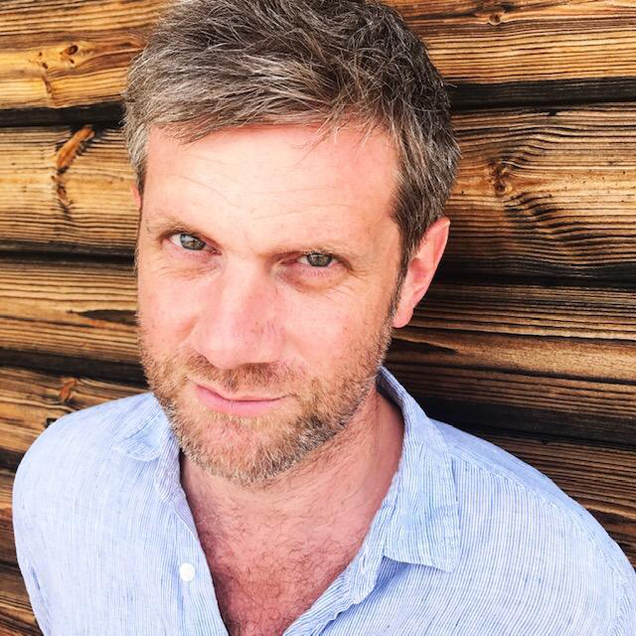
Seriously – you spent the entire summer holidays by yourself on a deserted campus?
Pretty much, yeah. I actually lived in a university-owned student house, which is what they would have done with Solace House. It was a vast house in Bristol, and it was amazing fun in my first year. But during the summer it was “Everyone’s left, I’m on my own, and I’m going mad”. So I put elements of that into the book.
I’ve always wanted to write about that feeling of “school after hours”. During the day it’s all fun and games, but at night it’s very different – it becomes the creepiest place on Earth.
I once spent a few days at my old university after the summer term had ended, and I remember a really distinctive sense of melancholy. All those tatty posters for end-of-term extravs, still sellotaped to the walls of a completely deserted campus.
That was it. Exactly the feeling that I wanted to write about. Everything feels hyper-real when you’re a student of that age – everything impacts on you enormously. And I really wanted to write about that emotional terrain.
I also seem to really like a found family. Both of my books have a bunch of young people doing a shared task that may or may not be insane. But this time, I wanted to write a story that was more of a mystery. I haven’t got much more to say about ghost stories at the moment. Not that The Apparition Phase was the “be all and end all” of ghost stories…
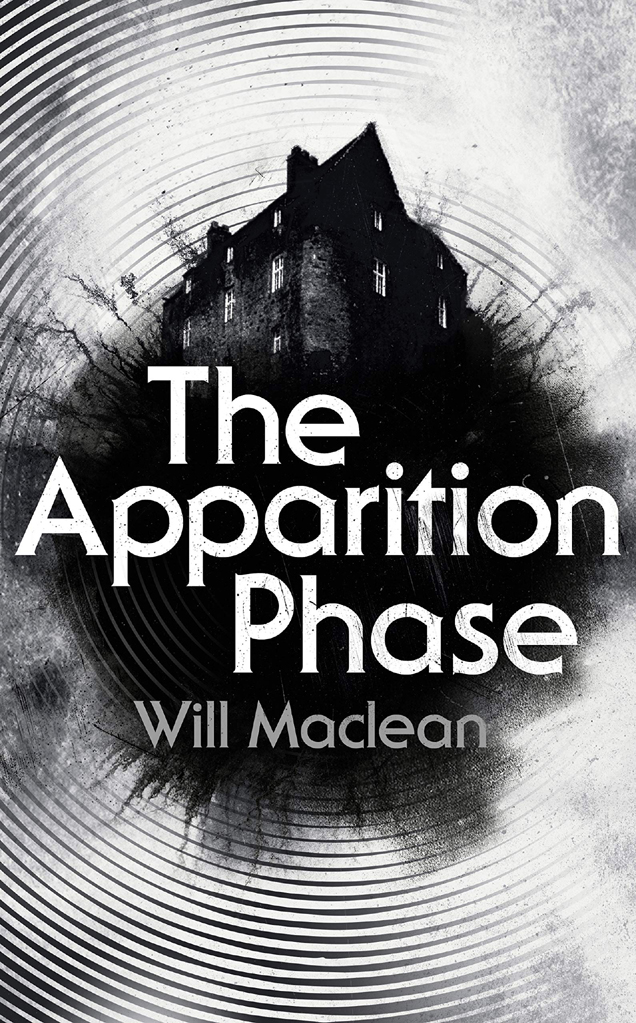
No, it was. It’s the final word on the matter.
[Laughs] Nobody can ever write a ghost story ever again! No, I just have a horror of repeating myself. I wanted to write something where I pushed the boat out – because I suddenly had time on my hands. This was very much a book that was started during COVID. I literally started writing on the first day of lockdown, March 23rd 2020. That’s not an exaggeration. I thought “Right, I’m going to do something new now…”.
That might also explain the feeling of isolation in the opening chapters.
Funny how that came back to me, wasn’t it? Everyone was suddenly experiencing the same feelings I went through at university. And it was dream-like… time had a different value to everyone. All of a sudden, the clock had no meaning. A familiar feeling when you’re a freelance writer! Initially, when you first go freelance, you go to bed at 3am and you get up at noon and you think “This is great – I’m my own boss”. But eventually you fall out of sync with everyone, and you have to pull back. You miss people. And the commute. And the sheer normality of everything – those things are very comforting.
So when it comes to vintage weirdness, is the 1990s the new 1970s? I was talking to the director Mark Jenkin recently, and his new film Rose of Nevada is also set in 1993.
Oh, really?
It’s great, but don’t worry – it’s nothing like Solace House. But it does feel like there’s something in the air. A re-evaluation of the 1990s as a “weird” decade when it maybe wasn’t seen that way at the time.
No, it wasn’t – it was seen as very straightforward, at the time.
I remember there being a common consensus in the 2000s that the 1990s had been really bland.
I remember that as well. That weird backlash… which, ironically, is how we now think of the 2000s. Maybe that feeling just comes around every 10 years.
I think quite hard about when to set my books. To some extent, I think it dictates your themes. I wanted a period when people were talking about parallel worlds and hyperspace, and that was the early 1990s – suddenly, people like Terence McKenna were fashionable, working with bands like The Shamen. You wouldn’t get a group like The Shamen now – a trans-humanist band whose main thrust was “We’re going to become pure information… so here are some rave-pop songs about drugs.”
One of which went to No 1!
Yes, they were a viable chart act in the 1990s! All of those ideas were coming into the mainstream.
People were genuinely nervous about the millennium as well.
They were. There’s a bit of that in Solace House, where the characters talk about the Millennium Bug. There are cultural artefacts: The X Files, for instance, is probably the best example of 1990s fin de siecle paranoia. It had all of those concerns, every week. Even the sister show called Millennium didn’t do them as well as The X Files.
And there’s a Busta Rhymes albums from 1998 called Extinction Level Event, all about the oncoming apocalypse! It was a thing…
I remember reading Fortean Times in the 1990s, and it was filled with millennium conspiracy theories. Remember the Bible Code? The claim that the text of the Bible contained a secret code that prophesised the end of the world in 2006?
Yes! That was massive!
I think it transpired that you could apply the same code to pretty much any large body of text, with similar results.
Let’s do it now! Get the Rupert The Bear annuals down from your shelf. But yeah, all this stuff seemed to be pointing to a higher reality. There were people around like Leo, a character in the book, who’s a bit New Agey… he’s gone in that 1990s Julian Cope direction, where’d you’d go to an ancient monument and try to read them in a new way. And I loved all that – that open-minded kind of research.
You draw Alex’s fellow students from some wonderfully accurate early 1990s archetypes. As well as Leo the New Age hippy, you’ve got Ruth the sulky goth girl, Clive the slightly older stoner… there was one of those in every single common room throughout the country. Usually wearing a Led Zeppelin t-shirt.
Absolutely. There was always one!
You were 20 and he was about 26…
…and you’d think “God, he’s ancient! Who’s this old fucker?”
When I was writing The Apparition Phase, I watched a lot of 1970s drama and read a lot of 1970s books, and there are archetypes from that era, too – but they’ve become so prevalent that nobody really notices them any more: the spooky twins and the school bully. But those 1990s archetypes haven’t really become archetypes yet. And you’re right, I literally sat down and made a list of them. I have to say, Ruth the goth is my favourite character in the book. She was just a delight to write – I was really cheered every time she turned up.
There’s also Adam, the pivotal “pale, strange boy” who transpires to be a minor aristocrat. Which also rang true for me. I went to Lancaster University, a very modern concrete 1960s campus, and there was a lad called Nick in my college. Very well-spoken, very polite, probably quite shy. I’d been there for a while before I discovered that he was actually Viscount Amberley, the grandson of Bertrand Russell.
I went to Bristol, so that was the norm! Tom Stoppard’s son was in my year, apparently, though I never met him, and Jemima Goldsmith was in the year below me. Everyone seemed to be a minor aristocrat of some description. I just tried to reduce that to the more relatable experience of discovering someone you know has a vaguely aristocratic background.
So are you basically Alex?
Good god, no… no, I’m not. Alex is a funny fish… he starts off in the same position I was in, because I needed that familiar emotional terrain, but he does a lot of things that I wouldn’t have done. He’s much more mature in a way, but also much more reckless. More strident. Sometimes you write and think “I’m just writing me here”, but that didn’t happen with Alex.
I can’t actually decide whether he’s likeable or not. Some people have said “God, he’s such an asshole…”
Oh, I didn’t think that. Maybe that means I’m the asshole as well.
[Laughs] People have said he seems very blithe. But I think you have to like the protagonist to some extent – especially in horror. Because a lot of horror is about taking the situation you’ve created and throwing the most unsuitable people you can imagine straight into it. In Solace House, you have Helen, who is a completely inflexible thinker, someone who patently shouldn’t be there…
She’s the born-again Christian character.
Yes, but that’s not the full stop of her personality. She’s just clinging to that to avoid going mad. And then you have Clive, who is utterly unreliable – again he shouldn’t be there. And neither should Alex, really.
The character of Ella is nicely ambiguous. She feels separate from the rest of the team – she’s late to join the house clearance party – and there’s a suggestion her presence might carry an echo of previous traumas in Solace House.
Yeah, I like Ella as a person. In many ways she’s an early 1990s archetype as well: one of those self-consciously strong-minded individuals that you sometimes find at university. But she wears that as an armour, because she has a past that’s quite troubled.
To some extent, though, she has to be unknowable in the way that the other characters don’t. So, for example, you only ever see her in the environs of Solace House. She’s never anywhere else. There’s a bit where the rest of the team discover that Flayne’s mother was also called Ella, and they get really excited – “Is she a weird echo?” And Ella says “I was literally at university with you – I was on the same course as Ruth”. I like positing those things before shooting them down, because it lets the reader decide for themselves.
Did you do any research into compulsive hoarding?
Yes, I did some reading around it. Actually, sorry, I hate that phrase… it implies I didn’t do any reading about it! Yes, I did. I live in Crouch End, which is quite famous for hoarders – it was where Mr Trebus lived. But who amongst us can’t understand the impulse to hoard? It’s such a human impulse. And for years, it didn’t have a name – these were just the people who lived down the street and kept everything. It wasn’t a widely-known condition until the 1990s.
I don’t like to use mental illness as a plot point in any way that can be read as exploitative. So when you read about Flayne, and the reasons behind his hoarding, they’re not the normal reasons.
No, Flayne has very practical reasons for wanting to fill his house with his possessions.
He does. I wanted his hoarding to make absolute sense in his own mind. For someone that we never actually see, Flayne is such a big character in the book. We don’t even see his face – the only images of him are the ones where he’s painted over his face, in every single photograph. That was an idea that came from the first lockdown… my daughter and I were painting over all the faces in a magazine, and I just remember thinking “Who would do this?”. It all came from there.
We get to know Flayne through his possessions, too.
We do, we see his life through the things he’s set aside. The dinner services that he’s kept, all beautifully preserved. I wanted him to be as much of a character as any of the students.
Flayne is also present through his poetry, extracts from which are quoted at the beginning of every chapter. And I don’t want to give too much away, but you pull off an incredible literary trick through the lines of Flayne’s poetry. Did it take a long time to construct?
A long time.
Longer than it took you to write the rest of the book?
Not quite – that would be a great story! I’ve done things like that before, but when I realised I could push the poetry further and make it relate to episodes in the text… that was a dark day. Because I knew I had to do it, and I knew it would take a very long time! My wife would come home and say “What have you been doing?” And I’d say “I can’t even begin to tell you. It’ll sound like insanity…”
But if you’re writing a book about altered states of mind, and other realities, it’s quite good to present something that reflects that.
Were you an English Lit student, by any chance?
[Laughs] I was an English Lit student.
I thought you might have been. Whose poetry did you take influence from?
I was always very fond of In Memoriam by Alfred Lord Tennyson, which is a great poem – it’s the one he wrote about his friend Arthur Henry Hallam, who had died. But Flayne’s poetry had to be more eccentric, it had to be doggerel – because he’s not a trained poet.
It isn’t amusingly terrible, though. Flayne is literate and well-read.
No, it had to also be good. A bit floaty in places, but good. There are references to Fairyland, and to The Bible. But the main influence on the poetry was actually the painting, The Fairy Feller’s Master Stroke by Richard Dadd. I think everybody knows that painting, even if they don’t know the name of it.
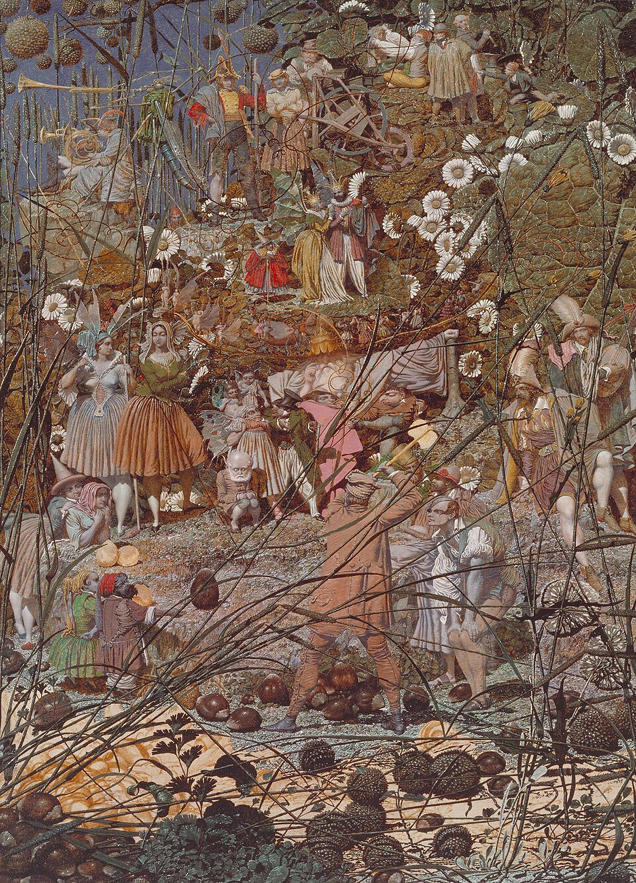
Or the Queen song of the same name…
Or the Queen song, yes! Although it turns out a lot of people don’t know the Queen song, which is something I put into the book.
I guess it’s not really ‘We Are the Champions’.
It’s not… and Dadd also wrote a poem to sit alongside the painting called Elimination of a Picture, which was the other inspiration for Flayne’s poetry. In that poem Dadd names the characters in the painting, who then found their way into Freddie Mercury’s lyric… Waggoner Will, The Politician, etc. Alongside words like “tatterdemalion” – wonderful Victorian words that people don’t use any more.
Flayne devoted his life to opening a portal to a parallel world that he calls Bewise. And the idea of portals runs through quite a lot of your work – including Broken Veil, the podcast you created with Joel Morris. What is it about that idea that fascinates you so much?
I think – and this is connected to hauntology – that portals operate along the same lines as trauma. They’re about an obsessive need to change the past – or at least to focus on the past – and those desires correspond very closely with traumatic experiences. Without wishing to get too personal, I had a very traumatic experience in my late teens, involving the death of a family member. And while that fracture doesn’t define you, it gives you a certain mindset. It teaches you not to take things for granted, and maybe makes you less prone to regret in certain ways. We’ve talked before about our attitudes towards the 1970s: how we wouldn’t swap any of it, that time, but we don’t want to go back there. And I think that’s also the hallmark of trauma.
Hauntology is hard to define, but it does feel like a generational model for unprocessed trauma, and how we feel about it. You’ve always talked about hauntology being emotional, and I think that’s a key factor. In the very first Haunted Generation article you wrote, that seminal feature… if we can use that word?
I’ll take it.
There we go! You said the first time you heard ‘ROYGBIV’ by Boards of Canada, it made you cry. And I didn’t read that and think “Oh, don’t be ridiculous” – I completely understood what you were talking about. It is an emotional thing. It’s very hard to quantify, but it’s definitely a feeling of loss.
So I think that’s what fascinates me about portals. Have you read The Door In the Wall by H.G. Wells?
I haven’t.
It’s brilliant. We always talk about H.G. Wells in terms of his well-known stuff, but he also wrote The Door In the Wall, about a man who is literally haunted by a door into paradise. It re-appears throughout his life. He goes in there as a child, and it’s a world of wonders, but then it casts a shadow over his entire adulthood. “I should have stayed there…” And every time he sees the door again, he’s too busy to go back through it. It’s a wonderful story.
Have I told you my childhood portal story? I’ve written about this a few times in recent years.
I’m all ears now. I’m literally leaning forward.
OK, basically… in the 1984 Easter Holidays, my friend Doug and were cycling around our home town – which we thought we knew really well – and we came across a narrow path leading away from the main road, between two very tall hedgerows. We’d never seen it before, so we followed it… and we emerged into a children’s playpark that neither of us had ever seen before, either.
We were absolutely dumbfounded. We sat on the swings and came up with what genuinely felt like the only logical conclusion to draw… that the path and the playpark had never actually been there before, and we had passed through a portal into a different dimension.
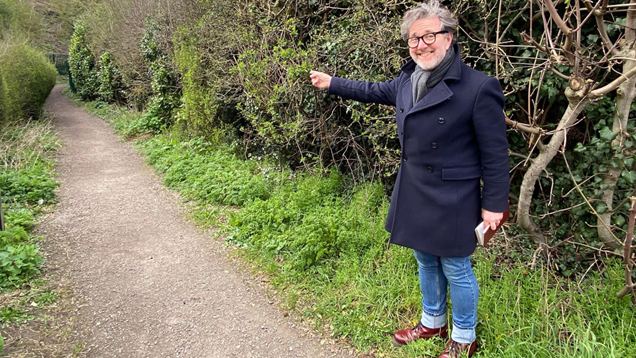
Why wouldn’t you think that?
It honestly felt like a far more likely explanation than us simply not knowing our home town quite as well as we’d thought. Then, as we were chatting on the swings, a group of men appeared at the top of the bank to our left, and walked down it. In my head, they were all wearing outfits from different time periods – one was a Viking, one was a First World War soldier, was a Victorian chimney sweep, that kind of thing. They said hello to us as they passed, then they vanished along the path at the opposite end of the park.
[Laughs]
Now, with the benefit of adult hindsight – I suspect they were simply workmen who’d been doing some maintenance on the railway line that ran across the top of the bank. And our fevered imaginations completely invented the outlandish costumes – probably because we’d both watched Time Bandits at school a few months earlier. But, despite all that, we still went back to school after the holidays and told everyone that we’d passed through a portal and met time-travellers from a different dimension.
And we weren’t universally disbelieved.
I love that. I mean, which version would you rather remember?
Exactly. So although I didn’t have any particular trauma in my childhood, I think I had a desperate desire for the universe to be far more magical and complicated than it appeared to be. And I think that was possibly connected to my fear of adulthood, which was very real. I think I maybe had such a happy childhood that I wanted to stay a child forever. Which, ironically, has led me to often feel quite sad as an adult.
I think that’s another thing that isn’t talked about a lot – not wanting to go through the mincing machine of growing up. As kids, especially for our generation, our parents often seemed like quite unhappy people. You’d think “What’s happened to you? Why have you been robbed of all your joie de vivre, and is the same thing going to happen to me?” I think that’s a big thing.
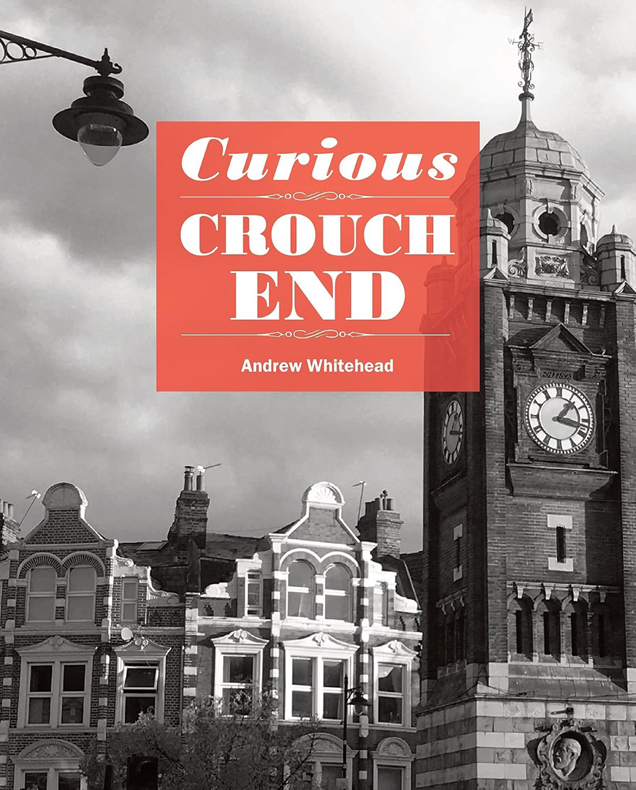
It’s funny you should mention your portal. Crouch End, where I live, is not a big place either, and a couple of years ago I read a book called Curious Crouch End. It claimed there was still a row of picturesque worker’s cottages down a road that doesn’t exist any more – literally behind a shop that I go in all the time. I thought “That can’t be right…”, but I had a look – and there they were. A neat little row. The remnants of a non-existent road.
Yeah, but were they really there?
Are any of us really here? [Laughs]. But yeah, I think there’s a really interesting discussion to be had about hauntology, childhood memory and trauma. It’s something I’d definitely like to write about more.
How was your experience of time as a child? You play around a little with the idea of non-linear time in your books.
I think that comes from my own philosophical viewpoint that nothing is really as we experience it. We just live in a best guess. And that applies to time as well. When you set things in the territory of your own life, you travel back through your memories and you end up thinking “God, that feels like years ago”. Those summers I spent on my own, they felt like they lasted a long time. But it’s not just the “time flies when you’ve having fun” theory – it’s more complex than that.
We’re both Alan Garner fans, another writer who plays around a lot with non-linear time. Does a little of your interest come from his work?
It does, but if there’s any influence from Alan Garner in Solace House, it comes from The Owl Service.
Well there is a dinner service…
Yeah. But it’s also a book about fate and repetition, which – to some extent – the characters are all trapped in. Alan Garner is so deft at those things, so I wouldn’t presume to say I was doing the same thing – but I do love him.
Can we talk a bit about Broken Veil? There are two series available now. For those that haven’t listened yet, can you tell us about the premise?
Joel and I set out to explore various paranormal things, keeping the sample of information as pure as possibly by basically asking our friends for their stories. In the first series, we discover a worrying pattern within the stories, which we then start to investigate – essentially, a place that may or may not have been researching technology with the aim of reaching into other realities.
Portals again, Will…
More portals, guys! The second series is out now, and to some extent it’s about the difficulties of actually making a second series. And you’re in it, of course…
Yes, talking about the BBC Radio Tees building where I used to work. Once, when I was there late at night, I was sure I caught a fleeting glimpse of something in a deserted corridor – but when I looked again, there was nothing there. I mentioned it live on air, and “the spooky corridor” became an ongoing thing. Listeners would contact the show and reference it, and studio guests would ask if they could see it.
Anyway, spoilers everyone: I’m in Episode Two.
You are. We really wanted to do a second series. When you’re a TV writer of a certain level, you’re rarely given the chance… nothing ever gets onscreen, so you’re taught how to plot out entire series of shows that never actually exist. So it’s nice to have one that now does exist, and pays off.
You were very open about the fact that the first series of Broken Veil was entirely fictional. With the second series, you’ve claimed that everything in Episode One is real, but after that – all bets are off. Do any of your listeners know what to believe any more?
We’re the boys who cried wolf, aren’t we? No, nobody believes us. But the first episode contains absolutely no untruths at all.
Including the mysterious Electronic Voice Phenomenon that you apparently recorded?
Yeah. Me and a friend were discussing EVPs and whether it was possible to record them on a laptop. I’d never used the laptop microphone before, so I put it on and recorded ten seconds of silence. Then, when we played it back, it had a very clear voice on it. Saying actual words. My friend said “Did you just do that?” And I said “No…” [Laughs]
So that was quite a thing. It genuinely happened, and you can hear the actual recording in Broken Veil. I referenced it in The Apparition Phase as well – it was a very strange, sludgy, oily voice.
You and I are fascinated by the paranormal and we write about it all the time, but it’s weird… when something genuinely happens to you, and you have a piece of potential evidence, you think “No, I’m not going to tell anyone. I’m not even going to think about it. I do not like this at all…”
But I’m glad it went out on Broken Veil, a series that is deliberately elliptical. We don’t have any answers. Which relieves me of the burden of having to attest to its truthfulness.
Brian Eno’s sound engineer had a listen, and he said it was genuine…
He did. Maybe Brian will use it one day. And I’d be as proud as a man could ever be. “ENO LOOPED MY EVP”… it sounds like a Half Man Half Biscuit Song.
But yes, there were some people out there who were annoyed that the first series wasn’t true. Which I can understand to some extent, but that’s the game we’re playing. I like the position it occupies. If you’re doing something where the themes are the paranormal, scepticism and the unreliability of personal accounts, then all of those things have to be built into the series.
The story you tell about the corridor is true, isn’t it?
Yeah. Well… after a fashion.
Well, it’s been subjected to the same conditions that any anecdote is subjected to. You have to tell to your friends, in the unforgiving environment of the pub. So you tidy it up, you make it more palatable, and – if possible – you give it a kick or a punchline to make for a more satisfying story.
I don’t make a claim for having any kind of genuine paranormal experience. I just tell the story as I remember it now.
Exactly. I’ve had similar experiences that have been very odd. I’ve felt things, but you can’t really communicate that to anybody else. I had a weird experience visiting Chislehurst Caves about sixteen years ago – I was taking photographs of the empty caverns, when I suddenly got really scared. For no reason at all. And I remember thinking “Wouldn’t it be awful if something actually appeared on my photos?”
And when I checked the screen, there was something on there.
What was it?
I don’t know. I got back to the surface and spoke to a member of staff, and he said “Lots of people photograph things, it’s usually their own breath”. I showed him the picture and he looked it at for a few seconds then said “Well, that’s not your breath, is it?”
I’ll send you the photo. You can judge it for yourself.
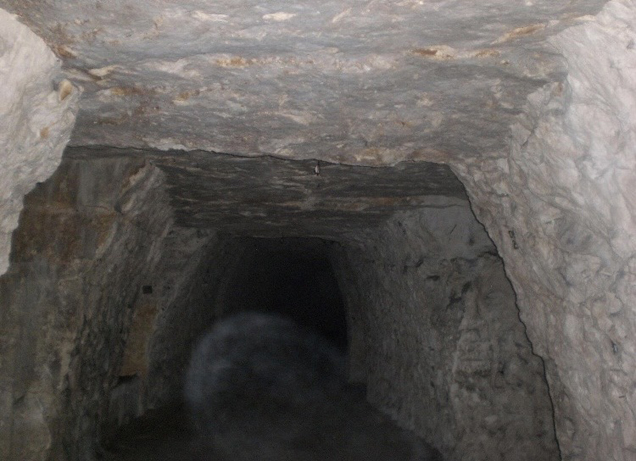
But if someone had else told me that story then shown me a picture of a blob, I’d have said “Yeah, OK…”. It would nothing to me, either… if I hadn’t had that feeling of utter desolation when I pressed the button to shoot the pic.
Can I ask a serious industry question? You mentioned the difficulty of being a TV writer actually trying to get your work onscreen. Does it sadden you that something as good as Broken Veil has to be a self-produced podcast, because there’s so little room for the genuinely esoteric in the modern TV landscape?
Yes. It really does. As a TV writer, you can spend your whole life in the waiting room. And it’s completely arbitrary, so you can’t take it personally – some people are lucky and their ideas are picked up, and others aren’t. At the moment, I’m watching Widow’s Bay and really enjoying it, but it’s a bittersweet enjoyment because I’m thinking “I’d love to have done something like this.” It’s very much in my wheelhouse.
But I think the correct way to deal with that kind of rejection is go and do something else. And in my case, that was writing books and making Broken Veil. It’s a very sane solution – if they won’t come to you, make your own stuff. We live in a fragmented world, and there’s no point in waiting around for the weirdly archaic image of the big TV contract. It’s not going to happen. Those days are gone.
It’s ironic though, because there are more TV channels than ever before. You’d think they’d all be falling over each other to find something really distinctive, but they’re really not.
They’re not, and that risk aversion is usually driven by fear – if you’re a commissioner who messes up, you might well lose your job. So it makes nobody want to commission some weird, David Lynch-style horror thing. Which I get. I do understand why those pressures are there.
And I think it’s also connected with success. The more success people have, the more they think they’re doing the right thing, so broadcasters become more risk-averse as they go along. Having said that, good stuff still gets through. You and I have talked about Small Prophets before, which I think is a masterpiece. It’s absolutely flawless. The fact that something as downright peculiar as that got through is staggering, and it hasn’t been made in a half-arsed way… the cast is stellar. So things like that give me hope.
You’ve had to wrestle with financial concerns as well – the first series of Broken Veil was free to listen to, but the second series is a Patreon project.
That’s purely because it was expensive to make, in terms of both the time it takes and the way we make it. We have a rough outline of where things are going, but it often goes off in very different directions.
There comes a point in every series of Broken Veil where we’re not sleeping and we’re saying “Is this working? Have we gone mad?” And I think that’s become part of the experience. “Oh God, what have we done?” [Laughs]
But a lot of its success is also down to Joel being a genius at sound design. It sounds exceptional. So I don’t think someone like Radio 4 would commission something like this – simply because of the way it’s made and the way it sounds. Douglas Adams always said he wanted The Hitch Hiker’s Guide to the Galaxy to sound immersive, like a rock album. I think that ambition, to make sound a space you go to – has gone.
For me, the thing that makes Broken Veil really distinctive is the rapport between yourself and Joel. You’re clearly great friends, and that really comes over.
That’s really nice to hear. I’ve known him for years – we met in 2008, in a writer’s room for The Peter Serafinowicz Show. He talked a lot, I talked a lot, and it was great. I’d heard of Joel and Jason [Hazeley, Joel Morris’s other writing partner], and they were just so “on it”. They took me and the guy I was writing with for a drink, and I just really liked them both. Joel and I have a lot of similar enthusiasms, and a similar background of trying to make a boring childhood feel more exciting. Just like yourself! It’s a continuing quest.
So what’s next for you?
Whether it gets published or not, I’m completing an anthology of short stories. They have a theme, but that’s as much as I’m prepared to say for the time being…
Joel and I are scheduled to do a Broken Veil book too, and I’m really excited about that.
How far can you take Broken Veil, do you reckon?
A few more series, I think. Between three and five. Any more, and it would end up becoming self-parody. Horror is always a hair’s breadth away from the ridiculous… it’s a constant temptation to laugh. When Joel and I made our film The Cunning Woman, we started joking about the idea that it should be about a guy who was haunted by Nicholas Lyndhurst. We couldn’t stop thinking about that for days.
It was just too easy to work out the scenes. The fusty academic goes to the village pub, and a band are playing the theme from Only Fools and Horses – which grinds to a sudden halt as he walks in. Then he finds a medieval woodcut of events from Goodnight Sweetheart…. it writes itself…
Horror and comedy both hit the same buttons. They’re both about finding the ultimate conclusion to any given situation. The funniest thing that can happen, or the worst thing that can happen. They’re in very similar territory.
But there’ll definitely be a third series of Broken Veil?
Yes! We’ve got a ton of ideas. We know where it’s all going, and we’re writing towards a very definite end point. You’ll have to wait and see!
Solace House is out now, published by Atlantic Books
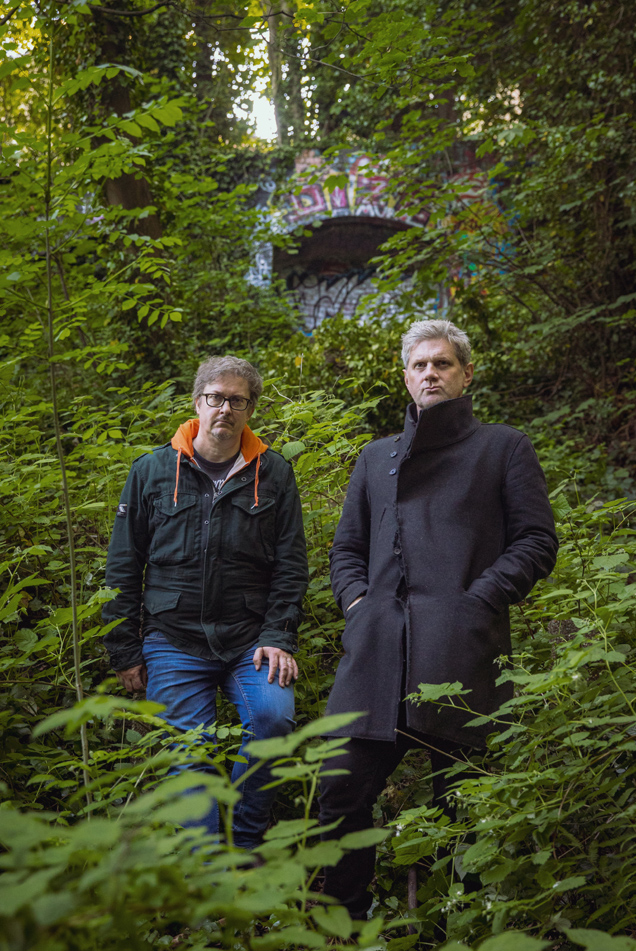
Photo of Joel Morris and Will Maclean by Alexis Dubus
Broken Veil Patreon is here…
https://www.patreon.com/BrokenVeil?l=en-GB
Will Maclean and Joel Morris on Broken Veil…
https://hauntedgeneration.co.uk/2025/08/12/will-maclean-joel-morris-and-broken-veil
Will Maclean on The Apparition Phase…
https://hauntedgeneration.co.uk/2021/06/03/will-maclean-the-apparition-phase-and-conjuring-up-philip/
Support the Haunted Generation website with a Ko-fi donation… thanks!
https://ko-fi.com/hauntedgen

