(First published in Issue 124 of Electronic Sound magazine, April 2025)
RAIDER OF THE LOST ARCHIVE
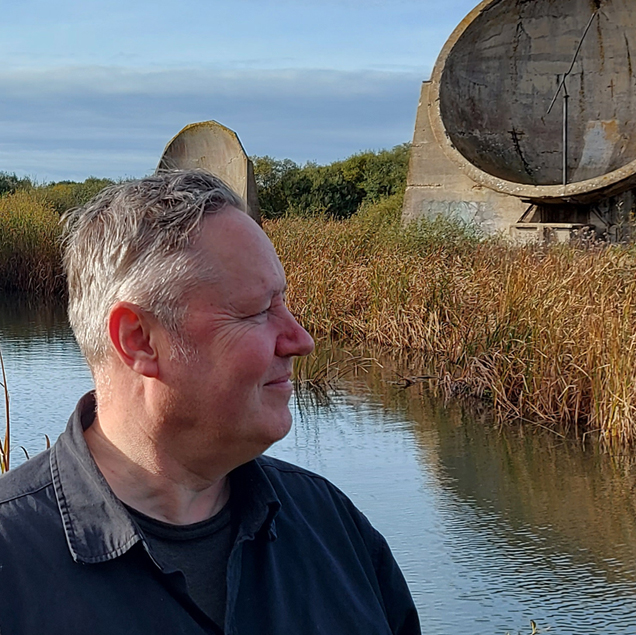
For over a decade, the Buried Treasure label has been unearthing lost soundtracks as well as providing a home for the multi-media Delaware Road project. It all derives from the passions of founder Alan Gubby – vintage electronica, weird old telly, subversive anti-authoritarianism and the occasional occult practice
Words: Bob Fischer
“Sometimes, when the weather’s a bit shitty and you’re working on your own, you think ‘Why do I do this?’” smiles Alan Gubby. “But then a new project or a new recording comes along that fires up your enthusiasm and you think ‘That’s it! That’s why I do it!’”
Ebullient and effusive, he never seems especially short of enthusiasm. Since 2013, Alan has been running the Buried Treasure label, unearthing lost soundtracks and rare library music while also providing a home for new sounds that include his own multi-media project, The Delaware Road. It’s a fascinating body of work that encompasses experimental electronica, esoteric practices, anti-authoritarianism and the occasional live event in a Cold War nuclear bunker with a six-times world snooker champion in attendance.
In spring 2025, however, his focus is on a brace of freshly unearthed soundtracks from two splendid slices of 1970s strangeness. First up? Sky, a 1975 ITV children’s drama in which a time-travelling alien teenager seeks the ‘Juganet’ stone circle that will return him to his rightful place in the cosmos.
No point in hanging around, is there? Let’s get straight down to the weird stuff.
“I remember watching Sky when I was a kid and thinking it was really odd,” says Alan. “There’s an environmental subtext about the Spirit of Earth protecting itself from alien visitations, which I think I would’ve got really into if I’d been slightly older. But I was only nine, so it went a bit over my head.
“And the soundtrack is quite disturbing. It’s by Eric Wetherell, who was a classical conductor and pianist, but for Sky he mixed chamber music with abstract electronics. These kind of archive releases can take years to pull together, but on this occasion it was quick. Eric’s daughter Anna was very approachable, and the family had the masters of everything he’d recorded.”
The help of friends and family members, he explains, can be of critical importance to Buried Treasure releases. The other weirdy 1970s soundtrack on the 2025 schedules? The electronic score to 1978 big-screen thriller The Shout, in which sinister drifter Alan Bates infiltrates the life of experimental musician John Hurt and claims to be able to kill a man with a bloodcurdling Aboriginal scream.
In this case, the music was produced by Rupert “Quantum Jump” Hine – still a year away from storming the charts with quirky electro-pop single ‘The Lone Ranger’ – and included contributions from Genesis stalwarts Mike Rutherford and Tony Banks. Initial conversations had been positive (“Rupert thought the release was a great idea,” says Alan) but, unsurprisingly, the project was put on hold when Hine sadly died in 2020.
“That was quite a shock,” says Alan. “And then two of my closest friends passed away during the lockdowns. That me affected me deeply, lots of projects went on hold, and I just assumed The Shout wasn’t meant to be. But last year, I got back in touch with Fay Hine, Rupert’s widow. I explained that I’d been getting on well with Rupert and asked if the release was worth picking up again. Luckily, Fay had just found more of the original tapes, and she said ‘We still want to do it’.”
This isn’t just about running a record label, is it? It’s musical archaeology requiring United Nations-level diplomacy skills. He’s the Indiana Jones of forgotten soundtracks, the Boutros Boutros-Ghali of master tapes in musty garages. Is the thrill of the chase something he relishes? He’s nodding vigorously.
“Yeah, it’s exciting,” he says. “I sometimes look at potential releases and think ‘Why hasn’t anyone put that out yet?’ And usually, it’s because it’s so damned complicated. The tapes are never in one place, no-one knows who owns the rights, this lot aren’t talking to that lot. You often end up being a mediator.
“But I’m always respectful, and I hope that comes across. Many times I’ve approached the family of a composer who has died, and they say ‘Why would anyone buy it? They didn’t even like it themselves’. You have to let them know that lots of people would be interested, and that it’s an amazing piece of work.”
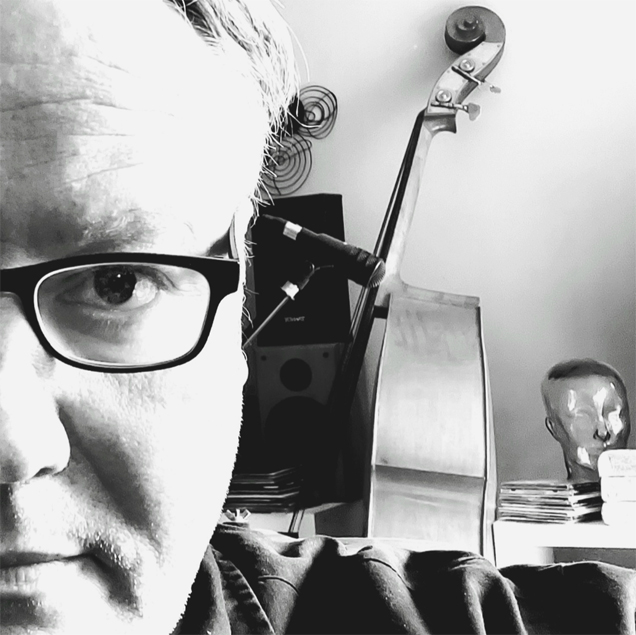
So what’s the Alan Gubby story? I’ve known him, I reckon, for nearly a decade, and I still don’t know much about him. We always just talk about music and old telly. Where do all these disparate interests come from? In fact, where does Alan Gubby himself actually come from? I don’t even know that.
“I grew up in Bracknell,” he explains. “My grandmother on my mum’s side was a concert pianist and a member of the Royal Academy of Music, so a lot of my upbringing involved going to concert recitals. But then my dad worked in the car trade, so there was always plenty of wheeling and dealing going on too.”
And his introduction to electronic music? The goggle box, of course, and the wave of weird compositions that gave an otherworldly edge to so many brilliant 1970s TV shows.
“The excitement of the new!” he nods. “You’d be doing something in the front room and you’d hear something strange and think ‘What the hell is that?’ The late 1960s and the 1970s were a great time to grow up, an era when new sounds could enthral and captivate you.”
By the early 1980s, he was the proud owner of a Casio VL-Tone keyboard. A purchase, I suggest, surely inspired by Trio’s chart-topping single ‘Da Da Da’? He bristles at the very idea.
“No, I didn’t like that record!” he laughs. “Me and my mate Matthew wanted to do more futuristic, experimental things. We were Kraftwerk freaks, and our school had a really progressive music teacher, Mr Hutchings, who would play us Jeff Wayne’s Musical Version Of War Of The Worlds. He turned us on to all kinds of new sounds.
“So Matthew and me would bang saucepans together and bounce them across two tape decks in our bedrooms. I had my Casio and a Wasp synth, and he was building drum machines and effects units – it was totally DIY. He lived a mile away from me and he didn’t have any speakers, so I’d wrap mine in binbags and walk over with them! His mum would make us dinner while we created these weird sounds, and that desire to experiment just consumed us. It’s something that’s never left me.”
Fourteen-year-old schoolmates Alan Gubby and Matthew Boardman became experimental duo Daz Odeum, and their Stockhausen-influenced cassette recordings were sold – with admirable incongruity – at school music evenings. By the mid-1980s, Alan’s passion for unorthodox sounds had expanded to include a pivotal interest in unconventional live events.
“In Bracknell we had South Hill Park, a Victorian mansion turned into a community arts centre,” he says. “You’d go there on a Saturday night and there’d be 300 people on the lawns out the back – punks, skins, mods, ravers, goths, and people from the alternative travelling movement who had been at the Battle of the Beanfield. All those tribes were interested in each other, and when the rave scene started there was always someone with a van who would take a gang of us along. They were really adventurous times. Life-affirming and counter-cultural. So that openness to new ideas and experiences has stayed with me, too.”
His first label, Kabal Agogo, was formed in the late 1990s and became a home for his own sample-heavy “loungeadelica” releases, recorded as Jung Collective. By the early 2000s the experiment had morphed into a second label, Nanny Tango, releasing what he describes as “edgy, electronic grooves”. But those disparate passions for experimental music and counter-culture subversion finally coalesced in earnest with the founding, in 2013, of Buried Treasure.
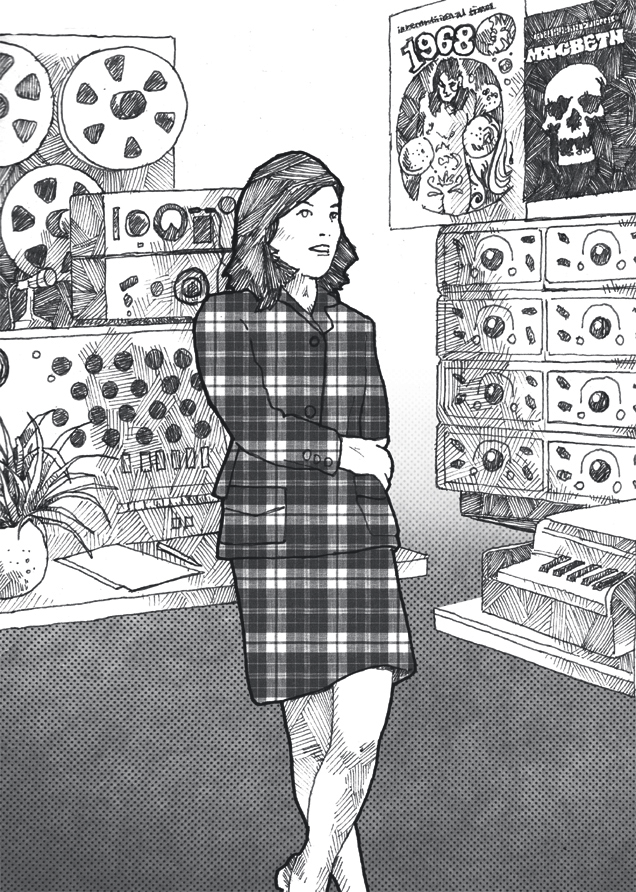
The label became a bedrock for perhaps Alan’s most ambitious project to date: The Delaware Road. This delightful tangle of multi-media fiction follows the story of two 1960s musicians – clearly based on John Baker and Delia Derbyshire – who become embroiled in a dark melange of psychedelic drugs and Orwellian authoritarianism. What began as a series of graphic novels with accompanying electronic soundtracks soon spiralled into a book and a tryptych of infamous live events in some outrageously unlikely venues.
“Going back to the rave scene, it was always a buzz when you arrived at a secret location or an illegal venue,” explains Alan. “So I knew I didn’t want The Delaware Road to be a traditional gig or theatre piece. We first presented it at the South Street Arts Centre in Reading and that was a blast, but I wanted to try something different. My dad’s side of the family are from Ongar in Essex, and when I said I wanted to put on a gig somewhere unusual he said “Well, I was down a nuclear bunker over there last month with your Uncle Terry!’”
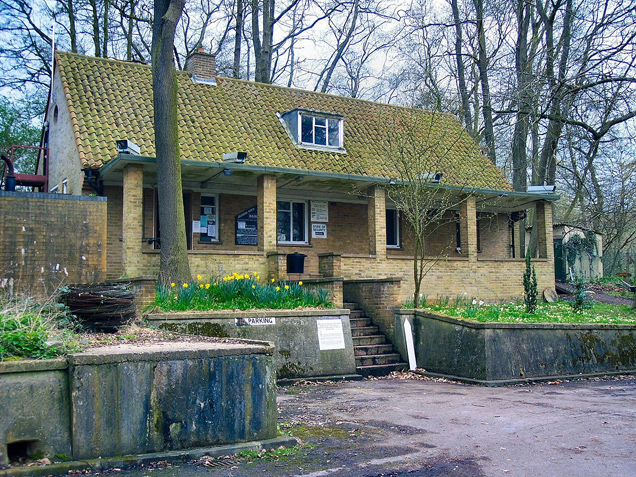
He laughs, and we share our memories of the extraordinary 2017 Delaware Road event at Kelvedon Hatch bunker. Memories of The Twelve Hour Foundation setting up reel-to-reel tape machines in an underground labyrinth once intended to shelter Margaret Thatcher’s government in the event of a nuclear war, and of performance artist David “Dolly Dolly” Yates reading Churchillian monologues in a concrete anteroom while snooker legend Steve Davis nodded blissfully in the front row.
“I know!” laughs Alan. “I still pinch myself about it.”
In 2019, the experiment went even further. The third Delaware Road event brought Penny Rimbaud, Polypores, Sarah Angliss, Lone Taxidermist and a legion of similarly-minded experimentalists to perform in a remote complex of army buildings on Salisbury Plain. All weekend, a fleet of double-decker buses transported revellers back and forth to the deserted village of Imber, requisitioned by the Ministry of Defence in 1943 and used for eerie target practice ever since.
Alan – what the actual fuck?
“That came from another family link,” he smiles. “My brother has a connection to some MoD sites, and he told me the army was opening up Salisbury Plain for movie filming – they’d recently shot 1917 there. I thought ‘Why hasn’t anyone done a live event there?’ And the answer was simply because nobody else had made the phone call. So I did.”
What I loved about these events, I tell him, was the blurring of the lines between fiction and reality. On Salisbury Plain, I attended what was advertised as an occult midnight ceremony in the woods. Halfway through, as I drank from a chalice of ceremonial wine, I became suddenly unsure whether I was contributing to a piece of immersive theatre or becoming an actual practising Wiccan.
“That was held by Geraldine Hudson, a respected occult artist,” says Alan. “So yes, you were part of something real. I definitely wanted to create the feeling of going through a portal. And for me, the best bits are when strange things happen that aren’t an explicit part of the performance. When you suddenly realise that Chris Lambert’s green-faced pagan mummers are walking alongside you in the crowd, and you’re not 100% sure what they’re up to.”
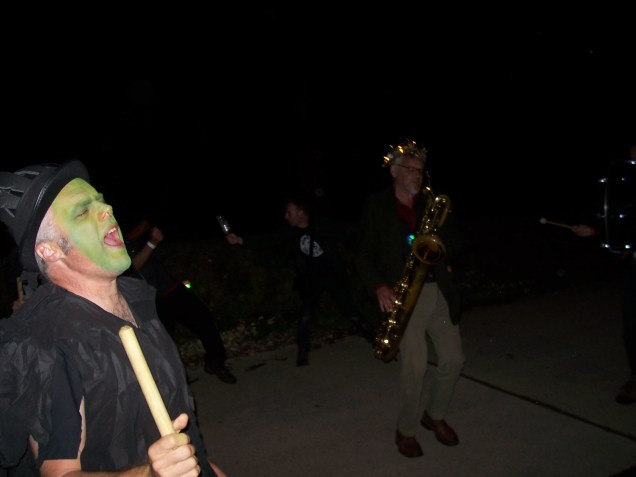
What’s his relationship with authority like, I wonder? It’s a theme explored in lots of his work, from the sinister “Corporation” of The Delaware Road to the political undertones of his own psychedelic jazz collective, Revbjelde. Even the event on Salisbury Plain – at the heart of the British military establishment – was playfully subtitled Ritual and Resistance.
He pauses.
“God, you’ve thrown me a bit,” he admits. “The Delaware Road is absolutely about the clash between authority and subversion. And I think we’re seeing that clash continually now, with the rise of extremism in America and Europe. I honestly don’t think the people in control give a fuck whether you’re woke or you’re a fascist, left or right – what they care about is never letting go of power, and they will do anything required across the political spectrum to manipulate you.
“So although what I do on the label isn’t overtly political, it’s been difficult to stay silent about all the insane powerplays we’ve seen unfolding recently.”
The explorations continue. Alongside the soundtracks of Sky and The Shout, the 2025 Buried Treasure schedule include new albums by Revbjelde and Tim Hill, an expanded version of Dorothy Moskowitz and Retep Folo’s 2024 opus The Afterlife and the soundtrack from haunting 1976 film Requiem For A Village. He’s writing a second novel too, set in Victorian Cornwall and exploring the effects of over-industrialisation.
The weather might still be shitty, but despite his protests at the beginning of our conversation, surely Alan Gubby’s enthusiasm has never really waned? He’s smiling warmly.
“Yeah, I’m just quietly doing my thing,” he insists. “Digging around, unearthing a few Holy Grails, getting to visit interesting places and working with some really inspiring people. Who could ask for anything more?”
The Buried Treasure back catalogue is here:
https://buriedtreasure.bandcamp.com/music
Alan Gubby on The Delaware Road:
https://hauntedgeneration.co.uk/2023/05/15/alan-gubby-and-the-delaware-road/
Support the Haunted Generation website with a Ko-fi donation… thanks!
https://ko-fi.com/hauntedgen

