Heat hazes shimmer above melting tarmac. The half-heard chimes of never-seen ice cream vans echo across deserted school playgrounds. Tepid chips are sprinkled liberally with sand, and the grumbling clouds of the approaching school term gather ominously above the fading remains of the six-week holiday.
Childhood summertimes always seemed to boast a quality of vague, sweat-soaked surrealism, and the feelings are captured perfectly in Lost in the Garden, a hugely enjoyable debut novel by writer Adam S Leslie.
Adam takes these memories into somewhat darker territory. In some timeless parallel universe England, the seasons have stopped turning: the country has spent years paralysed in an unrelenting eternal summer. Crops are rotting in the fields and the dead have inexplicably risen from their graves, roaming towns and woodland in a daze of violent confusion. Amid this forbidding torpor, three young women set off on a dangerous road trip to visit the mysterious, forbidden village of Almanby.
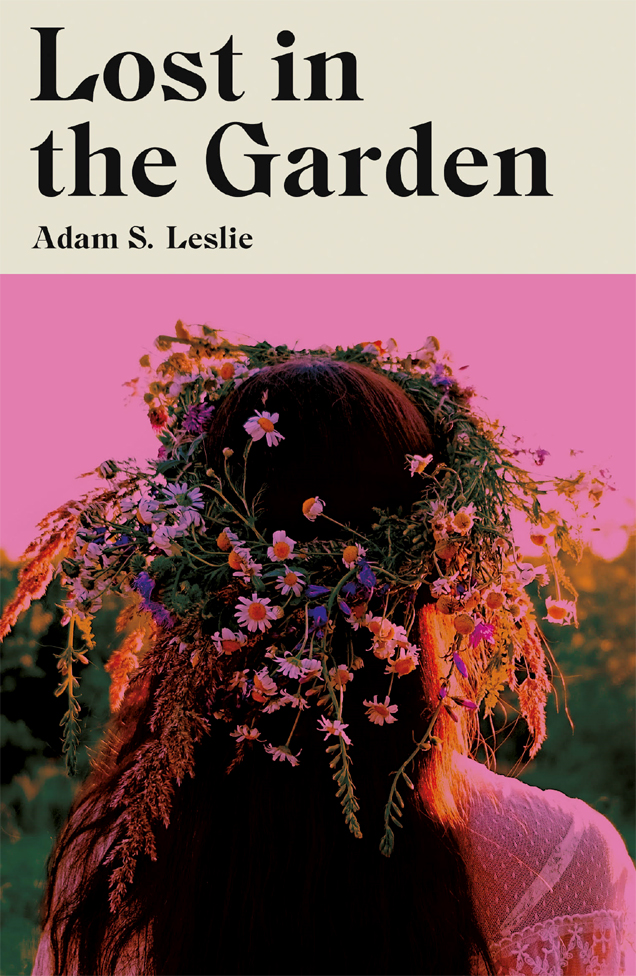
On a mercifully overcast Friday morning, I sat down with Adam to discuss the book’s themes and conception, along with inspirations that range from Day of the Triffids to John Cleese’s Clockwise. Here’s how the conversation went:
Bob: You’ve described Lost in the Garden as “summer hauntology”, which I think is a slightly unexplored area. Lots of the spooky stuff we love belongs firmly to the dark nights of autumn and winter, but I’ve always thought really hot days also have a strange, almost hallucinogenic quality to them. Was that the feel you were aiming for in the book?
Adam: Yes, I think so. Especially as hot days seem to last three times longer than regular days! And in childhood, they lasted three times longer than that. So it’s deliberate, in the book, that the main characters seem to be driving for hours, but then it’s still only mid-afternoon when they arrive at their destination. It’s one of those long summers days when you can cram a whole adventure into one day.
And yes, there’s definitely a hallucinogenic quality to hot days. Even down to the heat haze, that mirage, that little wobble over everything – it’s literally hallucinatory. This adventure isn’t taking place in the characters’ childhood, they’re all grown-ups, but I tried to give it the feel of that summer holiday period. Those six weeks were always such an emotionally intense time. You really had to make the most of them, clinging onto every moment and fighting the passage of time before you went go back to school.
I was lucky enough to grow up deep in the countryside, so could spend those weeks roaming the fields and woodlands and playing with my friends. It’s a very evocative time, even if it isn’t spooky in the same way as autumn or winter. Or even spring, with The Wicker Man and all those Folk Horror stories!
You still give quite a sinister feel to some traditional summery sights and sounds in the book. Summed up perfectly by the chimes of distant ice cream vans that are only ever heard, never seen…
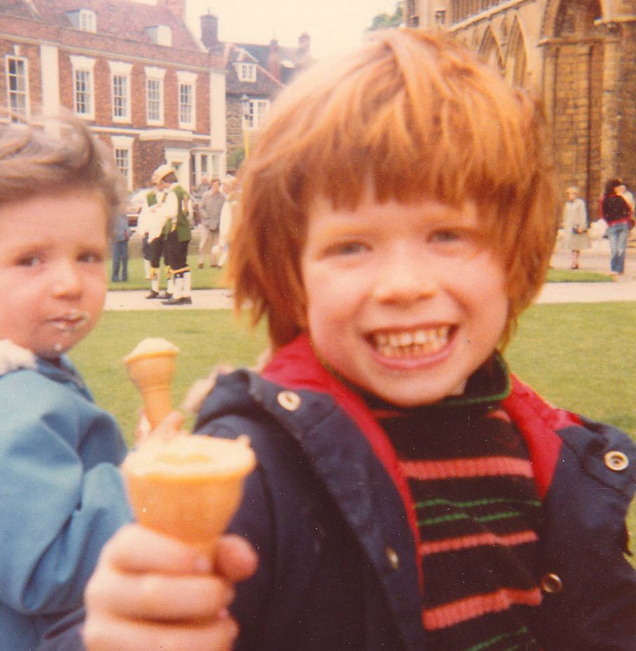
Yeah, the chimes are the call to action for children, aren’t they? “Quick, it’s the ice cream man!” Then you had to get your shoes on and beg your parents for money. I went to Middlesbrough Art College to study film in the 1990s, and I could always hear an ice cream van playing ‘Popeye the Sailor Man’. But for months, I never, ever saw it. And I was hoping I never would! When I finally did, I was a bit disappointed – I was hoping it would be some kind of phantom ice cream van, but it was just a bit grotty and ordinary.
So when did all of these disparate ideas begin to coalesce into a novel?
The book actually started life as a film script – I’ve been writing this story for thirty years! Which means that a lot of the themes, about young people thinking how strange it will be to be middle-aged, are authentic. I was about 18 when I was coming up with the ideas for it, just as I was realising that film was my medium… but that, also, I could never be a film director because I have absolutely no assertiveness.
So it was much better to stretch my legs out and make it into a proper novel where I could actually explore the themes and the environment a bit more. A lot of it was inspired by a book called Fantastic Cinema, by Peter Nicholls. I would read about films that I hadn’t seen and imagine what they might be like. Celine and Julie Go Boating really captured my imagination, just from his description of it. And then, when I did see it years later, it was nothing how I imagined! I really like it, it’s one of my favourite films, but it was nothing like I thought it would be. So Lost in the Garden is more how I imagined it.
I can’t remember huge amounts of mainstream Folk Horror being around in the early 1990s. Were you ploughing a lone furrow at the time?
I’d like to think I was, although the book is probably more Folk Horror now than it was at the time. I’m reluctant to dissect it too much, but a lot of the story elements in the final third of the book are more recent. I started off with the idea of three friends going on a car journey, and there being ghosts wandering around the countryside. Ghosts that, as many people have guessed, were originally intended to be zombies. But it occurred to me that zombies have a lot of cinema baggage, whereas ghosts feel more literary.
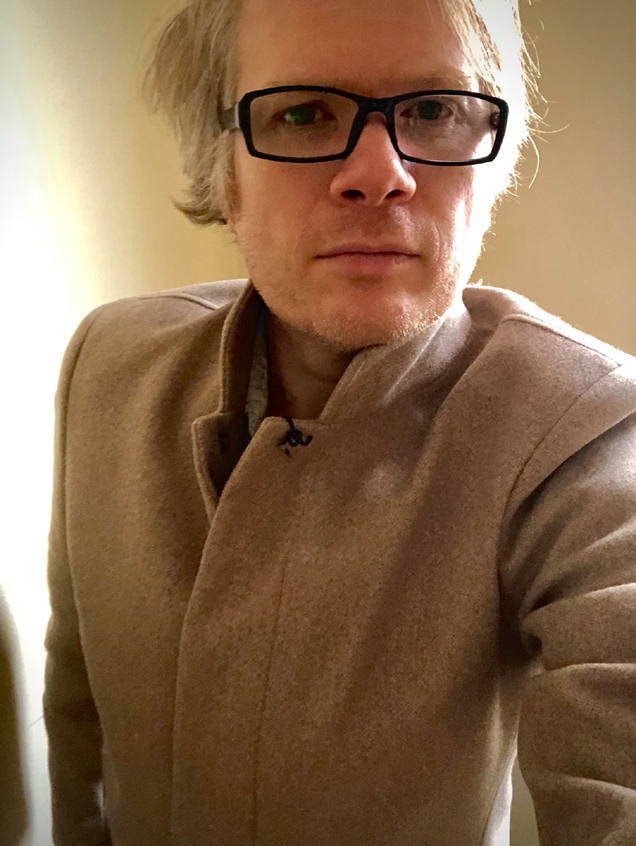
They’re corporeal ghosts though, aren’t they? They’re not wafty spirits – they’ll give you a good hiding if you get too close.
Yes, I think in Scandinavian folklore there are physical ghosts that like brawling! I always thought it was a shame that the zombies in zombie films are usually just there for the laughs, or for the splatter element. And it struck me that having actual dead people wandering around could be really quite eerie.
Yes, that’s the key to the creepiness of the ghosts in Lost in the Garden – they’re recognisable, real people. Your late Auntie Margaret is shambling down the street looking confused.
Yeah, if you see your old recorder teacher wandering across your garden in a bit of a daze – that’s probably quite eerie! I’ve read a review of the book where somebody complained that it was a zombie apocalypse, but that no-one was reacting like it was a zombie apocalypse. But that was kind of the point – it’s not a zombie apocalypse.
That’s what I liked. Despite this bizarre situation, people are just bumbling about trying to do everyday, normal things and not panicking. It reminded me slightly of the atmosphere of very early lockdown – people didn’t run screaming into the street, we just got on with things in a new way. And I think it would be same if the dead returned from their graves! We’d just shrug our shoulders and say “No need to barricade the doors, just carry on life with as normal and keep away from them, we’ll be fine”.
There would be stubborn people saying “I’m not staying indoors for anyone!” Then they’d just go outside and get eaten.
As indeed sometimes happens in the book!
Yes! There probably was a bit of influence from that period because revisiting this story was my lockdown project. I’m nothing if not a cliche – I wrote my novel during lockdown. It was a film script until then, with all the elements in place, but in the telling I think it was unconsciously – if not consciously – influenced by lockdown. Especially by the people who decided to go outdoors anyway. Actually, I think that was probably very conscious.
So talk us through your three protagonists, please…
There are three main characters. Three women who are friends, but not in a full triangle: one of them is a mutual friend of the other two. So there’s Heather, who some people have found intolerably annoying…
I didn’t!
I think it depends how straight or zany you’re playing her in your mind as you’re reading it. If you’re leaning into her actions and dialogue and she’s becoming really wacky in your mind, she’s possibly quite grating. But I see her more as a bit arch. She’s a loose cannon, madly in love with her on-off boyfriend Steven, who is a bit lukewarm on her. She’s quite eccentric anyway, but she plays up the manic pixie dream girl character to impress him. She has this obsession with never growing up and staying seven years old forever, so she’s playing on that and trying to impress on him how fun and buoyant she is.
So she and Steven have an on-off thing, but one day he announces that he has to travel to the village of Almanby, without saying why. He says he has to go for three weeks, but this is a village that they’ve been warned throughout their childhoods never to visit. Don’t talk to strangers, don’t play on the farm, look both ways before you cross the road and never go to Almanby! But nobody has ever said why.
Six months later, he hasn’t returned and nobody has heard anything from him. Apart from his voice, which can occasionally be heard drifting from a shortwave radio, just rambling nonsensical sentences. Which I’ll say at this point are genuine hypnagogia…
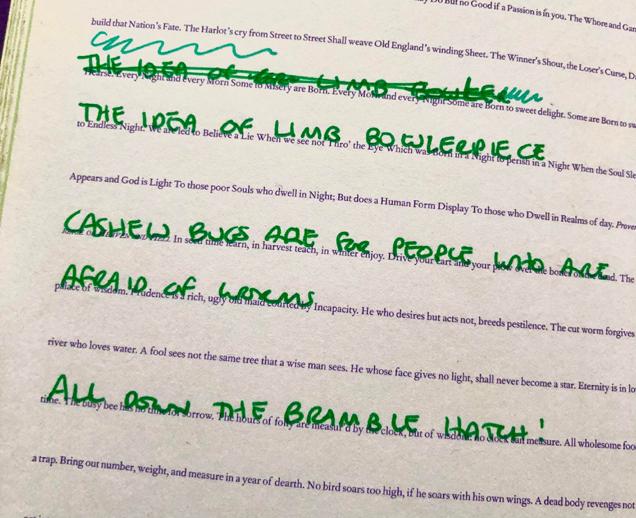
Oh wow! Your own, I assume? Do you keep a notebook at the side of the bed?
Yes. Both me and my friend Peter egg each other on. We go on surreal trains of thought when we’re half asleep, think “Hang on, that’s a brilliant piece of nonsense!” and then write it down. So all of the ramblings coming out of the radio are real.
Anyway, Heather is kind of reverse-egged into going to Almanby by her friend Rachel, who announces that she has a package she has to deliver there. She refuses to say what’s inside the package, just that she has a friend called Oscar who lives in Almanby, and that she’s taking it to him. Rachel is a wheeler-dealer and has a finger in every pie – she probably has no real friends, but everyone is a contact. Heather wants to find Steven, so she agrees to come, and their mutual friend Antonia is roped into it, too.
Antonia is the local stand-up comedian who plays to increasingly dwindling audiences in the village hall. She hates every moment of being a comedian because she’s terribly shy and anxious, but she has an enormous crush on Heather. And she’s the only driver out of the three, so she’s roped into driving to Almanby. She really doesn’t want to go at all, because she knows that if Rachel is involved it’s probably going to be something awful and highly illegal, but she knows that Heather is going. And she’d be too shy and anxious to hang out with Heather under normal circumstances.
So they all head off together….
Given that you started writing this at art college, were any of these characters inspired by your fellow 1990s students?
They were more inspired by people I knew at school. They’re a mish-mash. I’m closest to being Antonia, even though I’m not a mixed race woman who works as a stand-up comedian! But in terms of that social awkwardness, she’s my author surrogate character.
I’m Heather, I think. Intolerably annoying.
Ha! Heather is the character I’d like to be. I don’t look at my negative reviews and obsess over them or anything, but a couple of them have said they didn’t understand why Antonia would have such a crush on Heather. But Heather is everything Antonia wishes she could be.
Stop reading your reviews, Adam. They’ll drive you up the wall.
It doesn’t bother me that much, lots of people have written really nice things as well!
You’ve mentioned your rural upbringing. Where exactly did you grow up?
Lincolnshire. The Grantham area. Or, to put it in a Folk Horror context, about two miles outside Moondial! We’d drive past Belton House all the time on the way into town.
Had you read the Moondial book at that point?
No, I’d just seen the TV adaptation. Which was really weird, because living that deep in the countryside nothing like thatever happened. You never saw famous people – Richard Todd was local, but I never really knew who he was when my Mum spotted him! If you lived in London then I’m sure you were always seeing film shoots and famous people wandering around – someone was always climbing Nelson’s Column. But Moondial was a big deal for us.
It sounds like a pretty idyllic childhood.
It was, actually. When you look back at the 1980s now, it looks horrible – all those riots and strikes and catastrophes. But for us, that was all just on the telly in the corner of the room. We were once warned about a naked man driving around in a car, but other than that, nothing really happened…
So was Almanby based on any of your local villages?
It’s an amalgam of different places. Partly Hough-on-the-Hill… which, as the name suggests, is one of the few raised areas of Lincolnshire! It’s also partly based on Sherington in Buckinghamshire, which is where my parents currently live.
But I think Lincolnshire was an interesting place to grow up because you’d be familiar with lots of the village names without necessarily going to any of them. You’d see the road signs pointing to these places, and it would almost become like psychogeography. So I’d know that Syston was that way and Manthorpe was that way – but even though I was very familiar with the names, I had no reason to go to these places.
It’s like that aspect of the original Star Wars trilogy – they were always mentioning other places that we’d never see or find out about!
Oh, I loved that. When Luke mentions in the first film that he wants to go to Tosche Station, in Anchorhead… that kind of stuff completely fired my imagination.
It’s a really evocative name, isn’t it? That and Ord Mantell, where they ran into a bounty hunter! There’s a whole Star Wars environment that we’ve never seen. Resent is a strong word, but I really dislike the fan impulse to fill in all in the details, so that every monster in the cantina now has a name and a back story and they’re all somehow connected. It really shrinks that universe. If Darth Vader really did build C3PO, then George Lucas himself was just writing fan fiction.
I always think there should be a scene in The Empire Strikes Back where Darth Vader says “Hang on – is that the bloody robot I built when I was a kid?” Yeah, I’m not buying into that either. C3PO is just a passing droid who gets sucked into the story – I actually think it’s much more effective if these huge, cosmic events are drawing in ordinary, random people who have to step up to the plate and deal with them.
Yeah! I mean, did Chewbacca really know Yoda? It applies to Doctor Who as well. I like The Doctor best when he’s just some guy – he’s Columbo, not Jesus. And we don’t need to know about Columbo’s life, do we? We don’t want to go to his house and meet Mrs Columbo. We just want to see him being very clever and solving problems.
This ties into something I really liked about Lost in the Garden – the fact that so much of the weirdness remains completely unexplained. We never really find out why the dead have returned or the summer is lasting forever, because that stuff is unimportant to the story – it’s more about how people are dealing with these things. These days, I find I’m much more interested in the atmosphere and “feel” of a book or a film rather than actual linear plot. I’ve had enough of plots. I’ve seen enough plots to last me a lifetime.
There are only so many times you can reveal everyone was dead the whole time! [Laughs]
I remember waiting for the school bus the morning after the film Duel was shown on TV, and some of the kids were saying “But you never found out who the driver was!” But other than it being another Dennis Weaver, who – as the truck driver – could possibly have provided a satisfying pay-off? If it had just been some bloke, some random trucker or cowboy, that would have been very disappointing.
I think one of the most potent things you can do while telling a story is say “This bit is up to you to imagine”.
Yes, I think so.
And you do it really well in the book. And not just with the return of the dead. You know, why have the seasons stopped turning and it’s suddenly a baking hot summer all the time? We don’t know.
Yes, on the other side of the coin – and I’ll try not to keep referring to the reviews I’ve had – somebody else, a few chapters in, said they were enjoying it but also dreading the thought that everything might be explained in the end, expecting there would be some kind of mathematical A-B-C resolution. “This is why everything has slightly changed…”
Fear not, dear reader!
Luckily that ambiguous approach does appeal to some readers. One of the films that had a really early effect on me was 2001: A Space Odyssey, which I must have seen when I was about eight or nine. And I think it rewired my brain a bit. I liked it even more before I had any notion that it was about a superior alien race changing the course of human history using black monoliths – I just liked that fact that it was about this particular sequence of events, and that’s all it seemed to be. It absolutely blew my mind.
If everything is resolved, you don’t have to think about it any more. You’re finished with that particular film or book or TV show, it’s over. Whereas I like having to think about these things for days or even weeks afterwards. One of my favourite recent films is Enys Men. And I’m still not entirely certain how the different elements fit together, but it’s been wonderful trying to solve the puzzle in my head.
Yeah, I think providing you know you’re not supposed to have any idea of what’s happening, that’s great! If it’s an intense thriller and you’re completely lost, that’s not so good…
No, I’m talking about deliberate ambiguity, not bad writing!
Yes, evoking the dream state really appeals to me.
I was going to mention that Lost In the Garden seems to operate on a kind of dream logic. It feels very much like a nightmare on a hot summer’s night.
Absolutely. I’ve been endlessly frustrated when films don’t evoke dreams very well. Inception? That’s not a dream, that’s just different levels of a computer game. When you’re dreaming, although you might wake up in the morning and snap straight back into normal everyday life, you’ve still been through these really intense and emotional experiences. You’ve met someone who has died, or you’re seeing the end of the world, or you’ve murdered someone and are in terrible trouble.
I’m usually having to re-sit my A-Levels completely naked.
Yes, that kind of thing! You’re working out anxieties and intense feelings, it’s not just a load of weird images with dry ice.
There’s very distinctive dream world, isn’t there? I find it hard to read things in dreams. If I come across a road sign, then the letters will be scrambled. Or they won’t be traditional lettering that I can understand – they’ll be more like the Cyrillic alphabet. And they’ll morph and change around as I’m trying to read them.
Yes, like the lettering on AI photos?
Yes, exactly that! I actually made a note to discuss AI photos with you, but I thought that if I said AI artwork has a really interesting, dream-like quality then I’d just get people on social media telling me angrily that “AI PHOTOGRAPHS HAVE NO REDEEMING QUALITIES WHATSOEVER”. But they are absolutely like dreams! The letters are all wrong, and the proportions of everything are out of kilter.
I don’t know if you’ve seen them, but there’s a series of AI photographs that look like a seaside fete with people dressed in 1970s clothes while they interact with sea-monsters. They’re really dreamlike.
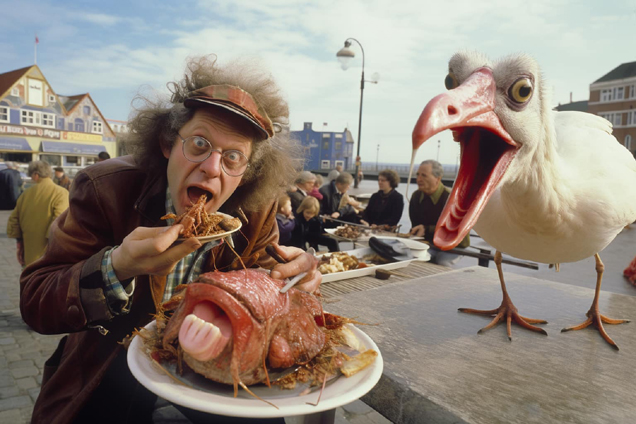
(Image created by Alan Livie and posted to the ‘Cursed AI’ Facebook page)
My friend Peter and I became obsessed with interacting with our dreams. He trained himself to become lucid when he was dreaming, and he was able to study all the details. We became fascinated with dreams being these specific worlds that we could explore, and he used to write up his dreams in a book – they started off as two paragraphs, but as he got better at remembering them he started writing pages and pages! He would try to taste things or smell things in his dreams, seeing how far he could push the whole experience.
So there will be some authentic dream things in Lost in the Garden. One that I’d completely forgotten about – you know the Facebook Memories thing, where it pops up and says “Three years ago you posted this”? It told me that I’d once posted about a dream I’d had, about a cartoon series called Sock Draw, with sock puppets that were hand-drawn. I’d already put that in Lost in the Garden and thought I’d just written a funny joke, but the whole thing had actually been fully formed in a dream years earlier.
When I was about fifteen, I had a recurring character in my dreams – a girlfriend, which I certainly didn’t have in real life at the time! She didn’t exist at all, but we went on lots of dates in my dreams. She was called Elesse, which I think was actually a brand of stationary, so now I now wonder if my unconscious mind saw that name on a box in a cupboard at school.
Did she always look the same? The same person every time?
Yeah, she was an Irish girl with dark hair. And the dreams were always really mundane, we’d just be going shopping for second-hand records in Middlesbrough town centre and then we’d get some chips. That was it.
That’s quite nice!
I think it’s just a sign of how unimaginative I was as a teenager. Or a boyfriend, and it’s possible very little has changed in that respect.
Anyway, speaking of AI – Lost in the Garden has the 1970s equivalent! Shortwave radio signals picked up on little transistor sets. I’m guessing, like me, you spent hours as a kid fiddling with the radio dial and trying to decipher the little snippets of music, foreign language stations and police communications? It all mish-mashed together, it was such an evocative sound.
Yeah, particularly when you were half-tuned into a voice and it would have a robotic, metallic quality that sounded like a ghost talking to you. It was all absolutely mysterious, and the air was filled with this stuff – the radio was a piece of equipment you could use to hear what the air was like! Especially at night. The night air was filled with weird noises and voices and bits of music floating around, and you could pick them all up.
Then you’d hear the Numbers Stations, and ‘The Lincolnshire Poacher’…
I never heard that in the North-east. There was clearly nothing worth spying on up here.
I think I heard it. Unless that’s a false memory, and I’ve just been convinced by hearing it lots of times since then.
All this stuff has clearly fed into your writing style. What’s your background as a writer?
I’ve had a screenwriting agent for about ten years, but I keep missing out on getting stuff actually made. So I have a lot of experience as a screenwriter without ever having being paid for it! But I did have a meeting with some people in Hollywood last night, so fingers crossed things are getting somewhere. It just takes ages.
So this is effectively and officially my first novel, but it’s not the first one I’ve written. I’ve written five or six. Which means I’ve got a bit of a backlog, so I don’t have to worry about spending a lot of time on the next one! [Laughs]
Yes, just put one of the old ones out. This is a terribly cliched question, but I never shy away from cliches.. as a writer, where do your literary influences come from? There are clear hints of John Wyndham in Lost in the Garden: a strange English village, where dark things are happening and malevolent beasties are wandering around the countryside…
Yes, if we’re talking rewiring my brain, then seeing Day of the Triffids on TV in 1981 did that to me. Not because it was especially scary, but the thing that really gave me weird dreams was just seeing the Triffids in people’s gardens, hiding behind the hedgerows.
That clash between the very ordinary and the terrifyingly fantastical is incredibly potent, isn’t it?
Yeah, I watched it again recently and there’ll be someone working in their garden while a Triffid peers over the hedge from next door. And you can imagine that actually happening. It’s not World War Z, where everything is so big and spectacular that it’s clearly a movie and you can’t really imagine being part of it. When you’re seven and growing up in the countryside, you can absolutely imagine being out with your dad and seeing a killer plant looking over the hedge!
And I was fascinated by the fact that the Triffids moved so slowly. You should be able to get out of the way of a Triffid quite easily, just keep your wits about you and you’ll be fine. But that lures you into being complacent.
So in terms of influence, are we talking more TV and films than literary sources? I’ve seen you talk about Tarkovsky’s Stalker as well. And, oddly, the John Cleese film, Clockwise…
Yes! I think it’s the last great John Cleese project. I never really liked A Fish Called Wanda – I think it’s trying to appeal to an American audience, which is valid, but I like how unashamedly English Clockwise feels. I’ve heard people say that it’s basically Basil Fawlty in a car, but I think Cleese’s character in Clockwise – Brian Stimpson – is quite a different personality. Basil Fawlty will explode at the slightest provocation, whereas Stimpson is trying very hard to keep a lid on things.
He’s quite a sympathetic character, isn’t he?
He is, and when the other characters start to panic, he says “No, it’ll be fine!” because he’s a headmaster. So yes, it’s all a combination of Stalker, Clockwise and Jean-Luc Godard’s Weekend.
I’ve seen you talk about Alan Garner’s The Owl Service, too – again, I think more the TV series than the book?
Yeah, I didn’t read the book when I was little. It was Elidor that really gripped me – although the main protagonist is called Roland, and I could only picture Roland Browning from Grange Hill! So I struggled with that, but the TV adaptation of The Owl Service is something I’ve seen more recently and it was a definite influence on the book. It’s so… not for children! It’s very unsettling and strange and really dark.
It’s another hallucinogenic summertime story as well. The air is clearly thick and baking hot, and everyone is swanning around in sweaty, clinging shirts – which only adds to the air of simmering sexual tension.
Yeah, there’s Roger going around in his unflattering shorts and nothing else! The character is meant to be 16, but the actor is clearly about 26.
Gillian Hills was pushing thirty, I think. She’d been acting since the 1950s.
If they were actual teenagers, that kind of smouldering, awkward sexuality wouldn’t seem so full-on. But because they’re all clearly in their late twenties, it’s a bit much. I mean… I say! [Laughs]
Again though, I love the ambiguity of the story. Even moreso in the TV adaptation. It actually has a narrated recap at the start each episode that explains things that don’t seem to have been shown onscreen!
I thought that was just me! But I think it’s mentioned in the Scarred For Life book as well. “I don’t remember that bit…” [Laughs]. There’s a nice oddness about the fact that the recaps are apparently unrelated to what’s actually happening onscreen. It’s a really well-made show. The characters are colour-coded as well, aren’t they? Roger is always in green, Gwyn is always black.
Yes, I’d forgotten about that. Don’t they represent the wiring of an electrical plug, as it would have been in the 1960s? Roger is “Earth”, Gwyn is “Neutral” and Alison is “Live”. So Gillian Hills is always in red.
Yes! There’s a scene where they’re talking around the pool table, and Roger is holding the green ball while Alison is playing with the red. There are so many subtle details. It’s like a feature film.
So yes, this was all part of a moment in my life when I realised films weren’t just 1980s blockbusters. And that there was a layer of really interesting indie and art cinema below the surface – people like Tarkovsky and all the French New Wave directors. All of these other textures to explore, rather than just Ghostbusters and Top Gun. Both of which I’m fine with as well!
And what about your own writing? Are you working on anything at the moment?
I am, yeah. I’m close to finishing what I hope is the next book, a twisty-turny political thriller set in a fascist near-future… So something a little bit different!
So I’m always on the go, and I’m hoping there’ll be something else along before too long.
Lost in the Garden is available from Dead Ink Books:
https://deadinkbooks.com/product/lost-in-the-garden/
Support the Haunted Generation website with a Ko-fi donation… thanks!
https://ko-fi.com/hauntedgen
 The Haunted Generation
Thanks Bob. Great interview as usual.
Have just ordered Adam’s book, sounds like my cup of tea!
LikeLike
Thankyou – hope you enjoy the book!
LikeLike
I had to stop reading this early on and order the book before I knew too much about it. Great interview. Well, the bit I read. I’ll be back when I’ve finished the book.
LikeLike