“Whatever happened to those heroes?”
The nature of traditional heroism – and the consequences of deploying it in grimy, post-punk Britain – is at the heart of this gritty, violent novel. In a shabby, early 1980s London comprehensive school, fifth former Tim Morgan is drifting into delinquency. Surrounded by a gaggle of rough and ready acquaintances (Mundy, Stewrag, Johnny Smirkface et al…) he runs a tawdry racket, inexplicably finding a black market for luminous exercise book labels purloined from his mother’s workplace. Proof, if any were needed, that 1980s kids would buy any old rubbish – this was, lest we forget, an era when ‘Capstick Comes Home’ reached No 3 in the UK singles chart.
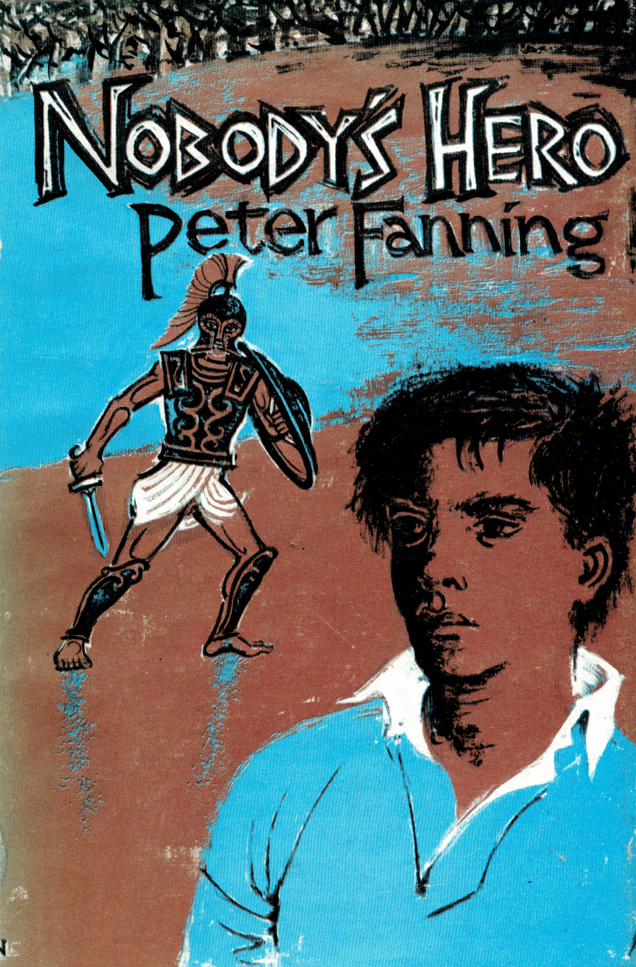
At home, Tim’s life is stultifyingly dull, and emotional welfare is at a premium. His sailor father is back on leave, but – as his mother casually discloses one rainy evening – “he ain’t coming home”. She barely puts down her Evening Standard to drop this domestic bombshell, and Tim skulks upstairs to indulge in what becomes a regular outlet for his pent-up frustrations – aggressively throwing his boots at a poster of Scarface pinned to his bedroom wall. And the ultimate insult? Even Tim’s luminous labels get pinched, the outcome of a furtive raid on his school locker that also results in the disembowelling of his favourite pencil case and the destruction of his French textbooks. Oh, well… c’est la vie.
Pissed off, lonely and – most of all – floundering for a role model, Tim finds salvation from a decidedly unlikely source. Sensing intelligence beneath the teenage bluster, antediluvian history teacher Mr Rook lends Tim an ancient, tattered hardback – presumably The Iliad – filled with the fables of Greek mythology. At first resentful of Rook’s kindness (“Boy, it was pathetic”), he nevertheless becomes intrigued – initially by the levels of gore and violence in the book (“One bloke got a spear straight through his buttocks”) but also, increasingly, by the ideals of Greek heroism. In particular, he identifies with Hector, the noble Trojan warrior who attempts to negotiate his way out of bloody conflict but is slaughtered by a vengeful Achilles.
Tim’s interest in the stories is clearly laudable, and at first he finds them inspirational – they spur him to perform his own heroics in a school rugby match against boorish local rivals, Rivers End. Scoring the winning try in the last seconds, Tim is mobbed by teammates and teachers alike, and feels the giddy rush of victory: “This is it. This is life, straight up… this hero bit”. It’s an affecting moment. But it comes with a bitter aftertaste: fired up by this fleeting taste of sporting glory, Tim begins to apply the straightforward morals of Ancient Greek combat to his everyday 1980s life. And for all the valour in these ancient tales, there is merciless vengeance, too – a factor Tim misguidedly applies to appalling ends when he becomes convinced that his meek, penniless classmate Stewrag is the thief behind the Great Luminous Label Robbery. In a shocking scene in the local park, Tim rallies his own army to administer a vile, brutal beating to the defenceless Stewrag, a vicious assault that leaves the ill-starred school “weirdo” requiring hospital treatment for a fractured skull.
Lovers of early 1980s bleakness and the “‘Fatcher’s Britain” school of youth fiction while find utter joy in the tiny details of grotty, Grange Hill-style school life. By day, author Peter Fanning was an English and Drama teacher at a genuine West London comprehensive, and he clearly pours his experiences into the minutiae of Nobody’s Hero. His description of the school changing rooms alone requires a Trigger Warning for anyone still traumatised by memories of sarcastic PE teachers and frozen rugby pitches flecked with jagged shards of broken ice. “Before you go out, it’s a damp, grassy smell, all whiffy and fresh… but afterwards it smells quite different. All sweaty bodies and steaming showers”. Elsewhere (on the opening page, in fact – there’s nothing like setting your stall out early) Tim wretches nauseously at the foul taste of a “snotrag” being forcefully pushed into his mouth. Boys, eh?
But the most affecting scene, for me at least, is perhaps the book’s most subtle depiction of the bleakness of the era. The coolest kid in the neighbourhood is Rick Burton, Tim’s sister’s on-off boyfriend. A year or two out of school, he’s “the biggest Flash Harry since John Travolta”, resplendent in his brown leather jacket with an obligatory gold medallion nestling amid a tangled thatch of chest hair. We all knew – and, indeed, hero-worshipped – a Rick Burton. But when Tim seeks out this strutting Scaramouche to regale him with tales of his new-found valour and zeal, he finds his idol grey-faced and monosyllabic, now a beaten man. Ostensibly after a bust-up with the aforementioned Cyndi, but there’s a clear undercurrent of early 1980s hopelessness, too. The Former King of the Fifth Form is now drifting aimlessly, staring into the filthy Thames with “eyes as bright as a London fog”.
“No more heroes any more…”
So is there any optimism to be found amid this tidal wave of inner city misery? Thankfully, yes. With the morality of mythological Greek vengeance clearly not entirely appropriate for the fifth form corridors (as Mr Rook puts it in a late pep talk to Tim, “Where do you stop?”), the repercussions of Stewrag’s beating begin to ripple and unfurl, and there are inevitable sidesteps into the youth justice system. But, between the trauma and the violence, there are hints that Tim is becoming drawn to what would now be called mindfulness. His increasing fascination with the immersive joy of a small boy constantly flying a kite on the park’s distant horizon suggests that salvation may, ultimately, be found in the tiny pleasures of a life he has always found so stultifying. And, indeed, an accompanying realisation that the Ancient Greeks found beauty in art, philosophy and academia as well as vengeful combat. It’s a moment of touching tenderness in a book that is brilliantly and unflinchingly uncompromising.
MUSTINESS RATING: 2/10. My 1981 hardback copy of Nobody’s Hero is unmarked, unfaded and smells as fresh as a spring morning on the slopes of Mount Olympus. I bought it for £6.60 on a recent visit to the extraordinary Barter Books in Alnwick, a place well worth a visit if you’re ever passing through Northumberland on your way to the Elysian Fields.
Help support the Haunted Generation website with a Ko-fi donation… thanks!
https://ko-fi.com/hauntedgen
 The Haunted Generation
“His increasing fascination with the immersive joy of a small boy constantly flying a kite on the park’s distant horizon suggests that salvation may, ultimately, be found in the tiny pleasures of a life he has always found so stultifying”
That has very strong echoes of the last chapter of A Clockwork Orange, where after everything, Alex runs into an an old droog, now with a wife and child, and muses on the kind of contentment such things might bring.
LikeLiked by 3 people
Good primer. We had this book recommended by an English teacher, and she touched upon the issues you highlight. Sadly, none of us took up her recommendation.
Your summary of the mob justice beating of Stewrag puts me in mind of the events in ‘The Lord of the Flies’. But in that story the slide into bestial anarchy is largely unchecked. Perhaps by the end of ‘Nobody’s Hero’, Tim begins to exhibit some of poor old Piggy’s empathy and insight.
LikeLiked by 2 people