(First published in Issue 99 of Electronic Sound magazine, March 2023)
STRINGS ATTACHED
Take indie frontman turned superstar DJ “Hifi” Sean Dickson, add peerless vocal acrobat David McAlmont and lashings of Bollywood strings, and what do you get? An exquisite new album forged from a heartwarming friendship
Words: Bob Fischer
“I was watching The Chart Show, which I loved,” recalls David McAlmont. “And it was all mainstream Top 40. Which was quite weird anyway, as I hadn’t really heard anything from the British charts for about nine years. But then the Indie Chart appeared, and there was this band doing a song called ‘Soft As Your Face’. And I thought OK… what’s indie music? I’d never heard of it until that point.”
The Chart Show! We’re already on a firm footing. In the late 1980s, Channel 4’s endearingly eclectic video showcase frequently provided tantalising glimpses of alternate musical universes. Not least for one impressionable 20-year-old who, having spent his early childhood in Croydon and Norfolk, then lived for a decade in his mother’s home country, Guyana. His return to the UK, it seems, was accompanied by a new-found interest in floppy-fringed guitar bands making splendid rackets in freezing pub backrooms.
“Within a couple of years I was buying the NME and Melody Maker every week,” smiles David.
And the band that awakened this interest? The Glaswegian fourpiece whose 1987 A-side ‘Soft As Your Face’ remains a swoonsome slice of dreamy indie-pop? The Soup Dragons. 36 years on, former frontman Sean Dickson is grinning in the adjacent Zoom window. Although for him and his late 1980s bandmates, dangerous experiments with (gasp!) electronic rhythms were just around the corner. A year before Screamadelica, their 1990 album Lovegod combined indie guitars with insanely danceable Acid House beats.
“I remember the music papers calling us ‘indie dance’!” laughs Sean. “The first band ever to be called that. And they did it as a slag-off… ‘They’re not indie enough to be indie, and they’re not dance enough to be dance’. Old 1990s DJs are always saying ‘I invented Acid House’, but I’ve never put my hand up and said ‘Excuse me, I invented indie dance’. Because nobody gives a fuck about indie dance…”
Nevertheless, The Soup Dragons’ musical expansions gave them a bona fide UK Top 10 hit and Billboard-sized success in the USA. An advert in the Melody Maker, meanwhile, led David to form acclaimed duo Thieves and – subsequently – to join forces with departing Suede guitarist Bernard Butler for a Top 10 hit of his own: the exultant ‘Yes’. Surely Sean and David’s paths crossed amid the hurly-burly of the 1990s festival circuit? Apparently not.
“No, it was Facebook!” explains David. “Sean made friends with me. I didn’t know who he was, but he kept posting stuff about The Soup Dragons, so I took him for a fan. Then one day, I was looking for a special guest for a show at the Leicester Square Theatre, and Sean said he would do it. I thought ‘Why would I ask you to join me onstage?’ Then the penny dropped…”
Still, it took a few more years for their musical paths to cross. Following a heartbreaking surfeit of wilderness years (and more of those later) Sean had reinvented himself as club DJ Hifi Sean and was beginning work on 2016 comeback album Ft. Self-conscious about his own singing, he asked David to contribute a single guest vocal to an album already boasting more A-list guests than a gentle coffee morning with Lady Gaga.
“I hadn’t made an album for 15 years,” says Sean. “I was lost in a world of late-night DJing and weekends becoming the midweek. But I realised if I didn’t start making music soon, I’d never do it again. And I didn’t want to sing, so I asked people who I really loved. People who were all unique in themselves. David doesn’t sound like Alan Vega, Alan doesn’t sound like Fred Schneider, Fred doesn’t sound like Yoko Ono. I wrote a list of twelve people, thinking five of them might say yes – but they all did.”
The song, ‘Like Josephine Baker’, is a soaring, disco-fuelled paean to this multi-faceted musical icon of the Silent Movie age. The collaboration proved the beginning of a genuinely touching friendship between the two men, a relationship that wraps both the personal and the professional into a heart-melting bubble of mutual admiration.
“We got on like a house on fire,” says Sean. “He’d come round for dinner with me and my husband Mike. Then he mentioned singing in jazz clubs, and I ended up going – and fell in love with David in a different way. There were things he was doing that I’d never heard him do before, and I thought the world needed to see that side of him. He did a Guyanese patois version of ‘Raspberry Beret’. He sang Billie Holiday’s Carnegie Hall concert from start to finish in front of 400 people, and gobs were on the floor. I think we’ve covered a lot of those bases on Happy Ending.”
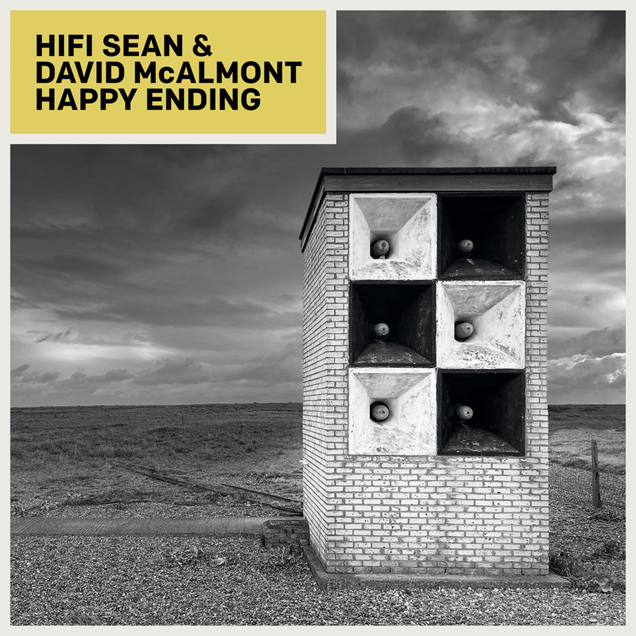
Happy Ending? The new album. A full-on Dickson and McAlmont collaboration, and it’s glorious. Pristine beats, soul-baring lyrics, soaring vocals and Bollywood strings forged from sheer liquid sunshine. The result of a friendship initially cultivated during a particularly turbulent twelve months.
“We spent Christmas Day together,” pipes up Sean. “Remember that?”
“2016,” nods David, wistfully. “The year George died.”
“We were sitting around having drinks,” continues Sean. “And a friend texted me to say George Michael had died. I remember David and Mike asking me ‘What’s up?’ and I thought ‘I can’t drop this now…’”
“Sean went strange for about an hour,” recalls David. “And when he finally said what had happened, it completely changed the atmosphere.”
Wasn’t there a consensus at the time that 2016 was the “Worst Year Ever”? We lost Bowie in the January, then everything turned to shit. Brexit. Trump. And we also lost Muhammed Ali, Prince, Terry Wogan, Alan Rickman, George Martin, Ronnie Corbett, Victoria Wood, Leonard Cohen and Gene Wilder. And George on Christmas Day. And Carrie Fisher two days later. Happy fucking Christmas, everyone.
“Prince was the one that really knocked me for six,” says Sean. “He was a fan of The Soup Dragons, which was insane. We played his club Glam Slam a couple of times, at his request. He came to our soundcheck and sang along to ‘Divine Thing’, then left straight afterwards. Our roadie said ‘Oh, Prince was here, singing along with you…’. I tried to find him, but I couldn’t.”
“We’ve thanked 2016 in the album credits,” says David. “We started the album that year, and you can kind of hear that the wheels had come off. I think a lot of the material speaks to that.”
For David, 2016 also marked the start of what he now refers to as his “party years”. Approaching his 50th birthday, it seems he made a deliberately conscious effort to indulge in a period of divine decadence. It’s there in the lyrics of lead single, ‘All In The World’: “This is my return to the louche years / Back to the numberless days and the hangovers…”
“To put things in context,” explains David, “I’d been studying for a History of Art degree since 2012. Then, in April 2016, I went to San Francisco to make a documentary about Sylvester for BBC Radio 4. We’d already lost Bowie, and I flew out the day after Prince died. And it sounds stupid now, but I was convinced that, by the time I touched down, Stevie Wonder would be gone. Another hero.
“I decided to give myself a treat, and I fell in with the San Francisco disco crowd. The legendary DJ Lester Temple and I became good friends, and I spent a lot of time partying with him. It was post-university decadence…”
“Which was great,” adds Sean. “Because that fed into the lyrics of the album.”
Oddly enough, I tell them, I’ve spent the morning transcribing some of the more outré lyrics. I wasn’t sure which of them to bring up in polite conversation.
“What have you transcribed?” asks David, genuinely intrigued.
My cheeks are already turning red in my own Zoom window. First on the list is a line from ‘Hurricane’, a splendidly risque and clearly deliberate homage to Prince. It’s “jizz in the jacuzzi”.
“Ah, OK!” smiles David, politely. Sean, meanwhile, seems actually in danger of laughing his own moustache off.
“At first, I though it was ‘juice’!” he chortles. “Then I read David’s lyrics and I was…” He gasps theatrically, and places a hand over his mouth.
“I remember Sean’s husband Mike raising his eyebrows as well,” admits David. “But there is a Prince element to that song, and I felt I had ‘Darling Nikki’-style permission to sing that line. Also, I’m over the whole idea of me being the ‘Croydon Choirboy’. It’s dangerous to make assumptions about someone because they make a beautiful sound. Marvin Gaye? Gorgeous noise, but… hello. ‘Hurricane’ is an honest self-portrait, but it’s very much about the party years. And I’m no longer in that mode.”
He looks thoughtful for a moment, then smiles reflectively.
“Oh God,” sighs. “That ‘jizz in the jacuzzi’ is going to follow us around…”
I’m being disingenuous here. Sure, there are eyebrow-raising lyrical moments on Happy Ending, but the overall feel is sensitive and heartfelt. Sometimes melancholy, sometimes touchingly celebratory. And the strings – arranged by Bollywood veteran Dr Chandru Jois – are the icing on a rich and rewarding cake.
“I‘ve always been obsessed with Bollywood string sections,” says Sean. “In my late teens, in the west end of Glasgow, we were surrounded by Bollywood video shops. You’d walk in, and just hear the most amazing arrangements.”
“And Guyana is about 50% Indian,” adds David. “So I’d go to the cinema all the time with my uncle to see Bollywood films. When Sean said that was the flavour he wanted for the album, I said ‘Absolutely…’”
The Bollywood stylings are particularly breathtaking on ‘Beautiful’. A song whose origins date back over 20 years, to a period when Sean’s life was at its lowest ebb.
“I was with my band High Fidelity, and we’d worked a lot with Chandru,” he recalls. “Then, in 2001, I came out. And it wasn’t a happy time. I won’t go into it too much, but it wasn’t all unicorns and rainbow flags. As a child I was obsessed with that year, we all thought we’d be living in spaceships. Little did I know, my life was about to fall apart. I lost everything. I ended up in this little burnt-out one-bedroom flat. Then, at the same time, Chandru contacted me and said ‘I have an 80-piece orchestra booked for the weekend, but the movie has fallen through. Anything you want recording?’
“I was literally a mess and I wasn’t eating. I never thought I’d make another record. I remember thinking ‘Bollocks – why does this have to happen to me?’ But I had a Portastudio, a guitar and drum machine on the floor, and I recorded three very simple ideas for songs and sent them to him. About six months later he sent me the tapes back… and I shoved them into a cupboard and forgot about them.”
‘Beautiful’ itself – immaculately constructed around those 22-year-old strings – is a hymn to Sean’s rebuilt life and self-confidence: “We’re higher than the towers and we’re deeper than the streets / Out there on the high rises is where I want us to meet…” With Chandru’s blessing, all three string arrangements have been repurposed for the album, and a further three added from scratch.
“I just remembered sitting there back then, thinking the world was ending,” says Sean. “But I had these three little string sections. And those strings have now been resurrected in a beautiful way.”
We talk about their earliest musical loves and their first dabblings with home recording. For Sean, it was Burt Bacharach: a passion forged at the age of five when Easy Listening LPs were sold from his local barber’s shop. By his teens, it was Soft Cell and early Human League. He talks slightly bashfully of ‘Silent Industry’, a bedroom synth cassette made at the age of 14, now set for long-overdue release on a boutique label at the end of the year.
For David, it was Queen (“‘Bohemian Rhapsody’ was our religion”), then the US chart pop that dominated the Guyana airwaves: Madonna, Cyndi Lauper and Lionel Richie. And his own earliest recording? Also made at the age of 14, a “very sweet” tribute to his schoolfriend, Paloma. So were his trademark vocal stylings in evidence even at that age?
“A lot of people told me that singing was something I should think about,” he says. “Although a lot of other people told me not to! I was a born-again Christian from the age of 13, but when I came out that was the end of my religion. And I thought ‘I need to find something to do… maybe I should give this singing lark a go’. And that was Thieves.”
Was it complicated – I wonder – being gay on the 1990s indie scene? It was a decade when laddishness was often given free reign to flourish.
“I think I was a bit naive about it all,” admits David. “I came back to Britain, and one of the first things I saw was Andy Bell in a leather leotard on ‘The Roxy’! So I didn’t think there was an issue. But being out on arrival was a novelty. Particularly with the indie folks. ‘Oh my God, you’re black and you’re gay! How interesting!’ And some indie boys decided they wanted to have their bisexual experience with me. I got propositioned a lot. I’d say ‘No, no, no! You’ve got this all wrong… just because I’m gay doesn’t mean I’m game!’
The experiences of both men, it seems, have fuelled both their friendship and their musical partnership.
“Working with Sean, I felt I could be a bit more honest, because Sean knows exactly where I’m coming from,” explains David. “I don’t think ‘Hurricanes’ could have happened with anyone else. I would have thought ‘Oh, I don’t know if I should go there…’”
“It’s definitely been a bonding experience,” says Sean. “Not just as friends, but as musicians. David has brought a lot of the best out of me, and hopefully vice versa. I hate saying this word, but we’ve been on some kind of journey. And that journey has been finding our true selves.
“This album has given me a lot more confidence in myself. I lost that for a while. But I don’t think I’ve ever been prouder of a piece of work in my life. And that has happened through our bond of friendship.”
Happy Ending is available here:
https://plastiquerecordings.bandcamp.com/album/happy-ending
Electronic Sound – “the house magazine for plugged in people everywhere” – is published monthly, and available here:
https://electronicsound.co.uk/
Support the Haunted Generation website with a Ko-fi donation… thanks!
https://ko-fi.com/hauntedgen
 The Haunted Generation