(First published in Electronic Sound magazine #114, June 2024)
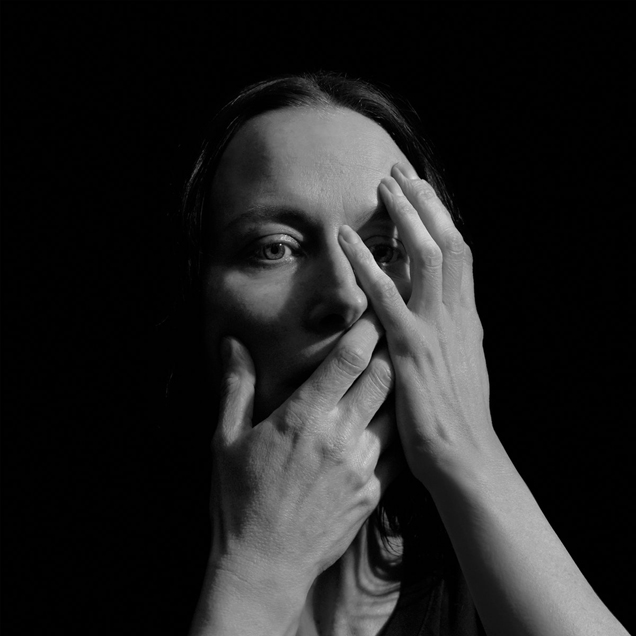
THE FORSYTH SAGA
Keeley Forsyth’s third album The Hollow is a bleakly beautiful masterpiece, an affecting symphony of operatic vocals and windswept soundscapes. Its inspirations? Scott Walker, a remarkable Oldham grandmother and an abandoned moorland mineshaft near Harrogate
Words: Bob Fischer
“There’s a photograph of the mineshaft on the back of the record,” says Keeley Forsyth, taking a gentle glug of black coffee. “I was with Ross, the producer, we were in the middle of writing, and somehow the mineshaft just seemed to align with where we were at. It was very wet, and the dripping gave us a different sonic perspective. It made sense that we’d come out of the studio to have some time away from the record, then found ourselves in that place. We just came across it. I think we already had the album title, because I’d written the track, ‘The Hollow’, but it focused us a bit more.”
She looks pensively through the brasserie window and pauses for reflection. Dressed entirely in black, she cuts a striking figure among a gentle hubbub of Barbour-clad morning diners.
“I think a lot about the performative side of things,” she continues. “I always go onstage wearing the same thing, like this, so any transformation is an internal one. And my thinking becomes all about the mouth, the throat, the blackness, the cavity. So rather than being in that mineshaft, I was trying to become it, really.”
We’re in Harrogate on a chilly Wednesday morning. She has already apologised for suggesting we meet in one of the town’s more exclusive eateries (“I hope you don’t think I’m pretentious, it’s just that they do free coffee refills in here”) and we have window seats and flaky breakfast pastries, basking in pale sunshine while a steady stream of expensively-dressed tourists mill casually on the pavement outside. Away from performance, she’s the exact opposite of an abandoned mineshaft, which isn’t a compliment I toss around lightly. She’s chatty, funny, welcoming and warm. But the unforgiving Yorkshire moorland within twenty minutes’ drive of this well-to-do little town has seeped like winter drizzle into the spine-freezing atmosphere of The Hollow.
“Sorry,” she chuckles, suddenly producing a handwritten note from her handbag. “I wrote the album title down in case I couldn’t remember it.”
It’s her third album, following the success of 2020’s Debris and 2022’s Limbs. And it’s terrific. Her operatic vocals sometimes initially feel wordless, but then meaning forms slowly, like gnarled trees emerging from impenetrable Pennine fog. Collaborating with producer Ross Downes, saxophonist Colin Stetson and jazz pianist Matthew Bourne, she has created a soundscape steeped in the wildness of the north of England – even though she winces at the prospect of being regionally pigeonholed in such an overt manner.
“It’s weird,” she explains. “When I was younger, I wanted to leave the North as soon as I could. And I did. I only ever saw myself in London. But there’s something about the work I do as a singer that is here. I can feel it. It’s cold. Before I vocalise anything, I put myself in this place, I put my hands down onto the earth to feel where I am. So it’s funny how it’s worked out – the place I’m from has become a source of material. You can’t escape it.”
Home, originally, was Oldham, and her speaking voice still hums with a soft Lancashire burr. Harrogate has been her base for the best part of a decade now, and all her music has been made here, but The Hollow has tangled roots on the other side of the Pennines. She was raised on a 1980s council estate by the doting grandmother to whom the album is dedicated.
“Mary,” smiles Keeley. “I absolutely loved and adored her so much. She was a very normal, very straight northern woman who worked in the psychiatric ward at Oldham Hospital. She was there for most of her working life, and she worked until she was 80.
“I felt really fortunate as a kid, because we did things nobody else was doing. We’d go to all the museums and art galleries, and my gran and her partner took me to the theatre. It was just a wonderful life – and quite rare for the kids on our estate! And now I’m a parent myself, I know that kind of commitment is a real one. It’s something you have to decide to do. I didn’t take it for granted then, and now I appreciate it even more.
“Everything I do is dedicated to Mary. Everything. It’s really strange to talk about it, but everything I think and everything I do is completely infused with her.”
Mary died in early 2023, aged 86, and the lyrics to one song in particular feel like the depiction of an intensely personal moment. “The faint smell / Of hopelessness / Suspended by a hum / That seeps through the cracks,” sings Keeley on ‘Eve’, as elegiac strings swell around her. “Let the body lay down and die”.
“Yeah,” she nods. “When I’m performing that song, it’s me re-enacting the last stages of being with her. Literally her last moments, singing into her ear and whispering to her to let go.”
I’ve been there, I tell her. My dad died in September last year. In his bedroom at home, with me and my mum and my partner all holding his hand. We realised it was coming, and we sat in shifts with him for days on end, barely daring to pop to the kitchen for coffee and biscuits. It was exhausting and heart-wrenching, but I wouldn’t have missed it for the world. I had to be there with him. And it changed me. Made me less scared of death, and – I think – perhaps a little more enthusiastic about life, too.
“It’s absolutely life-changing,” nods Keeley. “In those final moments, I was just aware that we’re kind of reduced – or elevated, whichever way you want to see it – to our senses. My gran’s eyes were closed for a few hours, so we communicated through sound and touch.”
There’s a Hollywood version of death, isn’t there? One profound final sentence, then “clunk”. The eyes close and the head rolls to one side. But my dad’s death wasn’t like that at all. We spent hours at his bedside saying “Has he gone? I think he’s gone”. And then, out of nowhere, he’d suddenly take another breath. When the final moment arrived, it took a while to be certain it had even actually happened.
“I know!” she exclaims. “Nobody tells you those things. I was really aware of this process taking over. There’s a shutting down of the organs, so even the breathing towards the end isn’t the breathing that you know. And it’s something that really does change you. Just like giving birth changed me. It was good for me to see things for what they are. We’re flesh, we’re organs. So my gran gave me everything. Even in her last moments, she gave me the reminder that death is real. You do die, and it all stops.”
She starts to chuckle.
“And I’m a person that needs deadlines like that, otherwise I’ll just sit on my arse all day.”
From an outsider’s perspective, Keeley Forsyth has done precious little sitting on her arse. By the late 1990s, as a result of grandmother Mary nudging her towards local theatre workshops, she was working full-time as an actor, starring in a slew of mainstream television shows. She has now enjoyed an impressive 25-year career as an in-demand TV performer. So had she always aspired to the life of an itinerant thespian?
“I hadn’t, really,” she admits. “I grew up watching musicals and listening to opera. The spoken word was tricky for me – I wasn’t really interested in it. As I became an actor, I understood that it can evoke and provoke the same feelings. But I spent a long time struggling with the feeling that it wasn’t quite right for me.”
Did she make a conscious decision to avoid being pulled into that celebrity world, then? It just feels like there’s a Sliding Doors moment here. One where, instead of becoming the baroque chanteuse of abandoned moorland mineshafts, she became a regular panellist on Loose Women, swapping bon mots with Jane McDonald. Her acting credits are resolutely not small change – she’s been in massive, primetime hits. Casualty, Heartbeat, Coronation Street and Happy Valley. She even spent a month caked in prosthetic make-up for Guardians Of The Galaxy. And, more importantly, she’s also done my beloved BBC daytime soap, Doctors.
“A few times!” she laughs. “I’ve done them all. And I was really ungrateful when I was doing them. It was ‘Come on, there’s got to be more than this’. Even when I was doing Doctors, I wanted to work with the likes of [Greek director] Yorgos and I really enjoyed watching European cinema. But I don’t think I ever got to the point when I was having to resist being pulled into anything. I was just desperately trying to work.
“I remember when Debris came out, one journalist was trying to get their head around the fact that I’d done this regular, commercial TV work and then made an album that was all Nico and The Marble Index – that was their words, by the way! And another journalist said that he wasn’t going to listen to the record because it was being sold as ‘Actress Makes Music’.”
Why, did he think it was going to be Robson and Jerome?
“Yes! And all that stuff is valid, of course. When you’re doing something new, obviously you can decide to completely wipe the slate clean and not use your previous name, and I did think about doing that. But that would just have been creating more ghosts for myself.
“And I’m 45 now, I haven’t got time to coast. I want to run on top of a hill, I want to fall, I want to scream, I want to tear my hair out. To an outsider, they might look like different choices, but this is the only way I can live.”
Her musical passions were forged amid the deadpan eccentricity of a previous generation of wordy songsmiths. She admits being “completely obsessed” with the ale-soaked drawing rooms of Yorkshire balladeer Jake Thackray and the dour, harmonium-drenched weirdness of Ivor Cutler. But the black, rolling moorland drones and the operatic vocals of her own work have one very obvious antecedent: Scott Walker. In particular the sumptuous bleakness of his career-resurrecting 1995 album, Tilt.
“When I’m making music, that’s the only album I’ll ever listen to,” she explains. “That’s the quest, to make something with that same feeling.”
And what exactly is that feeling? She pauses for a very long time.
“Not human,” she concludes. “Very primal. Take all the information out, and you’re left with the throb of some kind of organism. It’s how he makes the sounds as well – there’s that famous clip of a side of meat being punched in the studio! I don’t want to be overly pretentious, but that’s performative. It’s Beckett.”
So does this crunching change of both career and artistic direction suggest some kind of epiphany? I’m cautious of breaching the subject because I’m aware that not everyone sees their personal issues as being fair game for a magazine interview, even one that involves a generous selection of breakfast pastries. But I’ve seen Keeley talk before about a period of mental turmoil in 2017 that resulted in her being physically unable to speak. Her tongue simply wouldn’t move. Which must have been terrifying for an artist for whom versatile vocal expression is clearly a fundamental part of both their art and their everyday existence.
“It’s true,” she nods. “I think that’s what a psychological breakdown does to you. It locks you in. It lasted about two weeks. It was a physical manifestation of… oh, I don’t know. But it was beyond scary. You’re still conscious, but you can feel that you’re too far gone. It was like going down into that mineshaft.”
What happened? Did life, work and the sheer overwhelming gubbins of human existence just get on top of her?
“Yeah,” she nods. “I don’t know how other people experience it, but it’s something I knew was happening to me for a long time. But, if you’re able to, then you grab something from the bottom of the mineshaft. If you can somehow survive, you can bring something back with you. And it becomes a very significant part of who you are.”
And I’m guessing that “something” was the resolve to make the music she’s making?
“Yeah, I think so,” she nods. “What was there to lose? Sorry, it feels very indulgent talking about it.”
Not at all, I say. I think it can be really helpful. There might be people reading this who are in a similar situation right now, perhaps also dealing with grief or depression, perhaps even despairing that their lives are a million miles away from eating breakfast pastries in a Harrogate brasserie and feeling hopeful and healthy and fulfilled in their work. And yet here we both are.
“Thankyou,” she says. “Weirdly, when I’m into an artist I always try to find whether they have similar things going on – and usually they have. I just want to be well and I want to be happy. I am definitely where I’m meant to be now, and I can take everything that comes with that.”
She takes one last sip of her refilled coffee, and we break open the final two croissants.
“And that feels really good.”
The Hollow is out now on Fatcat Records.
Electronic Sound – “the house magazine for plugged in people everywhere” – is published monthly, and available here:
https://electronicsound.co.uk/
Support the Haunted Generation website with a Ko-fi donation… thanks!
https://ko-fi.com/hauntedgen
 The Haunted Generation