(First published in Electronic Sound magazine #113, May 2024)

UNDER THE INFLUENCE
He is the genial big cheese of Trunk Records, purveyors of deep-dive buried treasure from the strangest corners of the 20th century. And, says JONNY TRUNK, it all came from wearing squeaky plimsolls and pretending to be a leaf on a tree
Interview: Bob Fischer
VISION ON
“Vision On started in 1965, and it was a BBC programme to help deaf children be creative, with a presenter called Pat Keysall. I’ve spoken to people who used to make it, and they’ve said they were basically given a camera and told ‘This week, we’re going to do a programme about zig-zags. Can you go out and find some zig-zags for us?’
“So they’d say ‘Yes! There are zig-zags on the roof over there, and on the pavement. And outside that shop!’ Then they’d make a montage of them. And Tony Hart would create an amazing piece of artwork from empty matchboxes and tins of tuna. It was all over the place! The opening theme is a piece of groovy French music, but there would also be brass bands and improvised electronic stuff. That combination of bonkers, unexpected visuals and bonkers, unexpected music definitely had a massive influence on my creative mind.”
LISTEN, MOVE AND DANCE
“I have formative memories of being five, in my school hall wearing squeaky plimsolls and a little white vest, being told to pretend I was a growing flower or a leaf falling from a tree. While being played music that was often deeply peculiar. Then, when I started collecting records in the 1980s, I’d find that same music. Daphne Oram and Vera Gray records with Listen, Move and Dance on the covers. It all had a very deep impact – about 15 years ago, I started my own classes in Stoke Newington playing these original electronic records while a woman gave out instructions. ‘Pretend you’re a kite in the wind!’
“I think my interest in strange music all came from these early classroom experiences. Schools records, classroom projects, experimental music made by kids… fucking brilliant. I still love it. I can almost smell the school hall and see the speakers. It’s gone in very deep, and it permeates everything I do.”
LATE NIGHT TELEVISION
“We had the main television at home, but we also had a little black and white portable TV with a broken aerial that I occasionally borrowed to watch Match Of The Day in my bedroom. But I also watched a series of late-night films that were massively influential. The BBC’s horror double bills – I had some of the scariest nights in with those! And things like Peter Sellers in The Party, and The Monkees in Head. My love of horror and psychedelia all came out of late night telly.
“It was curated in a really interesting way. Streaming services now are just like old video shops – you enter Netflix or whatever, and you’ve got rows and rows of the same old shit! [Laughs] But late night telly, in your own bedroom after your mum and dad had gone to bed on a Saturday, was almost like a weird sexual awakening. Through Hammer Horror!”
LATERAL THINKING
“In 1989, I went to Watford College because it was the only place where you could learn to write adverts. And I wanted to do that. I was too old, and I had none of the qualifications, but I think I got on the course by sheer enthusiasm. And I started looking at the golden age of advertising. Which, if you ask me, was the 1960s.
“Back then, you had guys like Bill Bernbach producing adverts that were really clinical and clever. But they were also lateral. So I read [psychologist] Edward De Bono’s ideas about lateral thinking, and honestly – they’re like Eno’s Oblique Strategies. Can’t work out how to sell this particular pair of shoes? Chuck in something completely different and see where it takes you. A banana! Right, what can we do with shoes and bananas? All of a sudden, another door has opened to you.
“By the end of the course, I’d learned a process of thinking that was completely lateral. It’s about bringing disparate ideas together – and when it feels right, you get a little explosion in your head. Lateral thinking is one of the biggest things in my life. Loads of what I do every day comes from that kind of thought process.”
VINCENT BUGLIOSI
“He was the prosecuting lawyer for The People vs Charles Manson, and his book Helter Skelter is about how they pieced together the facts behind the Sharon Tate murders. It’s pretty gruesome, but it’s also a beautifully-written book. He puts across the truth in such a logical and straightforward fashion.
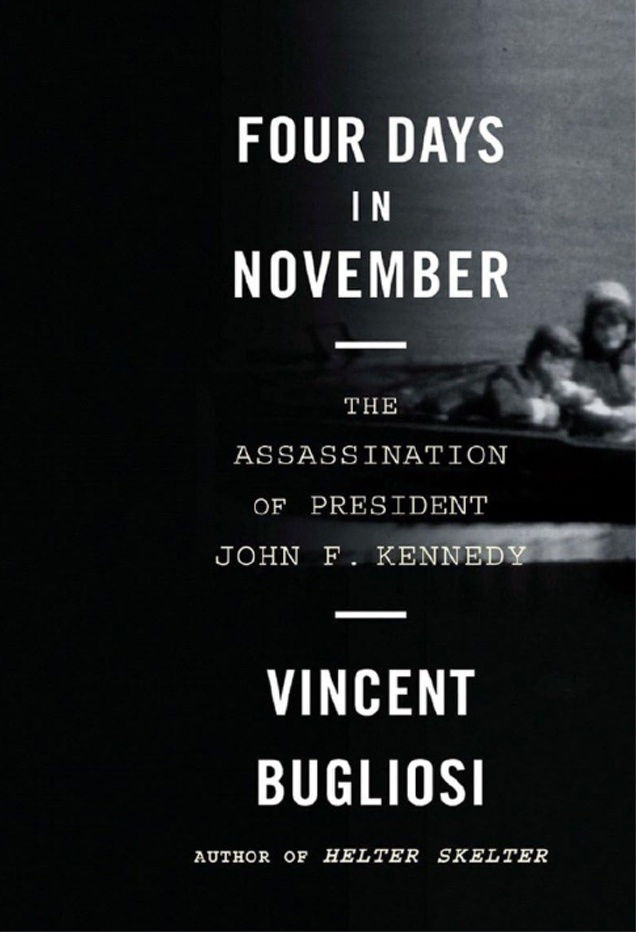
“He wrote another book called Four Days In November, about the assassination of John F Kennedy. At the beginning, he basically says ‘I’m just going to tell you exactly what happened, at the exact times it all happened’. And when you read it, you realise that all the conspiracy theories are complete nonsense. He obliterates them all. Lee Harvey Oswald was a crack shot from the army, he was a communist who hated JFK, and he immediately buggered off and shot somebody else! So why is there all this stuff about the ‘grassy knoll’ around?
“I’m obsessed with the truth when it comes to influential things that happen in the world. And I know it’s weird, but I think about Vincent Bugliosi’s books every day.”
VINTAGE BRITISH GRAPHIC DESIGN
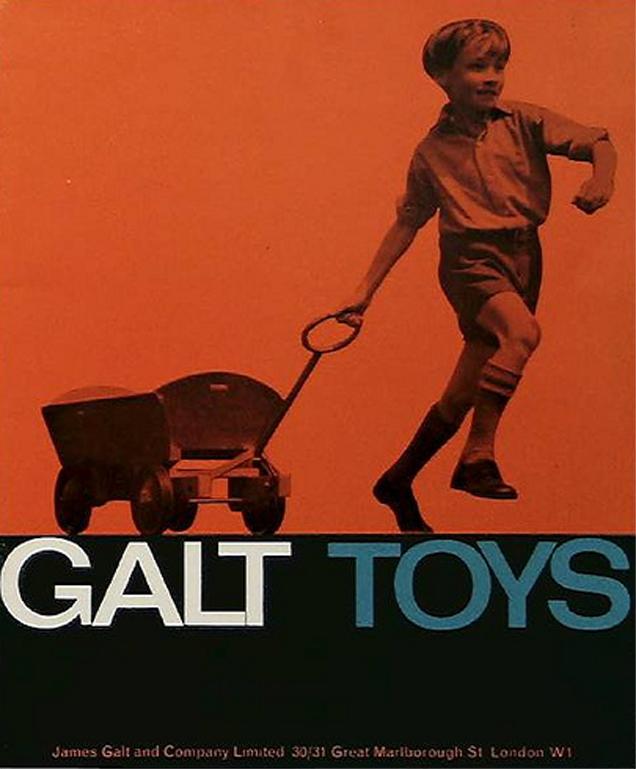
“When I look at the graphic work of the 1960s, especially British stuff by people like Peter J Dixon and Ken Garland, I have a massive reaction to it. We’re talking things like Sainsbury’s own label brands and Galt Toys. Primary colours in black and white photographs, Gill Sans fonts, all very clean, very direct and very charismatic. There was a Galt Toys shop where I lived in Farnham, and the graphics were so cool.
“They were all done by Ken Garland. I met him a few times, and he let me reproduce some of his work, which was an honour. There are lots of Trunk Records sleeves influenced by that period of 1960s design, and I’ve written books about graphics – including a new one, Audio Erotica. It’s about my collection of hi-fi catalogues! And without a doubt it’s all been influenced by people like Ken. He just embodies so many of the things I’ve talked about today – lateral thought, simplicity and cleverness.”
Audio Erotica: Hi-Fi Brochures 1950s-1980s is available here:
https://fuel-design.com/publishing/audio-erotica/
Electronic Sound – “the house magazine for plugged in people everywhere” – is published monthly, and available here:
https://electronicsound.co.uk/
Support the Haunted Generation website with a Ko-fi donation… thanks!
https://ko-fi.com/hauntedgen
 The Haunted Generation