(First published in Electronic Sound magazine #94, October 2022)
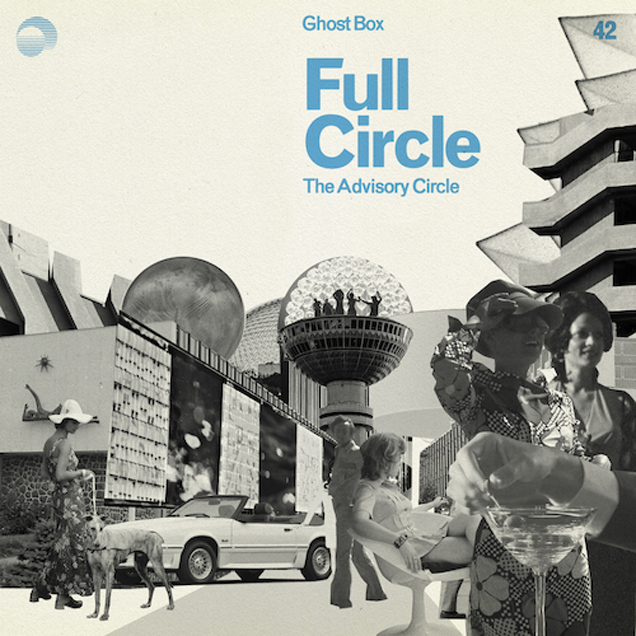
CIRCLE OF LIFE
Cate Brooks is The Advisory Circle, and the retro synths of new album Full Circle hark back to her earliest days on Ghost Box Records. But, in a rare and candid interview, she admits it’s been a “hell of a journey” to get there
Words: Bob Fischer
“To be honest, I thought I’d given up doing interviews…” says Cate Brooks.
To be equally frank, Cate… so did we. Throughout a 20-year career of affecting and emotionally-charged electronica, she’s always been the most elusive and enigmatic of artists. There are no publicity photos. No live sets. No podcast appearances, a skeletal social media presence and barely a word said in print since the turn of the 2010s. It’s all in the music, and her stalwart residencies with two monolithic labels. On Ghost Box Records, she is The Advisory Circle. Stranded amid the faded daydreams and utopian visions of her 1970s childhood, she hides from the Spirit of Dark and Lonely Water in a pebble-dashed bungalow with an avocado bathroom suite. For Clay Pipe Music, she makes solo albums with a more organic connection to place. There are the Somerset soundscapes of Shapwick, subsumed by Radiophonics and the tinkles of sinister music boxes, and the immersive sweeps of Maritime, filled with the “lonely beauty” of the shipping forecast and the Suffolk coastline.
Yet here she is, charmingly candid company on a Friday afternoon. We talk for almost an hour and a half, starting with the new album, Full Circle. If it’s Ghost Box, it must be The Advisory Circle. And a beautiful collection of melodic instrumentals, split into four distinct parts and clearly harking back to the label’s formative years.

“I was listening to a lot of De Wolfe and KPM library music,” says Cate. “Many of those records had different suites, especially in the late 1960s: there’d be the ‘Power Suite’ or the ‘Construction Suite’. So some of that feel came in. And a lot of it was orchestral… so, although the music I was making was synth-based, I think I was quite ambitious in terms of the arrangements.
“And I was wondering how I could take the Advisory Circle concept back to where I started. These days it’s less about Public Information Films and Schools TV, but I wanted to revisit some of those early sounds and textures. So Full Circle was me thinking about the roots of the whole project. My last couple of albums have been well received, but I think I’d lost a bit of how I felt when I first started. I really wanted to reconnect with those initial feelings… but in a new way, because I don’t want to make the same records twice.”
It’s almost 20 years since Jim Jupp and Julian House formed Ghost Box Records to release their own music, recording as Belbury Poly and The Focus Group respectively. Cate – already established as King Of Woolworths – was their first recruit, and that opening salvo of releases still crackles with a visceral fizz. This isn’t wistful, warm-hearted nostalgia, it’s almost angry. A generation whose lives have been scarred by the Central Office of Information and the residual trauma of worrying, as darkness descends on damp December afternoons, about the spectres lurking in the cubicles of school toilets.
“I still remember the week I first heard about Ghost Box,” recalls Cate. “Before they’d even released anything, a friend of mine – Jon Tye from Lo Recordings – sent me a link to a beta website that Julian had put together. He said ‘My friend is starting a record label and I think you’ll like it’. So I got in touch with them, and Jim sent me a few songs from his first album, The Willows. I remember standing in Mansfield bus station – the worst bus station in the world – on the way to visit my mum, playing them on my headphones and thinking ‘This is amazing… I want to be part of this’.
“And when I made the first Advisory Circle EP, Mind How You Go, we were selling our house. So I took a couple of synths over to the in-laws who gave me their kitchen to work in! I remember next door’s cat coming in a lot. And when I listen to it now, I can see those images. Even how the weather was: quite warm, but really wet. All this random shit that wouldn’t mean anything to anyone else.
“Although my life now is totally different to how it was then. For obvious reasons…”
She doesn’t want the subject, she says, to be “the elephant in the room”. Until last year, in public at least, Cate was Jon Brooks – an outwardly male artist in a musical field awash with Y chromosomes. In August 2021, she put a life-changing post on Instagram: “My close friends and family now know me as Cate. My pronouns are she/her. Life is too short to be someone we’re just not…”
A nerve-racking day, I’m guessing?
“Oh God, of course it was!” she laughs. “But it had got to the point where I was feeling disingenuous, and I don’t like being dishonest with anyone – even if I don’t know them. I’d been doing The Advisory Circle for a long time, and I almost felt like I was betraying myself. I was being steered towards a certain image, and that never felt right to me. So on the day I came out to everyone, a huge weight was lifted. It was me saying, ‘This is authenticity. This is me being honest about where my life is, and who I am’. It wasn’t up for discussion, and I think people picked up on that. And from what I know, they were honoured to be treated with the honesty they deserved. Which was really lovely for me.”
When did she first begin, I wonder, to question her birth gender?
“I was about five. Certainly pre-school. But the world was very different then, so it was kind of suppressed. There was no support, and people weren’t clued up.
“It’s better now, I’m pleased to say. I’ve been with my partner for over 20 years, and it’s never been a shock to her! My adopted family are wonderful. And the reason I can deal with this and be so confident is that they just didn’t have a problem with it. I told my partner from the first week we got together that there were some gender identity issues going on, and she’s always been really encouraging. She just wants me to be happy.

“So I’m proud of finding the strength to make that change. And hopefully it might also make people think a little bit. I might be the first transgender person they know. And I’m not an activist, that’s just not my way… but from what I’ve been told, I’ve made certain family members challenge their own thoughts and how they perceive gender issues. And that’s really cool. It’s a quiet activism, really.”
And does making music as Cate feel different to making music as Jon? She pauses for thought.
“If anything, I’m able to express my emotions more, and put them into context,” she says. “I was doing the same thing before, because the music was an outlet that I didn’t have in real life. But it just feels better now. The first thing I released as Cate was a little Bandcamp album called Chalk Sketches… a very stripped-back album, mainly piano and organ, and it was very cathartic to do.”

I’ve listened to Chalk Sketches on solitary, late-night dog walks through my local woods, the perfect setting for a back catalogue steeped in the crepuscular. Vintage synths, upright school pianos, fizzling field recordings… Cate Brooks albums combine musical eclecticism with a distinctly melancholy stillness. It’s the result of a decidedly bittersweet childhood.
“My dad was a professional jazz player,” she reveals. “Jack Brooks. A guitarist mainly, and he played with some quite prestigious artists. Johnny Dankworth and Tubby Hayes, people like that. I grew up near Oxford, and in the Home Counties all the jazzers know each other, so everyone was round our house at the weekends. He was never pushy, but he figured that I really liked instruments and recordings. So, when I was four, he gave me a cassette recorder and I started to make tapes. I remember one of my dad’s friends, a jazz drummer, turning up and hearing me play a half-sized drumkit. And he said ‘You know what? He’s better than some of the drummers I’ve had in my band!’
“Jazz was a huge thing for me, and still is. But also whatever was happening in the charts, because I’ve always loved pop music, too. I really liked Robin Scott… M. And Roxy Music, and Blondie. ‘Heart Of Glass’ was probably one of the first times I started to think about synths. It blew my mind.”
Synaesthesia played a part, too. Since childhood, Cate has “seen” music as colours and shapes.
“‘Sugar Sugar’ by The Archies was still a popular song on Radio 2 when I was a kid,” she recalls. “And the main melody in that song – played on a fuzzy marimba with distortion – produced the most intense green lozenge shape in my brain.
“So music gave me a real boost, and my dad was my best friend. He was so cool and I loved him. But he died when I was nine. After that, I went into my own world. I was very solitary, quite an unhappy kid. You know some kids go to the bottom of the garden and build castles? I took my tape recorder out to record sounds, then listened back to them and made collages. I got lost in a whole world of recording.”
That immersion, I suggest, is a defining characteristic of introverted kids. When 1980s episodes of Doctor Who ended, I would immediately write down the plot so I could revisit it all in my bedroom later. Obsessing over the tiny details. The little things in life that made me happy.
“I’ll tell you a funny story,” she says. “This morning, my other half was talking about Bernard Cribbins, and I said ‘When I had a train set as a kid, it came with a flexi-disc’. And I remembered it was Bernard Cribbins talking about being two inches tall, and getting squashed by a Pekinese. So I went on Youtube, found it, and I was word perfect! I haven’t heard it since I was about six.
“Because sweet and sour things happened throughout my childhood, that made me want to bubblewrap the nice things. I loved my gran, and spending time with her, so my album 52 was about her house. And my dad… I had eight years with him, and those memories are so precious. And obviously we didn’t have ways of documenting them at the time. There were no digital phones or cameras. But those things had to be preserved somehow, and our brains are very good at holding onto the things we want them to.”
It’s a sense of yearning nostalgia that comes over strongly in the music, I tell her. It reaches out across the decades, a lonely 1970s kid putting an arm around the shoulders of troubled 21st century adults. Her music has helped me through some very, very difficult times. Shapwick, in particular, is an album I associate entirely with the positive recovery from serious mental turmoil. God, it’s partly responsible for that recovery. Cate seems touched.
“That’s what life should be – doing good things for other people,” she says. “It doesn’t matter what you’ve lived through, if that stuff comes out in the art you make then you’re turning it into a positive and that counteracts the pain you’ve had.
“I’m really glad it helped you. If I wasn’t a musician, I’d be a therapist. And I’ve been through therapy twice. I think you can heal through music, and that’s a huge thing for me. An honour. To offer just an arm of support, even though it’s not personal. If you can do that, isn’t that an amazing thing?”
Had she been aware, I wonder, of her reputation as an enigma?
“It’s something I’ve been told, but I’ve never really thought about it,” she says. “I don’t jump up and down and try to make myself more popular. I’m more about making the music and letting that that speak for itself. I suppose that’s given me a bit of mystery, but it’s never been engineered.”
Nevertheless, that 2021 transition has been a turning point for her social life.
“Even before lockdown, I was avoiding being sociable,” she recalls. “To the point where people who knew me would say ‘Oh well… they’re just shy or socially awkward’. But no. That’s not the way it is. When I came out to my family, we started going out again, and the whole world felt very different. Any excuse now to get together for a party… I’m there. Being born the wrong gender, and knowing it from a very early age, causes a lot of problems. It makes you very withdrawn, and you internalise things.

“Going to family weddings, for example. In my previous life, I’d be expected to turn up in a suit and do the whole masculine thing. Which is fine if that’s what you do! But it always felt dreadful to me. I wanted to be in the fanciest frock going. I love my clothes, especially vintage stuff, so it was really getting me down. But in May this year, I went to the first wedding I’ve ever really enjoyed in my life. I had the best time! It’s made such a massive difference.”
It’s been a privilege talking, I tell her. I hadn’t known what to expect from the interview, and would have been happy with a gentle, round-the-houses chat about Full Circle. But I can’t thank her enough for opening up in this way. It’s been an education and an honour. It’s late on Friday afternoon now, and she modestly accepts the compliment.
“It’s life,” she says. “You just have to experience things, and they make you stronger. I’m very resilient, and a lot of that goes into my music. People say ‘Your music is really emotional’… well, I wonder why.
“But I wouldn’t change anything. It’s been a hell of a journey”.
Full Circle is available here:
https://ghostbox.greedbag.com/buy/full-circle-129/
Electronic Sound – “the house magazine for plugged in people everywhere” – is published monthly, and available here:
https://electronicsound.co.uk/
Support the Haunted Generation website with a Ko-fi donation… thanks!
https://ko-fi.com/hauntedgen

