(First published in Issue 115 of Electronic Sound magazine, July 2024)
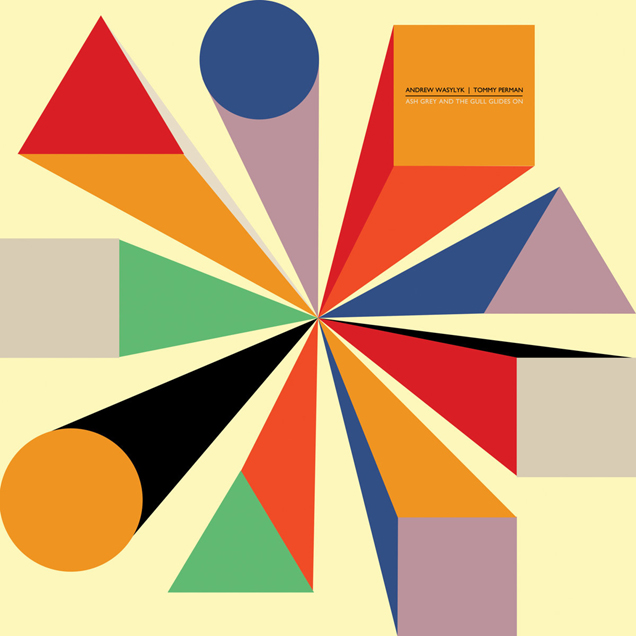
ANDREW WASYLYK AND TOMMY PERMAN
Ash Grey And The Gull Glides On
(Clay Pipe)
Two bearded men sit on a battered, wooden bench overlooking the Tay Estuary. The air is still, the sky is filled with clouds that lollop like great, white whales in an azure blue sky. As the North Sea rumbles idly, one of the men – the one in the trilby hat – passes a slip of paper to the other. His counterpart unfurls it, and reads the contents with a furrowed brow. Written in spidery handwriting is a cryptic instruction.
This probably wasn’t the exact creative process behind Ash Grey And The Gull Glides On, but where’s the harm in using a little imagination? It’s a modus operandi that Andrew Wasylyk and Tommy Perman would surely endorse, given their unorthodox approach to this exquisite and inventive song cycle. Inspired by Yoko Ono’s Grapefruit and the playful artistic pranks of the 1960s Fluxus movement, Perman posted three envelopes to Wasylyk, labelled ‘Recording Instructions’, ‘Tempo Cards’ and ‘Chord Cards’. Wasylyk’s resulting improvisations then become the basis for ten compositions of jazz-tinged meditative beauty, seamlessly collaged and set to Perman’s gently beguiling beats.
There’s an air of benign mischief throughout. Wasylyk’s pristine piano motifs weave around the Acid House rhythms of album opener ‘Climb Like A Floating Vapour’, but the genuinely heart-stopping moment comes from a single, sudden, silent pause in the middle. It’s a musical palpitation that instantly demands attention. Possibly even medical attention. ‘Communal Imagination’, meanwhile, has an underlying rhythm track constructed from the sampled creaks and clangs of Wasylyk’s upright piano. For the first few bars, you might be forgiven for shaking a fist at the lounge wall in the mistaken belief that the bloke next door has started sanding his windowsills at some ungodly hour of the morning.
Wasylyk’s piano is the lynchpin here. On ‘Root Grow Emerge’, his keyboard fingers are at their most languid, twisting effortlessly around brass foghorns and the half-heard playground chants of Perman’s own children. On ‘Spec Of Dust Becomes A Beam’, they become instruments of rhythm in their own right, syncopated augurs of a gathering summer storm of strings. It’s a musical world away from the winsome noughties indie rock that made Wasylyk’s name as frontman with The Hazey Janes, a fresh-faced fourpiece who once supported Snow Patrol. Older, grizzlier, his musical journey has taken him down some intriguingly overgrown pathways.
He’s certainly emerged in the right place. The Clay Pipe discography sometimes feels like a Spotter’s Guide to tangled, twisted landscapes. From the spectral village greens of Cate Brooks’ Shapwick to the submerged church spires of Gilroy Mere’s Gilden Gate, it’s a label that has become virtually defined by its profound relationship to place. Even Wasylyk’s own 2021 album, Balgay Hill: Morning In Magnolia, was inspired by his crepuscular potterings around the sprawling Dundee park of the title. Ash Grey And The Gull Glides On, however, feels more like a fragmented daydream of home. Both ‘The Unbearable Sound Of The Roses’ and the woozy title track itself are restless afternoon slumbers of songs, both infused with yearning for familiar trappings now tantalisingly out of reach.
At the end, a familiar voice emerges. ‘We sign our names on walls / Across grand halls and malls / We shout in silence, we whisper loud,” sings Arab Strap’s Aidan Moffat on ‘Be The Hammer’, a deadpan paean to the marginalised. “We live in cracks and corners / We are the many mourners / We are the raindrops, not the cloud”. A moving plea for both recognition and conciliation, it’s a triumphant and rousing conclusion to the album. The final message? “You might find nothing to see here / But come tomorrow, we’ll still be here.” It’s a beautiful moment of solidarity and a genuinely touching message of wonky togetherness. Here we all are, amalgamated by our quiet weirdness, united in our longing for lasting moments of gentle stillness and our dreams of a half-remembered home.
Wasylyk’s piano remains diligently unwavering while Perman’s beats swell to an exultant climax, and then we’re left alone on that battered, wooden bench overlooking the lapping tides of the Tay. Wasylyk, Perman and Moffatt have decamped to a half-lit hostelry, and the sky has become a palette of purples. That cryptic slip of paper, now crumpled and discarded, is tugged out to sea by a passing breeze. We’re home again and alone once more, but on that bruised horizon is a little sliver of hope.
Album available here:
https://claypipemusic.bandcamp.com/album/ash-grey-and-the-gull-glides-on

NICHOLAS LANGLEY
Cinema Du Look
(Spun Out Of Control)
“Femme Fatales with big guns, coolly efficient assassins, highly sexed and impossibly beautiful kleptomaniacs, Paris Métro signs, wet cobbled streets – and neon, always lots of neon”. Such were Nick Langley’s apparent inspirations for this album of evocative noir synth anthems, a heartfelt homage to the Cinema Du Look movement of the 1980s and ‘90s.
For eternal students who joined their college Film Society at the Fresher’s Fayre and spent three years staring at the dog-eared Betty Blue poster on the wall of their campus bedroom, it might be an overwhelming experience. ‘Le Métro’ is an appropriately cinematic opener, where a lonesome whistle and the rumble of underground trams are quickly subsumed by downbeat synth-jazz with its collar turned up against the cold. ‘L’Intrigue’ sounds like Debussy drinking black coffee with a sizzling Gitanes stuck to his lower lip, ‘Promenade’ is a moody romantic interlude for sultry saxophones.
Langley wears his influences on his sleeve. In the 1980s, the music of Éric Serra and Gabriel Yared complemented the stylish visuals of Jean-Jacques Beineix and Luc Besson with expansive synths and lugubrious, rain-soaked beats. And ‘Cinema Du Look’ never strays too far from the template. There’s an immaculate air of alienated detachment throughout, an oddly heartwarming coldness, epitomised by the mechanical rhythms and keening guitars of ‘Getaway Train’. Even the upbeat funk bassline and jaunty arpeggios of ‘Rollerskate Girl’ can’t dispel the nagging feeling that she’s rollerskating swiftly away in the opposite direction.
‘Pour Jean-Jacques’ plays over the end credits here, and it’s beautiful. A misty-eyed piano elegy for the director whose work most of us discovered through rented VHS tapes or late-night Channel 4 screenings, in an age when esoteric art generated its own underground network of passionate young enthusiasts. Langley was clearly one of them, and his album is a double-whammy of nostalgia. It’s a celebration of these films in their own right – of Subway, of Nikita, of Les Amants Du Pont-Neuf – but also of our own love affair with them, at a time when that giddy cavalcade of the undiscovered, of the music and literature and cinema that makes our teenage hearts burst, is briefly the most exciting thing in the world.
Album available here:
https://spunoutofcontrol.bandcamp.com/album/cinema-du-look
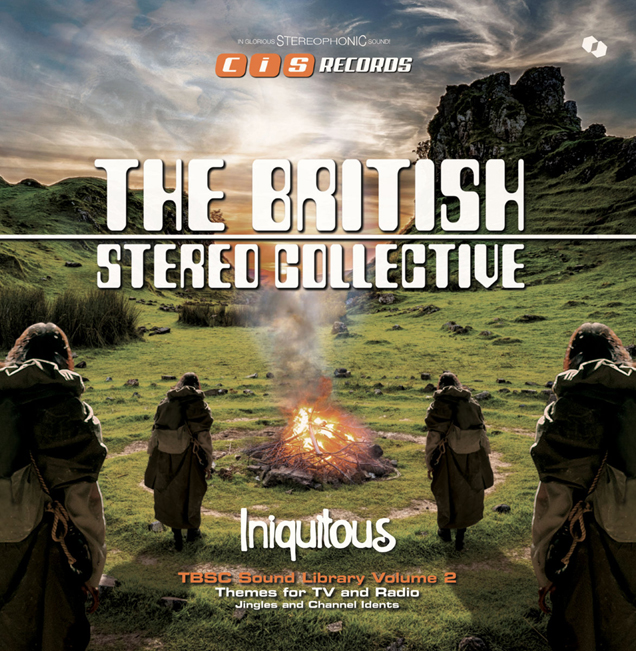
THE BRITISH STEREO COLLECTIVE
Iniquitous
(Castles In Space)
Stuck in a parallel universe late 1970s, where regional TV presenters wearing pastel-shaded Slazenger jumpers read out his eighth birthday cards every day for eternity, Phil Heeks has crafted a second volume of adorable spoof themes from the uncharted backwaters of the ITV network. Like 2021’s Mystery Fields, it creates nostalgic joy from affectingly low-rent bleakness. So ‘Astro Nautical (Theme From Star Quest)’ is an heroic Jeff Wayne pastiche, a military synth tattoo for Fairy Liquid spaceships, while the spooky ambience of ‘Unexplained’ perfectly evokes an age when twitchy men in nylon trousers claimed to have been granted telekinetic powers by aliens landing in Stroud.
But the greatest joys come from Heeks’ forays outside traditional haunty territory. The highlight? Cheesy football anthem ‘Goal!’, a grimly upbeat throwback to a decade when World Cup pundits’ panels were wreathed in Embassy Regal smoke and Jackie Charlton would need a 20-yard run-up to tell you that Lesław Ćmikiewicz was coming on for Poland.
Album available here:
https://thebritishstereocollective-cis.bandcamp.com/album/iniquitous
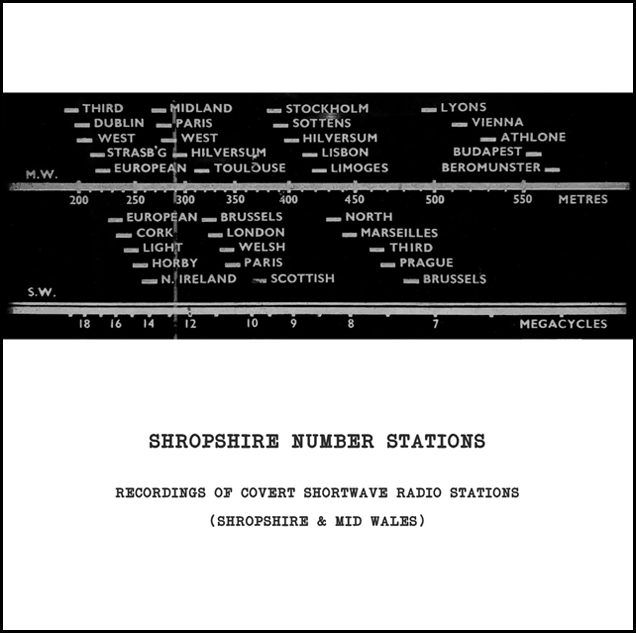
SHROPSHIRE NUMBER STATIONS
Shropshire & Mid Wales
(Plenty Wenlock)
Are shadowy spooks in trilbies and macs lurking amid the sodden wheatfields of Oswestry? Eric Loveland Heath certainly thinks so, creating this flawless homage to mysterious ‘Number Stations’ and their weird shortwave radio broadcasts, long rumoured to be coded instructions to spies in the (often literal) field.
From opening communiqué ‘The Minsterley Tumbler’ onwards, it’s a pitch-perfect recreation of these eldritch missives. There are ear-splitting bursts of static white noise, Speak & Spell renditions of disarmingly jolly melodies, and emotionless readings of number sequences (“3-5-7-7-3-3-5”) that may (or may not) be ciphered instructions to take a poisoned umbrella into the streets of Telford. Heath, apparently, has already been broadcasting this collection from a discreet Shropshire layby, and the subsequent recordings from his own car radio are included as a bonus download. The perfect summertime treat for those disappointed that The Conet Project never headlined at Glastonbury.
Album available here:
https://plentywenlockrecords.bandcamp.com/album/shropshire-mid-wales
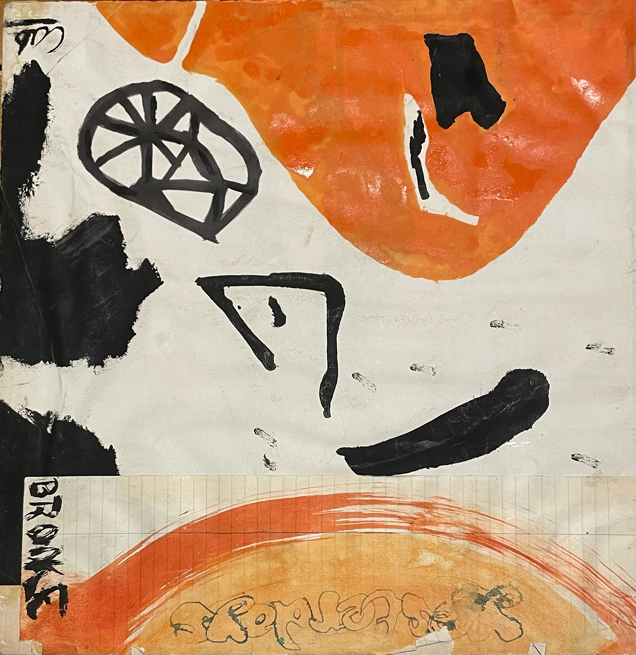
THE ALL GOLDEN
Sympathetic Magic
(Island House)
Mackem multi-tasker Pete Gofton raids his 1990s Tascam archives for another charming selection of hissy nostalgia with a distinctly psychedelic edge. Opener ‘Pink Saturday Mornings’ combines windswept drones with tinkling windchimes, before both ‘Days Of Running Wild’ and ‘Ten Dreams’ add dreamy synths and jangly guitars. The wobbles of Gofton’s ageing TDK D90s provide an extra layer of wistfulness, and the fizzling shards of ‘The Red House’ are a touching throwback to the days when the chorus pedal reigned supreme and backstreet rehearsal rooms stank of fags and Tennent’s Super.
Album available here:
https://theallgolden.bandcamp.com/album/sympathetic-magic
DANDELION ADVENTURE
John Peel Session
(Wormer Bros)
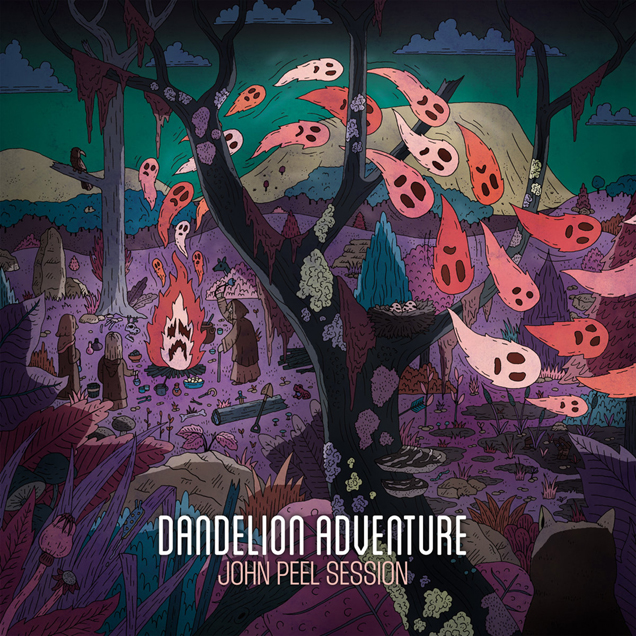
The post-Smiths, pre-Britpop indie interbellum is a lo-fi treasure trove of weird delights, encapsulated by this splendid time capsule release from a Lancashire five-piece once beloved of My Bloody Valentine. Guitarist Ajay Saggar has spruced up their 1990 Peel session for a limited vinyl pressing, with the likes of ‘Exit Frenzy Revisited’ and the spoken word ‘Bing Crosby’s Cathedral’ finding the snarky midway point between The Fall and John Cooper Clarke. On the flipside are the band’s 1988 four-track debut recordings, with the fuzz-drenched, double-drum attack of ‘Speed Trials’ a lip-curling treat.
Album available here:
https://dandelionadventure.bandcamp.com/album/john-peel-session
PULSE: JODIE NICHOLSON
Who?
This Darlington singer-songwriter presented an impressive collection of teenage confessionals on her 2019 debut album, Golden Hour. But Jodie Nicholson’s sumptuous follow-up Safe Hands is a huge leap forward, fusing elegant songcraft with some surprisingly retro synths and beats.
“A lot of that stems from my prog rock upbringing!” laughs Jodie. “I had heavy doses of Marillion and Pink Floyd, but since I was a kid I’ve also listened to tons of Totally Enormous Extinct Dinosaurs, who dabbles in all kinds of electronic music. So I’ve always delved into that synth-dance world, though it’s never fed so much into my own songs until now.”
Why Jodie Nicholson?
Her beat-heavy 2020 single ‘Move’ was playlisted by BBC Radio 6 Music, and the success bolstered Jodie’s confidence in taking full control of her sound. Hence the album title?
“Yes!” she beams. “The album is centred around self-trust. I wanted to produce my own music in a studio, working with session musicians. So without being narcissistic, Safe Hands is about trusting myself to be capable of that. It’s me trying to stretch out.”
Tell us more…
Opening track ‘You Wanted This’ has virtually become her mission statement, an affecting note to herself to reconnect with her formative passions.
“I was trying to tap into why I wanted to make music in the first place,” she explains. “Thinking about being a kid, obsessed with Stars In Their Eyes and listening to Avril Lavigne. I was just trying to channel that childhood energy, and ‘You Wanted This’ is definitely my proudest production moment. That was the first time I thought ‘Yeah – I’m a producer. I can do this’.”
Safe Hands is available here:
https://jodienicholson.bandcamp.com/album/safe-hands
Electronic Sound – “the house magazine for plugged in people everywhere” – is published monthly, and available here:
https://electronicsound.co.uk/
Support the Haunted Generation website with a Ko-fi donation… thanks!
https://ko-fi.com/hauntedgen
 The Haunted Generation