(First published in Issue 112 of Electronic Sound magazine, April 2024)
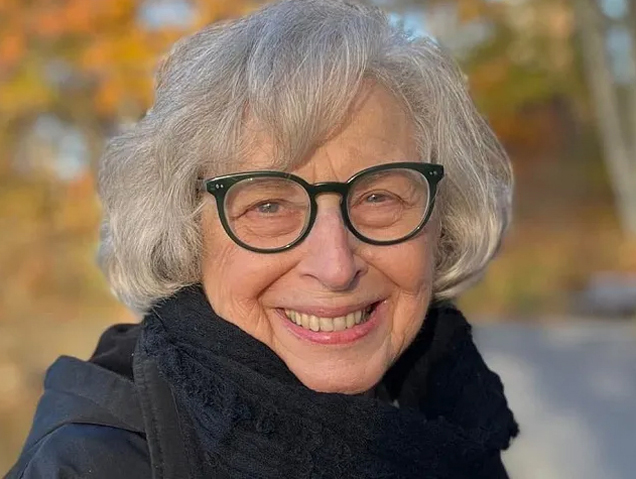
CALIFORNIA SCHEMING
In the 1960s, Dorothy Moskowitz voyaged through the heart of the US avant-garde, a journey culminating in the explosive psychedelia of her influential band, The United States Of America. Six decades on, she sees the essence of that artistic revolution in a new collaboration with Swedish producer Retep Folo
Words: Bob Fischer
“My very first serious approach to making discordant, ambient music using computers came during the firestorm of 2020,” begins Dorothy Moskowitz. “We saw the sun turn bright red, and we couldn’t leave the house. We were stuck inside for days, and I went up to the computer and wrote something called ‘September Burn’. We’ve had several firestorms since then, when we simply couldn’t breathe – they’re fifty miles away, but they affect the entire bay area in a heinous way.
“On a lighter note, when I first moved to California, I had jersey sweaters and a few linen pants. Now I have winter clothes and I have summer clothes, just as I did when I was growing up in New York. It’s a very different sort of weather system, and who knows what’s going to happen from day to day?”
As we speak, it’s a mild Thursday morning in Dorothy’s now-native Oakland, with little sign of the wildfires that have brought widespread devastation to the Golden State in recent summers. But the spectre of climate change still casts a deep shadow over her latest musical project, The Afterlife. It’s a compelling collaboration with arguably Sweden’s most accomplished musical anagram – Peter Olof Fransson, whose recordings as Retep Folo have combined alluringly old school synths with an offbeat jazz sensibility. The Afterlife adds a darker aesthetic, with Dorothy’s spoken word contributions and haunting harmonies punctuated by squalls of electronic noise.
“Facebook was our connection,” explains Dorothy. “Peter sent me a message and introduced himself. And instantly I was a fan. There was just something about the track and the video he sent me that reminded me of where my head was artistically in the early 1960s. There was some commonality between his aesthetic and mine, and I had this curious sensation of having known him in some way. When he said he was concerned about climate change, and how global warming threatened the existence of the human species, I didn’t need any convincing to go forward with text and lyrics that supported him.
“The other thing that attracted me was the way he made his videos. I’m not sure if anyone knows who Ray Johnson is? He was an avant-garde collage artist in the early 1960s, running something he called the New York Correspondence School. He would send out postcards of random snippets to people, and you would add your own snippet and post it back to him. I was absolutely fascinated by the way he created collage, with the juxtaposition of unlike elements, and there were similarly unusual collisions in Peter’s work.”
And how, I wonder, do those artistic collisions translate into Retep Folo’s musical compositions?
“In the avoidance of cliche,” she replies. “The Afterlife sounds very easy to listen to, but he’s doing 5/4 time and using cadences that you expect to be symmetrical – but they’re not. Also, there’s a whiff of analogue sound. You hear the smell of analogue music in there, don’t you?”
Absolutely. There’s a splendid waft of the old school in there. Whirring tape machines and studios with eggboxes on the walls.
“That’s what he was after,” smiles Dorothy. “I’m not sure how he treated my voice – he didn’t have ring modulators and the whole hocus pocus we had with the United States of America. But he really wanted a specific sound, and I like that sound.”
The Dorothy Moskowitz story is complicated and compelling, with some frequently eyebrow-raising diversions. It began amid the hurly-burly of 1940s New York, where she was surrounded by a myriad of cosmopolitan influences.
“My mother’s family was pretty musical,” she recalls. “She had a lilting voice, and often told me that my slightly breathy sound reminded her of her own father, who could lead services in Hungary without formal cantorial training. My older sister studied classical piano and even performed professionally in her younger days. But it was probably my tone deaf father who influenced me the most. Max Moskowitz had no memory for lyrics, but it never deterred him from singing random snatches of some Grand Ole Opry tune in an odd Carpathian accent. He was not easily embarrassed, and he needed no coaxing at a wedding or Bar Mitzvah to display his Kazatsky skills.”
What she describes as a “turning point” came in early 1960s Manhattan. As a student at Barnard College, the women’s college of Columbia University, she heard Karlheinz Stockhausen’s 1955 opus ‘Gesang Der Jünlinge’. Combining disorienting electronic pulses with the manipulated vocals of 12-year-old chorister Josef Protschka, this pioneering composition made an indelible impression on the 21-year-old Dorothy.
“It was a tape concert at MacMillan Hall on the Columbia campus,” she explains. “This was the late spring of 1962. There was no maestro with a baton, no harmonies and no accessible melody or pulse, just the sound of a child’s voice combined with ethereal electronica. It held enormous emotional power. Until that moment, I was a collegiate tunesmith. But a few months later, I met Joseph Byrd, who introduced me to the Fluxus-inspired avant garde artists in Manhattan. His closest friends were the composers Malcolm Goldstein, Phil Corner and La Monte Young, the artist Marian Zazeela and the percussionist Max Neuhaus, who had actually toured with Stockhausen. There were happenings, with pieces that could run for hours, and all of this ferment was life-changing.”
By 1963 she was in a relationship with Byrd, and by the mid-1960s the couple had decamped from New York to Los Angeles. There, they befriended a married duo whose experimental electronic soundtrack to a classic science fiction film had seen them cold-shouldered by the conservative gatekeepers of the mainstream film and music industry alike.
“Louis and Bebe Barron had written the musical score for Forbidden Planet in the late 1950s,” says Dorothy. “But they’d fallen into obscurity due to the machinations of the music industry and the unions. They were not considered to be composers. Joseph brought me over to visit them and they invited us into the room where they kept their tubes – in stack upon stack of iron cages. We tiptoed in, as though they’d taken us into a nursery. Bebe explained that the tubes had a life of their own, and that their sounds would only extinguish at their own pace. I found out later that Louis had invented these sounds himself: he was very adept at what was called ‘cybernetics’ at the time. But it was Bebe that created the leitmotifs, she came up with individual sounds for each of the characters in the movie.”
In 1967, Moskowitz and Byrd formed The United States Of America, a band whose self-titled 1968 debut – their only album – remains potent and powerful, a giddy concoction of psychedelia, sound collage, electronic experimentation and Dorothy’s own strikingly manipulated vocals. The venture, however, was disappointingly short-lived. By the end of the year, the band had split. Almost six decades on, she seems rueful that their music sacrificed the pioneering spirit of her formative years for a more commercial approach.
“In other interviews, I’ve talked about the elements that led to our early demise,” says Dorothy. “The conflicts and the dying label support. But there’s another thread that I haven’t traced before. It has to do with that experimental world that I described earlier, that Fluxus-inspired coterie in New York in the early 1960s. What we all seemed to share was a love of Dadaism. And it wasn’t nostalgia, it was more like a game plan that favoured random collisions, with no outdated aesthetics involved. So when Joseph asked me to move from New York, I assumed we would be staging happening-like events, being confrontational, even asking the audience to create random noises. Very little of this actually took place. Maybe that was my greatest disappointment – we were trying too hard to be mainstream. Had we been truer to our experimental roots, we might have held together more easily.”
However, the influence of Louis and Bebe Barron continued to be pervasive.
“They came to one of our concerts,” says Dorothy. “I got to be friendly with Bebe, but at the time she wasn’t composing any more. She had opened up a boutique in Santa Monica called Ephemera. If you look at the US of A album cover, down at the very bottom, it says ‘Costumes by Ephemera’. So that’s how I got to know Bebe personally – I asked her questions about composition, and she turned me from a frumpy ex-hippy into something that was pretty strange! I looked like something out of A Clockwork Orange. I was wearing a derby hat, a bobby cape and bright shiny silver stockings, and that was all Bebe Barron’s creation. We’d get to walking and talking, and I’d ask her about composition. One day I asked about the fact that each of these tubes had its own lifespan and she didn’t know what was going to happen. She said ‘Dorothy, that’s the wonderful thing about it – you just have to let the circuitry run its course”.
And ain’t that a fine metaphor for life?
“I’m writing a song about it now!” laughs Dorothy. “When I make electronic music now, I’ll sometimes lay a patch into a place where it’s not intended – I’ll copy a drum track into an oboe track and sometimes the collisions can be very surprising. And I don’t correct them, because Bebe’s ghost is in my office saying ‘Let the circuitry run its course, Dorothy’.”
The circuitry ran in some typically fascinating directions. She speaks fondly of her time in the All-Star Band of psychedelic folkster Country Joe McDonald, opening for The Who in Paris and recording at the ‘Honky Chateau’ studio once so beloved of Elton John. Then, by the mid-1970s, she was working as a voiceover artist on Sesame Street, providing half-sung narration for a jazz-fuelled piece of animation that has since become the subject of much online consternation. ‘Cracks’ tells the story of a young girl who sees the fissures in her bedroom wall transformed into a menagerie of animals. Aired fleetingly between 1975 and 1980, it was then banished – for reasons unknown – to a dusty archive, existing only in the realms of fuzzy childhood memory. To seasoned US hauntologists, it has taken on mythical status.
“There’s a lot of action on the internet about it,” says Dorothy. “When I tried to do the research, I found the woodwind player, the great Mel Martin, had passed away. The producer and probable script-writer Peter Scott was long gone too, and his family didn’t know anything about it. The only person left who might know something was Andy Narell, the steel drum player. But talk of hauntology… when we were recording it, a curious apparition appeared in the studio. A wraith of a young woman floated in, wearing shroud-like threads. Her name sounded invented, something like ‘Ether’ or ‘Skyward’, and she said [floaty, ethereal voice] ‘We’ll be finishing the animation soooooon’. A real white witch of a voice!
“I never heard anything more about it until decades later. Never saw it on TV. I was very surprised to learn it had creeped out so many youngsters, and that no one was able to find any record of it for so many years. In 2019 I started getting inquiries about it, and that led to a podcast and some media attention. I wasn’t previously aware that I was the focus of such nostalgia. Maybe I’m the Grandma Moses of hauntology!”
The Afterlife too, I suggest, has affectingly hauntological overtones. Albeit with something of a family feel. There are immaculate harmonies from both Dorothy and her daughter Melissa – herself an accomplished performer with Seattle yacht rock outfit Point Of Sail – and Melissa’s sister Jessica provides atmospheric field recordings. And threaded throughout is an oddly chilling narrative provided by Dorothy’s school-age grandson, Hudson.
“Because of the ecological aspect, Peter wanted the sound of a child’s voice, and for this album to be addressed to future generations,” explains Dorothy. “What will they think of our slipshod approach to the planet’s falling apart? So he gave me a little script, and my grandson was barely five years old when he recorded it. Peter mixed him lower than I would have done, possibly to capture the essence of what was being said rather than the content: a child is watching us from somewhere, and in a couple of years that child will be forty years old and saying ‘What happened here?’
“He’s a Lego addict and he builds things five times his size, so he was very busy with his Legos while I was feeding him his lines. His real name is Hudson, but he changed it to Boom when he was three or four. I said ‘Why Boom?’ and he said ‘Because I’m an astronaut!’”
And with that, the circuitry – for this conversation at least – has run its course. She talks excitedly of future projects and collaborations, but is keen to sign off by stressing the genius of her most recent musical partner.
“The Afterlife is Peter’s masterpiece,” she affirms. “I was just lucky enough to be called in on it. He didn’t have to do any coaxing at all.”
The Afterlife is available here:
https://buriedtreasure.bandcamp.com/album/the-afterlife-cd
New 2025 version:
https://buriedtreasure.bandcamp.com/album/the-afterlife-2
Electronic Sound – “the house magazine for plugged in people everywhere” – is published monthly, and available here:
https://electronicsound.co.uk/
Support the Haunted Generation website with a Ko-fi donation… thanks!
https://ko-fi.com/hauntedgen
 The Haunted Generation