(First published in Issue 106 of Electronic Sound magazine, October 2023)
THE MOTHER OF INVENTIONS
In the mid-1960s, Delia Derbyshire collaborated with playwright Barry Bermange on Inventions For Radio, a series of groundbreaking sound collages. Dr David Butler is a curator of the Delia Derbyshire Archive, and looks ahead to a forthcoming box set of these pivotal radiophonic recordings
Words: Bob Fischer
“Delia was working on Inventions For Radio at the same time as ‘Doctor Who’, so this was a really intense time for her,” explains Dr David Butler. “She’d joined the Radiophonic Workshop in April 1962, and been eased in relatively gently. But by 1963, her reputation had really started to grow within the BBC.”
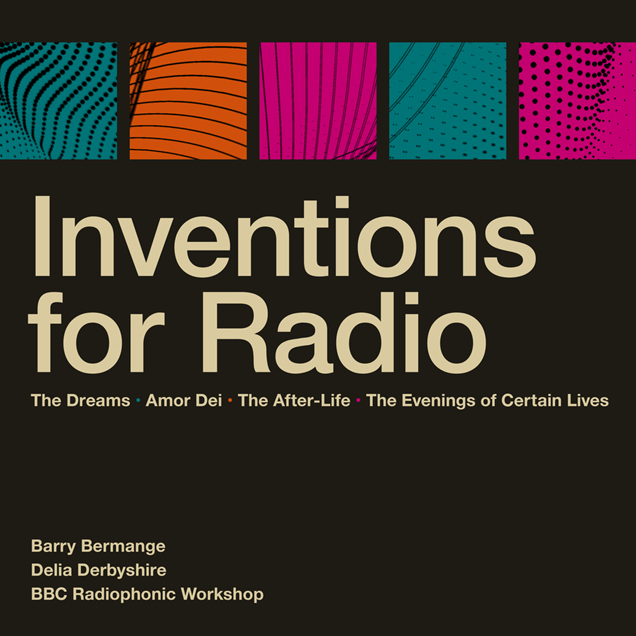
This year sees the first-ever official release of Inventions For Radio, a compelling series of sound collages broadcast by the BBC’s Third Programme radio service in 1964 and ’65. Initiated by playwright Barry Bermange, the series comprised four 45-minute instalments: ‘The Dreams’, ‘Amor Dei’, ‘The After-Life’ and ‘The Evenings Of Certain Lives’. Bermange had collected field recordings of everyday Londoners and Home Counties residents discussing impressively weighty matters, from the nature of their dreams to their relationship with God and their ideas about the hereafter. Edited into meticulously-assembled montages and combined with Delia Derbyshire’s sympathetic radiophonic accompaniment, they make for a touching and sometimes unsettling listening experience.
David, a senior drama lecturer at Manchester University, is a curator of the Delia Derbyshire Archive and the writer of a forthcoming biography about this most enduringly fascinating of radiophonic trailblazers. Inventions For Radio, he says, forms a pivotal part of her body of work.
“In the 1960s, Barry Bermange was part of the absurdist theatre movement, alongside people like Harold Pinter and Samuel Beckett,” he says. “People were touting him as one of the next big things in British theatre, and he had some genuine success. He really is significant, and Inventions For Radio wouldn’t have happened without him. But Delia did much more than was acknowledged…
“There’s a smoking gun. When ‘The Dreams’ went out, there was a memo from the BBC’s Head of Radio Features saying they’d been impressed by Delia’s work, and they were going to commission more from Barry Bermange. Desmond Briscoe, the Head of the Radiophonic Workshop, wrote a note saying ‘I would like to discuss Delia’s contribution to this programme… apart from the obvious electronic music‘.”
The skilful arrangement of the speech snippets, says David, suggest Derbyshire was heavily involved in the editing process, seamlessly weaving metaphysical thoughts from the anonymous users of Hornsea Old People’s Welfare Council into her first truly long-form musical compositions. But the result wasn’t to everyone’s tastes. BBC audience reports, collected immediately after the original broadcasts, include complaints from Third Programme listeners about “moronic mumblings” and “self-opinionated non-entities”. In 2023, these reactions seem jaw-dropping. By anyone’s standards, the members of the public recorded for Inventions For Radio speak with great erudition and articulacy.
“It tells you a lot about the listenership of the Third Programme,” says David. “The BBC Handbook itself says the Third Programme was seen as having a narrower audience – so you are going to get ‘Disgusted of Tunbridge Wells’ in there. People who have working class accents discussing the psychology of dreaming, or whether God exists? There seemed to be a feeling that they didn’t have the right to talk about those things. It should be a philosopher or a theologian, Aldous Huxley or Malcolm Muggeridge.
“It’s easy to over-romanticise that period. With A Taste Of Honey and Coronation Street, working class voices were coming through, but it didn’t happen overnight and there were still prejudiced attitudes around. I think Inventions taps into that, and that’s what makes it so remarkable and important.”

The series, David suggests, also captures a salient moment in Delia Derbyshire’s progression as a composer. Devising her arrangements for Inventions For Radio, she drew on lessons she had learned at Dartington Hall Summer School – a residential course in contemporary music founded in 1953 by William Glock, who became the BBC’s foward-thinking Controller of Music in 1959. A year before beginning work on Inventions, Derbyshire had helped to run a week of educational workshops delivered by a major figure in the electronic music field.
“In August 1962, Delia went away to Dartington and worked with Luciano Berio,” says David. “And Berio’s influence is definitely on Inventions – especially the chopping up and transformation of the human voice. You can tell, when she comes back, that his ideas are flying around in Delia’s head. She references him in her notes, and she starts creating graphic scores after seeing Berio use them for his pieces. That experience was massive for her in developing her understanding of electronic music. Prior to that, she’d largely been learning on the job.”
With regard to Inventions, the relative credit afforded to Bermange and Derbyshire has, says David, shifted over the decades to reflect their respective reputations. In the 1960s, Derbyshire’s contribution – in accordance with BBC policy of the time – stayed anonymous, covered simply by a catch-all credit for the Radiophonic Workshop. Her first on-air acknowledgement prefaced a 1977 repeat on BBC Radio 4. But after her death in 2001, suggests David, it’s Bermange’s vital contributions that have been slightly overshadowed by the surge of interest in Derbyshire’s work.
Nevertheless, he nods enthusiastically at the suggestion that Inventions was a project deeply infused with Derbyshire’s own personality and complex upbringing.
“One of the reasons she became so obsessed with music was that it offered an escape from the things that troubled her as a child,” he says. “Her parents bought her a piano when she was eight years old, and music completely took over her life. The doodles in her notebooks are often clefs or staves or piano keyboards, and there’s one page where she’s just written the word ‘music’ over and over – it’s like Jack Nicholson in The Shining!
“When Delia was six, her sister Benita died, at the age of four. They’d been evacuated together and had a close bond, and they’d barely returned home from the war. So it’s revealing that a lot of Delia’s writing about music – as a child and as a teenager – is repeatedly about its transcendent quality. The ability of music to take you out of this world and into another state. In ‘The Dreams’, ‘Amor Dei’ and ‘The After-Life’… it’s all there. I think these pieces spoke to her, and she was able to plug into things that had really informed her and her interest in music.”
Inventions For Radio is available here:
https://www.silvascreen.com/sillp1598-inventions-for-radio/
CD version here:
https://www.normanrecords.com/records/200452-barry-bermange-delia-derbyshire-bbc-inventions-for-radio
Electronic Sound – “the house magazine for plugged in people everywhere” – is published monthly, and available here:
https://electronicsound.co.uk/
Support the Haunted Generation website with a Ko-fi donation… thanks!
https://ko-fi.com/hauntedgen
 The Haunted Generation