Reviews originally published in Issue 107 of Electronic Sound magazine, November 2023:
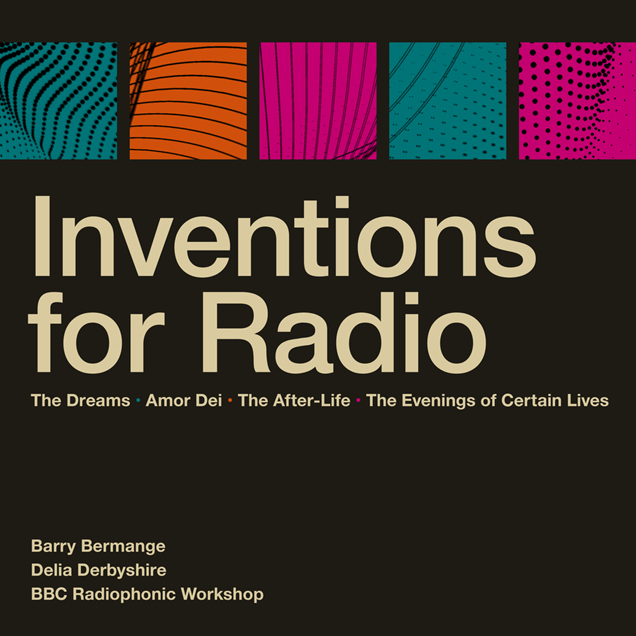
BARRY BERMANGE & DELIA DERBYSHIRE
Inventions For Radio
(Silva Screen)
“This is an attempt to illustrate, with sounds and voices, the dream condition. All the voices were recorded from life and arranged in a setting of pure electronic sound…”
The plummy-voiced BBC announcer sums it up perfectly. In 1963, playwright Barry Bermange conducted a series of unorthodox “vox pops” with assorted members of the public, many of whom were users of the Hornsey Old People’s Welfare Council. The task he set them? Simply to describe the details of their nocturnal imaginings. The resulting interviews were assembled into The Dreams, a 40-minute sound collage set to radiophonic backing by an uncredited Delia Derbyshire and broadcast on the BBC’s pragmatically-titled Third Programme.
And blimey, “the dream condition” is illustrated with knobs on. And, presumably, twiddled. “I’m being followed and pursued by something,” begins one tremulously nervous lady, as Derbyshire’s electronic heartbeat quickens. “I swam as fast as I could to get away from the crocodile, but the crocodile suddenly changed into a lion and then that changed into a tiger,” continues a younger-sounding gent. In an impeccably-assembled narrative, our collective dreamers plummet through disorientating voids before emerging into bafflingly alien landscapes. “It looks like the moon because it’s all dried up,” recounts one bemused woman, with Derbyshire’s accompaniment so redolent of her most famous TV assignment that it’s hard not to imagine a police box gently materialising at the edge of a crater.
But the journey takes a darker turn. In a “frightening and suffocating sea”, genuinely deceased family members cling onto heartbreaking vestiges of life. “I could feel this tin hat… I could see my youngest brother’s face,” recounts one lady. “He more or less shuddered… I thought to myself I know he’s safe, he’s alive. I must tell my mother”. The dreams collected are a fascinating insight into the British unconscious of the 1960s, but also act as a touching reminder that our collective psyche still bore deep, emotional wounds from the trauma of two recent world wars. Derbyshire’s drone-like soundscape becomes a throbbing scar on a rainy, grief-stricken day.
Three more Inventions For Radio – as they became titled – followed throughout 1964 and ’65. The next, ‘Amor Dei’, is an intriguing theological debate. “God is my friend, my only friend,” pleads one elderly contributor, her voice cracking with emotion. But there’s no shortage of dissent. “A social ritual for weak people who can’t think for themselves,” is the dismissive conclusion of one uncompromising mansplainer. Derbyshire’s accompaniment – uplifting electronic hymnals for the believers, a shoulder-sagging hummadruz for the cynics – feels like a reminder of her own staunchly Catholic upbringing.
‘The After-Life’, meanwhile, assembles collective expectations of the Great Beyond. “One is granted a vision of loved ones who have preceded us into a higher life,” insists one clearly convinced male interviewee. The nervous jangle of Derbyshire’s music feels less certain, but she surrenders to a spectral church choir as the ailing residents of Hornsea seek refuge in the green fields and clear water of the hereafter. “I know what it is to have pain and sickness,” states one frail-sounding old lady, and any cynicism suddenly feels unspeakably and unnecessarily cruel.
The final instalment, ‘The Evenings Of Certain Lives’, initially feels like a dispiriting over-extension of this theme. Here, the more elderly of Bermange’s contributors reflect on the miseries of physical ageing, detailing a litany of aching backs and failing hips. But there’s an unlikely turning point. “I was gassed during the First World War,” recalls one old boy. “That slowed me down”. It’s the opening of an affecting portal to the stolen childhoods of the early 20th century. Of frolics in Highgate Pond, of gunfire at Ypres and crashed Zeppelins, of the crepuscular duel between “a swordfish and shark” witnessed by one croaky-voiced sailor five or six decades earlier in some far-flung ocean of his youth.
Derbyshire’s contemporaries at the Radiophonic Workshop have spoken of Inventions For Radio as her finest achievement. But it’s important not to underplay the contribution of Bermange, whose concept provides both an emotional rollercoaster and a priceless window into the social mores of everyday 1960s life. This first-ever commercial release, comprising three hours of extraordinary radio and a selection of isolated cues, feels indispensable. And the message throughout is consistent. Life can be painful, but – if you know where to look – it can also be filled with hope and beauty. Above all, it’s important to take note of the sage advice offered by one spirited old gal in the final instalment. “Never give up,” she asserts. “Try and do something… that’s my opinion of life.”
Sixty years ago, Bermange and Derbyshire did something rather wonderful.
Album available here:
https://www.silvascreen.com/sillp1598-inventions-for-radio/
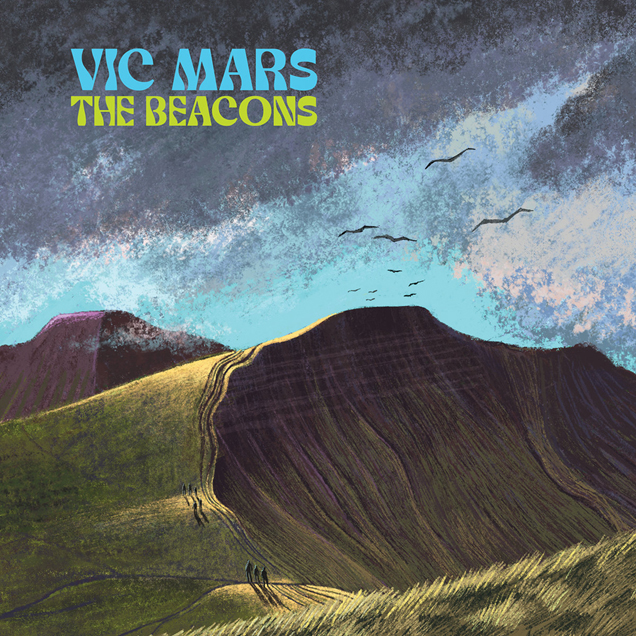
VIC MARS
The Beacons
(Clay Pipe)
It’s the moment.
Those who frequently walk alone in wild places will recognise it. The chilling turning point when an amiable afternoon ramble – all flapjacks and ‘The Happy Wanderer’ – is suddenly subsumed by nebulous disquiet. Storm clouds gather, casting ominous shadows on already forbidding hillsides. Birdsong is silenced, the wind murmurs through the branches of skeletal sycamores, and there’s a decomposing sheep at the foot of a joyless cairn. Without a whisper of warning, you’re acutely aware of being uncomfortably alone. The Beacons, Vic Mars’ third album for Clay Pipe, captures the moment perfectly.
Previously, Mars has channelled the gentle calm of his native Herefordshire into elegantly pastoral albums, indebted equally to Ralph Vaughan Williams and the music box from Camberwick Green. But The Beacons crosses the border, belonging firmly to the unforgiving landscapes of the Welsh mountains. The foghorn rumble of a windswept Moog lures us onto the frost-flecked slopes of ‘Picws Du’, before a waltzing melodeon stumbles breathlessly across the deserted plateau of ‘Foel Fraith’.
There’s dark social history here. The wistful synths of ‘The Obelisk’ circle mournfully above the spot where missing infant Tommy Jones was found dead in August 1900. And there are two paeans to wartime plane crashes. The plaintive piano of ‘Memorial Cairn’ commemorates the 1942 loss of a Wellington Bomber at the summit of Waun Rydd. And ‘MF 509’? Another doomed aircraft whose night-flying exercises ended in tragedy on Carreg Goch in November 1944, with the loss of all six Canadian crewmen. Stuttering synths, the ping of radar and a swell of elegiac ambience marks their passing here.
Elsewhere, there are lighter tones. ‘Cwm Llych’ is a shimmering dance across the surface of this modest lake, where – according to local legend – an idyllic, invisible island populated by fairies was once accessible from a secret door at the water’s edge. Mars weaves softly-strummed guitars around humming drones to lure the fey folk from their hidden paradise. And there is, of course, a triumphant ending. The climactic strings of ‘Ystradfellte’ are a bone-thawing whisky in this isolated Powys village, and the moment suddenly feels like a folly, an indulgent surrender to barely-there danger.
It’ll be back, though. It always comes back.
Album available here:
https://claypipemusic.bandcamp.com/album/the-beacons
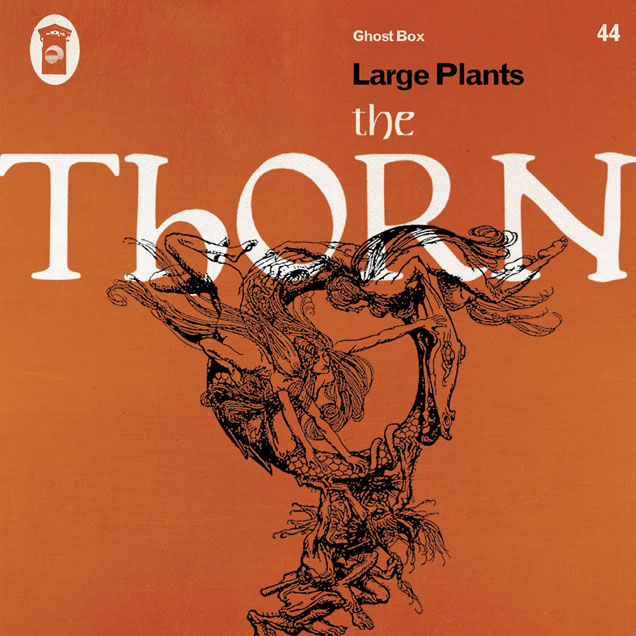
LARGE PLANTS
The Thorn
(Ghost Box)
“The thorn is not a gentle tree, it scratches and it stings”. Jack Sharp’s second Large Plants album is a folkier affair than the ‘eavy rock of 2022’s excellent The Carrier, but will still delight anyone raised during a time when pixie-hatted longhairs regularly explored the outer realms of Middle Earth on The Old Grey Whistle Test. Recording single-handed in a semi-derelict barn, Sharp adds vintage synth sounds to his immaculate guitar stylings and crafts a collection of gloriously pastoral prog.
Ecological concerns pervade. ‘The Death Of Pliny’ sees the demise of Roman naturalist Pliny The Elder during the eruption of Vesuvius as a salutary warning against modern-day climate complacency. “The earth does not care at all / If every man should fall,” sings Sharp in a deceptively winsome whisper. Elsewhere, the vulnerable ‘Hope It Is A Feathered Thing’ boasts a whiff of Peter Green-led Fleetwood Mac, and there are equal hints of Trees, Comus, Circulus and all others who ever travelled the hallowed pathways betwixt acid-fried psych and bucolic folk-rock. Sublime.
Album available here:
https://ghostbox.greedbag.com/buy/the-thorn-1/
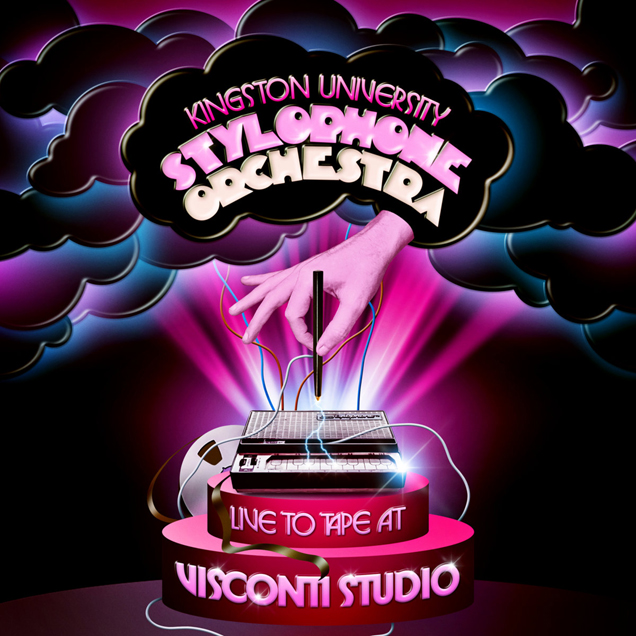
KINGSTON UNIVERSITY STYLOPHONE ORCHESTA
Live To Tape At Visconti Studio
(Spun Out Of Control)
“The idea behind the orchestra is just to play cheap, battery-powered synthesizers together”. That’s the modest announcement from founder Leah Kardos at the outset of this as-live covers collection, but she’s selling the project short. ‘Who Gives A Thought’ turns Brian Eno’s recent album-opener into a thrilling buzz of massed stylophones, pierced by the soaring vocals of Kardos and long-term orchestra member Zuzanna Wężyk. And their take on ‘Are “Friends” Electric’ – complete with Yarwood-esque Numan impersonation from Athos Kyriacou – is genuinely grin-inducing.
Really, it should be throwaway fun. But, as with 2022 debut Stylophonika, there are unexpected depths. Kardos is a respected Bowie authority and an accomplished solo artist, effortlessly combining academic rigour with irreverent affection. An approach epitomised by the orchestra’s timely take on the theme from Doctor Who, where the evocative buzz of the quintessential 1970s toy instrument collides perfectly with the ultimate example of teatime telly weirdness. It’s like all our childhood Christmases come at once.
Album available here:
https://spunoutofcontrol.bandcamp.com/album/live-to-tape-at-visconti-studio
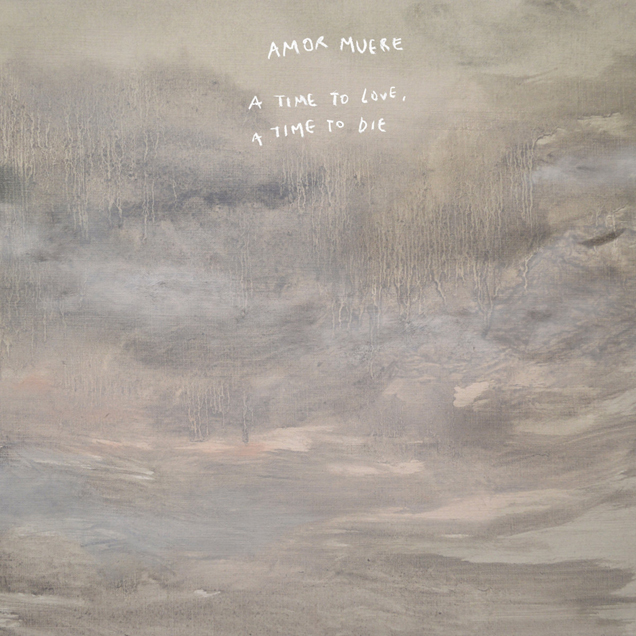
AMOR MUERE
A Time To Love, A Time To Die
(Scrawl)
Mexico-based Mabe Fratti frequently brews her own giddy concoction of ambient dreampop and contemporary classical, but here she forms an “experimental supergroup” with singer Camille Mandoki, violinist Gibrana Cervantes and tape manipulator Concepción Huerta. Opener ‘LA’ sets an impressive tone, with Fratti’s jagged cello lines and honey-toned vocals succumbing to overpowering noise. ‘Can We Provoke Reciprocal Reaction’ adds jazzy grooves, but 19-minute closer ‘Violeta Y Malva’ is the jaw-dropper, with Mandoki and Fratti’s voices combining thrillingly amid a stirringly dark dreamscape.
Album available here:
https://scrawlworld.bandcamp.com/album/a-time-to-love-a-time-to-die
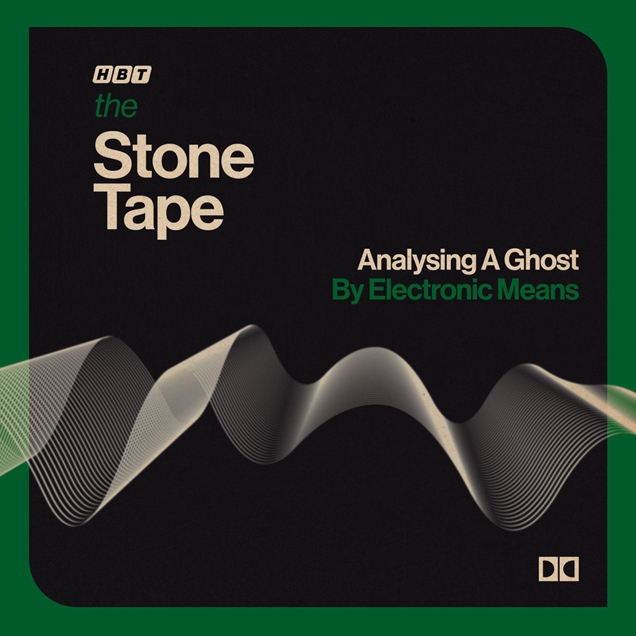
VARIOUS ARTISTS
The Stone Tape: Analysing A Ghost By Electronic Means
(Hidden Britain Tapes)
Nigel Kneale’s creepy 1972 TV drama The Stone Tape – in which Jane Asher gets the screaming abdabs from haunted walls – clearly still troubles the impressive roster of weirdies on this splendid tribute album. So The British Stereo Collective’s ‘Written In Stone’ boasts balefully melodic synths, and The Hardy Tree’s ‘Chuffy’ brings sinister folky ambience. And while the likes of Warrington-Runcorn New Town Development Plan and The Twelve Hour Foundation provide heavyweight hauntological chops, the curveball is ‘When They Return’, a dark hummadruz from Napalm Death founder Nic Bullen.
Album available here:
https://hiddenbritain.bandcamp.com/album/the-stone-tape-analysing-a-ghost-by-electronic-means
Electronic Sound – “the house magazine for plugged in people everywhere” – is published monthly, and available here:
https://electronicsound.co.uk/
Support the Haunted Generation website with a Ko-fi donation… thanks!
https://ko-fi.com/hauntedgen
 The Haunted Generation