(First published in Shindig! magazine #134, December 2022)
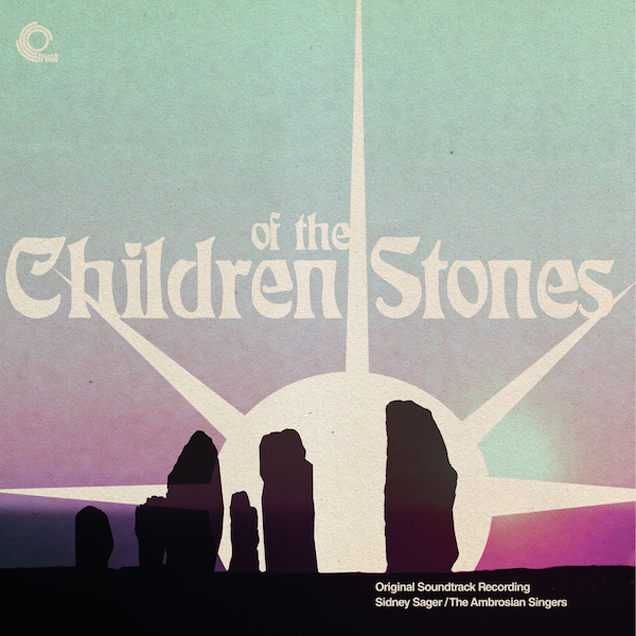
EVERYBODY MUST GET STONED
In 1977, a generation of British children were traumatised by the malevolent megaliths of teatime ITV drama Children of the Stones. Among them were future record label owners JONNY TRUNK and ALAN GUBBY, who – 45 years later – have joined forces to grant a first-ever release to the series’ alarmingly experimental soundtrack. BOB FISCHER says “Happy Day!” to them both…
“That title sequence to Children of the Stones…” muses Jonny Trunk, still wincing at the vestiges of residual childhood trauma. “It’s so unpleasant to watch. So harsh and avant garde. I was ten when I first saw it in 1977, but my little sister was only five. And if she’d been sat in our front room watching that, she’d have been genuinely disturbed.
“But it was a time when disturbing children’s television was everywhere. Just everywhere. Those shows have all now been well documented, and the piss has been taken out of them… but it’s still a fascinating period. An era when people were just trying to scare the shit out of us all.”
Even by ‘70s standards, there’s something insidiously eerie about Children of the Stones. Created by seasoned TV writers Jeremy Burnham and Trevor Ray, the seven-part series was filmed on location around Avebury stone circle during the blistering summer of 1976. It follows the tribulations of astrophysicist Adam Brake (played by future Blake’s 7 star Gareth Thomas) and his son Matthew, lodging in the fictional village of Milbury on a short-term research project. And, predictably, all is not as it seems. The locals, in thrall to the ancient megaliths that surround their homes, have a vacantly sunny disposition (“Happy Day!”), while Matthew’s docile new schoolmates seem unnaturally intelligent. Village bigwig Hendrick (played with oily relish by Iain Cuthbertson) is clearly harbouring sinister secrets, and only wild-eyed poacher Dai (Freddie Jones) appears immune to the suffocating sense of disquiet that envelops the entire village. For Jonny Trunk, the series perfectly encapsulates an era already steeped in earthy wrongness.
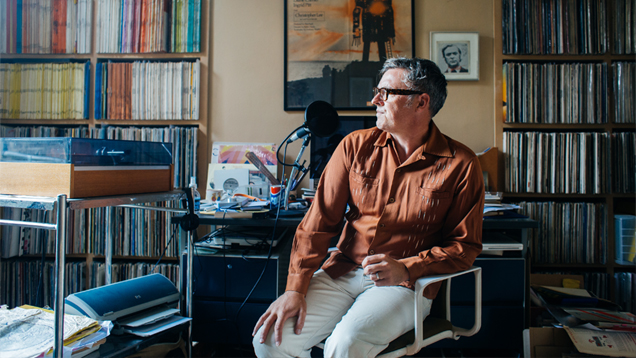
“Stone circles were a good starting point for spooky weirdness, weren’t they?” he chuckles. “Druids, solstices and magic. We were still coming out of 60s hippydom, and the people making TV programmes in the ‘70s were really into that stuff. Plus… my family used to go on holidays to the North York Moors, and we’d come across creepy old houses and weird circles in the woods. So I already had that interest in odd, otherworldly things.”
And that “unpleasant” title sequence? It still grates. Looming with supernatural intent, Milbury’s silhouetted megaliths blot the sun from a cloudless sky; black slabs filled with dark energy from ancient, arcane ceremonies. But it’s the music that lends these opening scenes such eerie, appalling power. Unearthly electronic swoops surrender to ritualistic choral chanting that borders on the semi-orgasmic, all performed with disturbing relish by the Ambrosian Singers, a baroque vocal group founded in 1951.
For Alan Gubby, it was a sound that held particular resonance.
“My grandmother was a concert pianist and church organist,” he explains. “So there was classical music in the family, and as a kid I’d get taken along to choral recitals. And I remember watching Children of the Stones when I was about ten, hearing the music and thinking ‘What?!?’ It’s just really, really creepy. It was shown just after we’d got in from school, and I think a lot of us got into it together. You look at the content now and think… surely this is an adult show? There are just so many layers to it.”
Jonny, of course, is the puckish prankster behind Trunk Records. Curator of bizarro British film soundtracks, lost advertising jingles and a delicious cavalcade of assorted flotsam from a tide of mid-20th century pop culture. Alan, meanwhile, is the benevolent overlord of the Buried Treasure label, with a passion for dark electronica and a fascination with the psychic fall-out from the Cold War. They are long-term friends, but – for the best part of a decade – neither had realised the other was secretly on the trail of the experimental soundtrack that had haunted their respective childhoods. A soundtrack created, implausibly, by a man whose previous work had rarely veered from the musical mainstream. Sidney Sager was a veteran composer who – in 1977 – had only recently been appointed musical director of ITV’s spooky outpost in Wales and the West Country: HTV.
“Sidney was born in 1917,” says Jonny. “He was virtually a pensioner when he wrote the music for Children of the Stones. Think how old 60 felt, back in 1977 – you were ancient when you were 35. And there’s not that much known about him, really. I think he was an East End Jewish musical kid. Same goes for the Ambrosian Singers, too: we just don’t really know very much about them. They were a roving, ever-changing group who never had a fixed line-up.”
Legend suggests Sager’s unexpected delve into the avant garde came at the behest of Children of the Stones producer Peter Graham Scott, who – on hearing a composition by Polish composer Krzysztof Penderecki on his car radio – was struck by the disquieting dissonance of the choral arrangement. Alan Gubby nods. He’s heard the story, too.
“There’s an anecdote about him driving back from one of the Avebury location shoots in 1976, wondering how they were going to score this creepy show,” he explains. “When he heard Penderecki, he said ‘We need something avant garde, like this…’
“But you look at Sidney Sager’s work in the late ‘50s and early ‘60s, and he was working with presenters like Johnny Morris. The music was very well done, but it was pure light entertainment. Children of the Stones was one of his first commissions for HTV, and it’s like nothing he’d ever done before. People say it’s influenced by Penderecki, but to me it sounds almost identical to a piece called Nuits by Iannis Xenakis, a Greek experimental composer. Can I play it to you now?”
At this point, Alan slips a CD into the player behind him and our conversation is overwhelmed by the sound of dissonant choral chanting. And bloody hell, he’s right – it sounds exactly like the music from Children of the Stones. So did Sidney Sager’s career at the fluffier end of the entertainment spectrum mask his interest in the more outré aspects of contemporary classical music? Alan is unconvinced.
“I suspect he was one of those working composers who was so highly skilled you could just give him a brief and he’d do it,” he shrugs.
For Jonny Trunk, unearthing the master tapes of the Children of the Stones soundtrack had become a long-standing obsession. Sidney Sager himself died in 2002, but a lead to the whereabouts of his musical archive was provided by Trunk Records’ 2009 release of another unconventional TV score: David Attenborough’s 1979 nature documentary, Life on Earth.
“I’d been trying to find the Children of the Stones tapes for ages, but I was getting nowhere,” recalls Jonny. “And then, one day, I was talking to Edward Williams – the composer who did the music for Life On Earth. This was about ten years ago, and he and his wife Judy started asking me which other TV soundtracks I was interested in. I said ‘I’ve been trying to find the music from Children of the Stones’. Judy said ‘Oh, we knew Sidney Sager for years. You should speak to his wife, Naomi. Here’s her number…’
“I thought ‘I can’t believe this…’ and I contacted her. But, with anything like this, you’re going to get one of two reactions. Either ‘Wow, how fabulous’, or ‘What, that old crap?’ And it was a ‘that old crap’ conversation. But I told her Life On Earth had sold really well, and that I’d like to release the music from Children of the Stones. She said ‘Well, I think there’s a box of tapes in the garage…’
“I said ‘Please! Go to the garage and see what’s there!’ She said ‘I’m not doing that, it’s too cold in the winter…’. So I phoned her again in the spring. ‘Hi, it’s me again! If it’s still too cold, don’t worry – I’ll drive up, have a cup of tea, then go in the garage myself and have a look’. But she didn’t want that, either. She did, however, give me the musical notation for Into the Labyrinth: a 1981 HTV series, also scored by Sidney. She said it was all she could find. So she wasn’t against me doing the release, she just couldn’t find the tapes. And I tried to pick up the trail again a couple of years later, but by that time Naomi seemed to have disappeared to an even more remote English village. She’d stopped replying to phone calls and e-mails, and Judy didn’t know where she’d gone, either.”
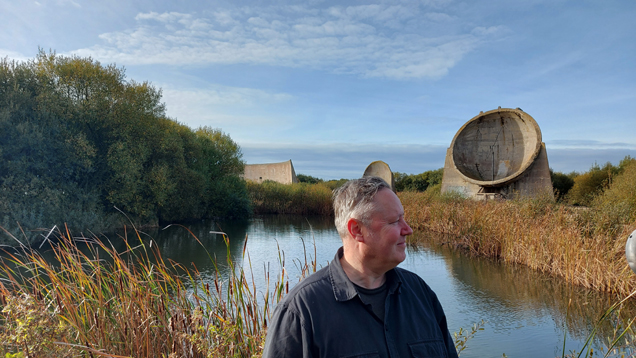
Even as the trail went cold, what Jonny hadn’t realised was that his friend Alan had already made significant inroads into tracking down the rights to the soundtrack, but needed help in facilitating a release.
“I was in the park at the beginning of 2022, and I was talking on the phone with Alan, who I’ve known for years,” recalls Jonny. “He basically said ‘You need to help me out here. I’ve got a recording that I can’t put out, so I think you should do it instead’. It’s Children of the Stones…’”
“I think he actually choked when I said it!” laughs Alan. “I’d worked with Jonny on quite a few projects, but I just hadn’t spoken to him – or indeed anyone – about Children of the Stones. Because the licensing had taken forever… I’d gone down lots of dead ends trying to trace the rights holders. HTV had been absorbed into Granada TV and Carlton Communications and, along the way, they’d just got rid of their paperwork. Eventually, I was more or less ready to go, but in the middle of COVID, to cut even a few hundred records, you had to pay all the money up front and I was being quoted a waiting time of 18 months. I just couldn’t afford to do it. But I knew that if I didn’t, someone else might – so I phoned Jonny and said ‘I’ve got an idea…’
“When he phoned me, I said ‘What?!??’ and told him about my search for Sidney,” smiles Jonny. “After years of legal dead ends trying to establish HTV rights and locate the score, Alan had obtained permission from Carlton to release the music from the actual TV soundtrack, providing we didn’t use any of the dialogue. There’s no official archive for the show, so the release had to be taken from existing digital files.”
With painstaking precision, Alan extracted 17 minutes of musical cues and provided essential restoration. “I took what I could isolate from the DVD,” he recalls. “The levels were all over the place with some very abrupt 1970s edits. Fortunately, Jeremy Burnham himself sent me a much better quality version of the audio master. So I pieced the music together without dialogue, smoothing levels and transitions so it didn’t jar or jolt quite as much”.
It’s a hugely impressive achievement, but – when our needles finally clunk on that long-overdue slab of vinyl – it won’t be the Ambrosian Singers’ nerve-jangling chants that provide that initial blast of Proustian nostalgia. The opening track of Trunk’s release is the 10-second musical sting from HTV’s regional ident, a 1970s sucker punch that had Spangles-sucking kids around the country bracing themselves for rural disquiet. As the ITV region encompassing Stonehenge, Glastonbury and Avebury, HTV was perfectly positioned as the network’s prime purveyor of folky strangeness.
And, in the midst of their Children of the Stones research, Jonny and Alan discovered HTV’s curious link to a previous joint project. In 2008, Trunk had issued two compilations of electronic music by arguably the BBC Radiophonic Workshop’s most distinctive, idiosyncratic and troubled composer: John Baker.
“When we put together The John Baker Tapes, the reels we were given had all his preliminary takes on them, too,” remembers Alan. “And a lot of it was non-BBC material. He was moonlighting, and often working with Johnny Johnson, who wrote the HTV ident music. Johnny was the king of the jingles: ‘Beanz meanz Heinz’, ‘Hands that do dishes’… he wrote all of those. And we knew John Baker had provided little electronic parts for a few of them, working under a different name: John Matthews. Basically so he could get paid for operating outside the BBC!
“Every time I heard the HTV ident, I thought ‘That really sounds like John Baker’. But it was only recently, when we were pulling Children of the Stones together, that I could finally say to Jonny Trunk, ‘You’re not going to believe this – I’ve just had the masters sent over from the Johnny Johnson archive, and it explicitly says ‘Electronica by John Matthews’. So the HTV ident absolutely is John Baker.”
Alan’s detective instinct also set him, rather splendidly, on the trail of Children of the Stones’ infamously creepy painting. Brought to Milbury by the unsuspecting Matthew Brake, it shows the villagers dancing around a powerful cosmic ray at the centre of their beloved stone circle. Alan was determined to track down the prop itself: painted for the show by artist Les Matthews, and a pivotal part of the serial’s unfolding plot.
“I went on such a wild goose chase with that painting!” he laughs. “I’d see people online saying ‘When I was a kid, I saw it on display at Avebury Manor’. Well… they might well have done, but it certainly isn’t there now. I got in touch with Lord Avebury, who sits in the House of Lords, and he came back to me on letter-headed notepaper saying ‘Thankyou for your inquiry, Alan. But I don’t recall ever having seen this painting…’ I was really clutching at straws. I searched for years. I even phoned the Red Lion pub in Avebury and asked if there were any regulars in there who might remember what happened to it.”
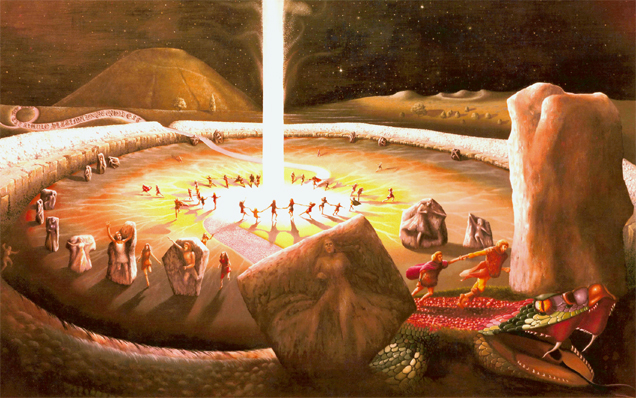
Again, it was Jeremy Burnham who provided the solution. “When I contacted Jeremy, he said ‘The painting? I’m looking at it now!’” smiles Alan. “There were a couple of copies made for the screen, and he couldn’t remember if his was the original, but he had some really well blown-up photographic versions of it from the 1970s, and he sent me one of those. So now there’s an A2 poster of the painting included with the record.”
“We got permission from Les Matthews as well,” adds Jonny Trunk. “He’s getting a royalty that’s probably more than he got paid in the first place…”
Trunk’s release also features postcard versions of six woodcut illustrations from the 1977 novelisation of the serial, and the album artwork is provided by Ghost Box Records’ artist-in-residence, Julian House. Sleeve notes have been penned by avowed Children of the Stones fan, Stewart Lee. For both Jonny and Alan, a decade’s worth of painstaking research and restoration has been justified to provide a beautiful vinyl homage to a series they both clearly adore.
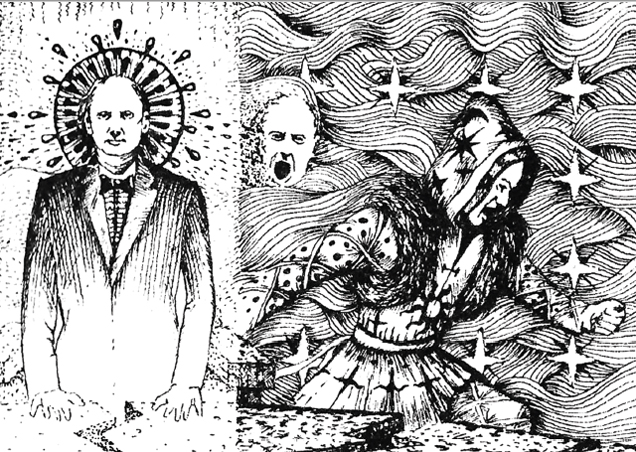
“Children of the Stones is still a touchstone for lots of people,” says Jonny. “Even though it was made four years after The Wicker Man, for most of us it feels like a prelude. Creepy kids, and the local villagers all joining hands and singing together. None of our generation saw The Wicker Man until the 1980s, so for us Children of the Stones came first!”
Alan, too, is fulsome in his praise – both for the show itself, and its writers. Neither of whom, sadly, have lived to see this release: Trevor Ray died in 2019, Jeremy Burnham in 2020.
“I love the series,” says Alan. “Trevor and Jeremy pitched it so intelligently – it’s not just spooky stones, there’s so much else going on. When I finally made contact with Jeremy, he was so approachable and generous, and lovely to work with. And he loved the fact that Children of the Stones had exploded and become this huge, cult programme.”
The music from Children of the Stones is available here:
https://trunkrecords.greedbag.com/buy/children-of-the-stones-original/
HOORAY FOR HTV
Five good reasons why HTV was the undisputed home of vintage TV weirdness…
Sky (1975): Intending to drop in on a future, post-apocalyptic Earth, glowy-eyed alien teenager Sky mistakenly arrives in the 1970s West Country. Rejected by Mother Nature’s “immune system”, he is attacked by the elements as an unwelcome infection on the planet. A thoughtful eco-minded script by Doctor Who’s resident “Bristol Boys” Bob Baker and Dave Martin provides future Indiana Jones alumnus Robert Eddison with glorious scenery-chewing opportunities as baleful baddie, Goodchild. Also: stone circles, Glastonbury Tor, hippies in caravans.
King of the Castle (1977): Bob Baker and Dave Martin again, with a script that sometimes feels more like experimental theatre than teatime telly. Menaced by future EastEnders meanie Jamie Foreman, shy teenager Roland escapes into a lift and is transported to a nightmarish, parallel universe version of the high-rise apartment he calls home. With guest roles for 1970s undisputed twins of TV sinister, Talfryn Thomas and Milton Johns and – yes! – Sidney Sager providing a suitably spooky score.
The Clifton House Mystery (1978): Just an ordinary day in HTV-land. When classical conductor Timothy Clare buys a ramshackle house in Bristol, his family swiftly discover a skeleton bricked up in a hidden bedroom, and all manner of ghostly shenanigans ensue. Featuring a fabulously ripe turn from Last of the Summer Wine’s Peter Sallis, theatrically rolling his eyes as a flamboyant ghost-hunter. And a charming, tinkly score from… yeah, you guessed it. Sidney again.
Into the Labyrinth (1981): “Is that Cheddar Gorge? HTV here. Can we bring a load of kids and two feuding sorcerers down, please?” Yep, what else would you expect to find in Somerset’s favourite underground cave system but Ron Moody and Pamela Salem battling over a mystical gizmo called the “Nidus”? For the hat-trick, it’s Sidney Sagar with the baton again… and the piercing operatic theme was sung by Lynda Richardson, who – it has been suggested – may also be the lead Ambrosian vocalist on Children of the Stones.
Robin of Sherwood (1984): Out goes “Hey Nonny Nonny” and thigh-slapping Merry Men bantz, in comes medieval mysticism, Pagan folklore and Ray Winstone with a dagger between his teeth. Richard Carpenter’s lavish updating of the Robin Hood mythos brings witchcraft, devil-worship and Herne the Hunter to Sherwood, all soundtracked by Clannad’s supremely evocative electro-folk score. Altogether now, “Walking through the mystic forest…”
Shindig! is a magazine dedicated to the stranger corners of psych, prog and acid-folk. Check it out here…
https://www.shindig-magazine.com/
Or subscribe here?
https://www.silverbackpublishing.rocks/product/subscription/
Support the Haunted Generation website with a Ko-fi donation… thanks!
https://ko-fi.com/hauntedgen

