Christmas morning, 1979. Hidden among a luridly-wrapped glut of Star Wars merchandise piled high beneath my grandma’s silver Christmas tree is a more low-key present, a slim comic book that almost goes unnoticed amidst the X-Wing Fighters and Imperial Stormtroopers. It’s Father Christmas, Raymond Briggs’ downbeat tale of a warm-hearted but grumpily lonely Santa. Although it baffles me at first, being a world away from the “Crikey, readers!” jollity of my beloved Whizzer and Chips, I soon become fascinated by Briggs’ work: the complex emotions, the understated humanity, the unflinching depictions of British grot and grime.
Forty-five years on, I get the same sense of gentle beguilement from Stagdale. Frances Castle, founder of the Clay Pipe record label, has been slowly releasing volumes of this haunting graphic novel since 2019. It follows the story of two youngers, four decades apart. Twelve-year-old Kathy moves into the titular English village in the summer of 1975, and – at the end of the first instalment – discovers the long-concealed diary of Max, a Jewish refugee evacuated from Germany in 1938. In the second volume, we are shown Max’s story: his tearful separation from his parents and his voyage to Stagdale via the kindertransport scheme.
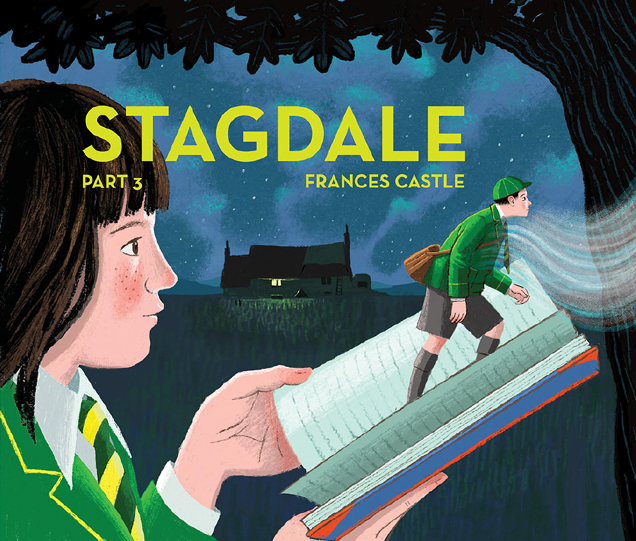
The third volume of Stagdale is released today and is just as touching and beautifully illustrated as the previous two instalments. I was delighted to catch up with Frances recently to discuss the evolving story of Stagdale, and also to chat a little about future Clay Pipe projects.
Here’s how the conversation went…
Bob: Can you talk us through Stagdale Part Three a little, please? Part One was very much Kathy’s story, we saw her arriving in Stagdale village in 1975. Part Two followed Max’s journey on the kindertransport in 1938. Part Three feels like the moment where their stories really begin to coverge.
Frances: Yes – so basically, at the end of the first book, you see Kathy finding Max’s old diary. At the end of the second book, you Max arriving in Stagdale forty years earlier. And the third book is very much based on what Kathy is reading in his diary. We see what’s going on in her world a bit, but we also hear about Max settling into Stagdale. And then he sees something at the end that changes the story…
No spoilers! Did you do a bit of research into how kindertransport children were treated once they arrived in Britain?
I did, and there are lots of different accounts. Some of them were treated really well, some of them were treated really badly, and I guess Max is somewhere in the middle. He’s there to work for the family that have taken him in, really. That’s why they’ve done it. They’re not cruel, but you get the feeling that he’s not really appreciated either. And I think that would have been the middle ground for a lot of German children that came here.
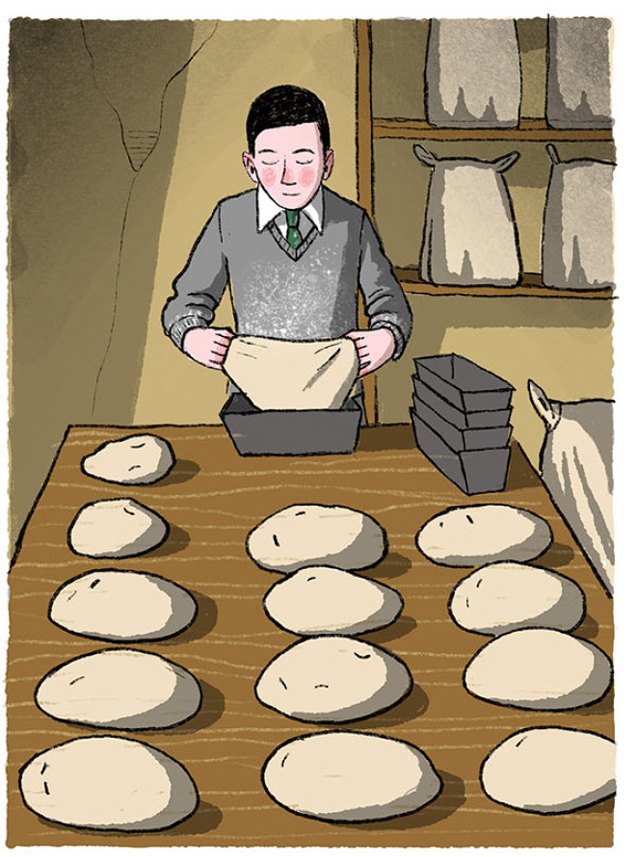
There are stories of British kids being evacuated to the countryside too, and effectively being treated as free labour.
My partner John used to work with an old man who had been evacuated during the war, and it was funny – he’d been sent to a village in Oxfordshire, not far from where my mum and dad now live. We were driving up there a couple of weekends ago and we had to make a diversion, and we ended in the same village. John said “Oh, this is where Ted was evacuated to!” He’d heard the stories, but he’d never actually been there before.
Ted had told John that he’d ended up in a similar situation to Max. I think he lived with a milkman and his family, so he had to get up really early and help out. And one day he was left alone in the van in a forest for a long time, while the milkman went into somebody’s house. Ted was from the East End, and he was terrified at being stuck in the middle of this wood all by himself! So all of that was in my mind when I came up with Max’s situation.
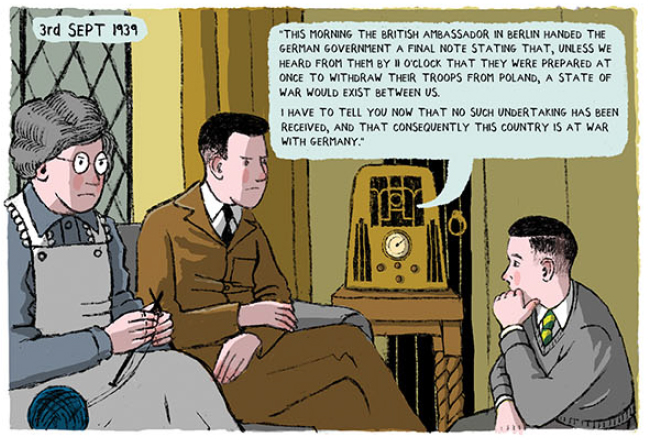
Max, of course, soon has the added complication of being in a country that is about to declare war on his original homeland. A situation that I know became very fractious in the UK… up here in the North-east, I’ve heard stories of Italian families who had lived here for decades, but who had their windows put through when war was declared.
Mad, isn’t it? Didn’t a lot of Italian families come over after the First World War? I know there were lots in Scotland, too.
Yes, I think Italy had a big economic crisis in the 1920s and a lot of Italian people came to live in the UK. Teesside was full of ice cream parlours set up by Italian families.
And are they all gone now?
A couple are still around. Pacitto’s is still going strong, but the big one in Middlesbrough was Rea’s ice cream – run by Chris Rea’s dad, Camillo.

Ah! Wasn’t Francis Rossi from an ice cream family as well? Rossi’s Ice Cream is definitely still a brand – you see it on the side of ice creams vans around Essex.
I’ll look into that… (NB – he was) anyway, sorry, I’m getting distracted as always! So yes, the outbreak of war makes things very difficult for Max…
Yes, and obviously lots of people didn’t know exactly what was happening in Germany at the time. Or at least the people in Stagdale wouldn’t have known. So they instantly dislike him.
Which gives him a kinship with Kathy, even through their stories are separated by forty years. When she finds his diary in the 1970s, it seems like she begins to really identify with his outsiderdom.
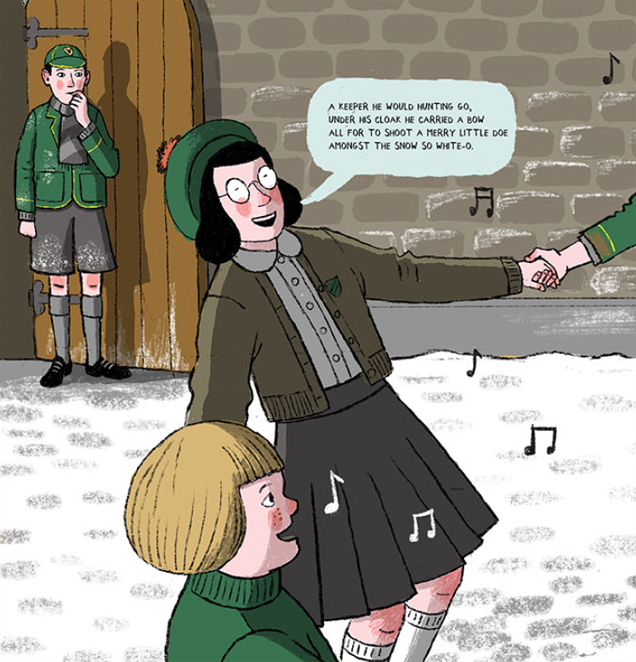
That was the idea, really. That their situations are slightly similar. With this book, I had to use my imagination a bit more than with the others. The second book was very much based on actual facts, and I did a lot of research into the evacuation of children on the kindertransport. But now Max has arrived in Stagdale, I’m having to work out for myself what would have happened to him. I wanted to have an undercurrent of an older world coming through, so we see the children singing folk songs in the playground. I think there’ll be more of that in the next book too, which is going to be set pretty much entirely in the 1970s.
I was going to ask you about that scene. The kids in 1938 are singing ‘A Keeper He Would Hunting Go’, with Max predictably excluded. That’s a song I know from the Shirley Collins version – is it the same for you?
It is, but I went through a lot of folk songs to work out what fitted. Because it’s Stagdale, I wanted a song with a deer in the lyrics, and I found ‘A Keeper He Would Hunting Go’. But of course, it’s about the coming of springtime – “the leaves so green-o” – so I changed it to fit into the story because I needed something wintry. That was one of the last things I did, I was looking around for the right song for a long time.
It feels very authentic, though. Even in the 1970s we were still singing traditional folk songs at school. I remember being taught ‘The Lambton Worm’ when I was about six.
Yes, and we did country dancing as well! That was something left over from the 1950s folk revival, I think.
My mum definitely did country dancing at school in the 1950s.
I didn’t like it! [Laughs] It seemed really outdated even in the 1970s.
I was going to ask about the wintry scenes in Stagdale, actually – Part Three switches really effectively between the snowy winter of 1938 and the hot summer of 1975. Did that keep things interesting for you as an artist? The two seasons obviously have very different aesthetics.
Yeah, I wanted that feel. Sometimes in a computer game, you have a level that’s set in winter and a level that’s set in summer, and I really wanted to get across the idea of that change. The first book is very hot and summery, the snow starts in the second book and carries on, and that contrast is definitely something I was really after.
Did you ever consider doing it the other way around? A 1930s summer and a 1970s winter?
No, it just seemed to fit that way. I had all those memories of the long, hot summers we had in the 1970. And, in fact, the research that I did showed that the kindertransport arrived in Britain in the winter – I think it started in October 1938 and continued up until Christmas. So everything seemed to fit.
How about the geography of Stagdale? Do you have the village itself mapped out?
I’ve got it in my head! [Laughs] There’s a main village that you get to by crossing a bridge, and that’s where the High Street is. Before you get to the bridge, on a rough green, that’s where Kathy’s cottage is – and opposite that is where the Bloat family live, in a cottage that’s falling down. So they’re all outside the main village. Then you’ve got the church, and the hill with the chalk stag. So it’s all in my brain, and when I draw it I have to make sure everything is in the right place! “Could Kathy see the church from there? No, she wouldn’t be able to see it from the shop, it would be behind her…”
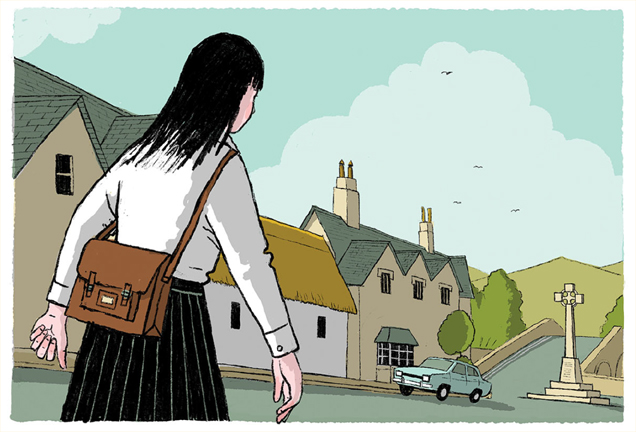
We need a map of Stagdale, Frances. Like the map in Lord of the Rings.
I should do that, actually. I did a Bloat family tree in this book, so maybe I should do a map at the end of the next book. That’s a good idea. I might actually be quite important for the next book, because things will have changed in the village, and… no, I won’t say!
I suspect you won’t tell me this either, but there’s a suggestion in Part Three that the connection between Kathy and Max is more than just about her finding and reading his diary. There’s a hint that they’re communicating with their thoughts in some vaguely otherworldly fashion, across the decades. Is there something in that?
I kind of want to keep stuff like that ambiguous. Not definite. So it’s all down to your interpretation…
So basically you’re not telling me?
[Laughs] Yeah, that’s how it stands at the moment!
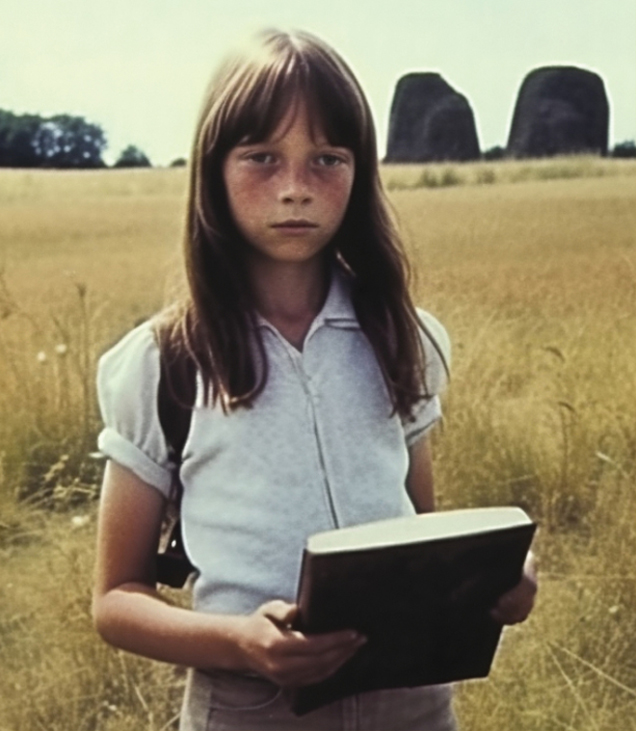
Were you contemplating multi-media Stagdale spin-offs at one point? I remember a little while ago you posted some AI renders on Twitter of a very realistic-looking Kathy arriving in the village.
I was just playing around with AI, really. I’m kind of sick of it now, but when it first came out it was “Wow – look at this!”, and I wondered if I could create a kid that looked like Kathy. It was probably only a year and a half ago, but things have changed so quickly since then. But a spin-off? I don’t know. I’m just focusing on getting the books finished, really. I’m not pushing myself and I don’t want to rush it, but I am determined. Because I don’t have a deadline, it would be so easy just to say “I can’t be arsed any more”. But people keep asking me about it!
So I think there are probably two more books. But it might just be one big book, I’ll have to see what happens, time-wise. Part Three has taken three years, so if I do two more it will probably take six! The amount of work I put into all these tiny drawings is just vast.
I quite like the slow burn of it all. I was looking back at our previous chats about Stagdale, and the first one was in 2019 – we actually did it on the radio, I was still working for the BBC back then.
Oh yes, of course! Five years ago, then? That’s not too bad.
Yeah, but you said then that you’d been working on Stagdale for seven years…
[Laughs] I’ve had to fight for it, really. Initially, it started as something I was working on for a children’s publisher, but then that all fell through. I thought “Do I give up now?” But what I did instead was change it into something that I was actually interested in, rather than something that a publisher might like. And it’s just always been there – any free time that I’ve got goes into it. I’m not actually working on the next book yet, but as soon as this one comes out I’ll start up again!
As with the previous two volumes, Stagdale Part Three comes with a flexi-disc of music by your alter ego, The Hardy Tree. There are three very beautiful tunes inspired by Max and Kathy’s story. Is the music something that you work on alongside the books, or does it tend to come afterwards?
I work on music a lot in evenings anyway, it’s my way of relaxing. But I’m quite slow at getting things together. I’m not really a musician and I don’t really have any keyboard skills, so everything is pieced together and it can be quite slow. With this one, I’d completed the book but I only had two tracks ready, and I was thinking “God, I haven’t got the music finished!”
But upstairs from where I work is a guy who runs an analogue recording studio, Ed Deegan. I asked him to listen to what I’d done on the third track and maybe put some piano on it – it was a track called ‘Faces in the Trees’. He’s got some lovely old vintage equipment, and he added some wurlitzer piano and some amazing whispering tape loops. So that was really good – just giving it to someone else and saying ‘Can you finish it for me?” was really helpful. Sometimes I get stuck.
There’s been a nice flurry of Hardy Tree activity in the last couple of years, though – your album Common Grounds came out in 2022, and you’ve recently released a lovely mini-album called All The Hours.
I’d like to do more. I played live twice this year as well, which I’d never done before! The first time was really low key, just to check that I could do it – it was a little label market at the Betsey Trotwood. I did a 20-minute piece based on an animation I’d done for the Common Grounds cover. Then I supported Andrew Wasylyk at the Lexington, so that was really good. They wanted me to do 30 minutes, so I worked out a couple more tracks from the same album. It was very nerve-racking, but I really enjoyed it and I’d like to do more.
It’s been a busy year for Clay Pipe activity, really…
Yeah, I generally do three vinyl albums a year, but I’m trying to do smaller runs of other things as well. I haven’t got a huge amount planned for 2025 yet, but that’s only because vinyl pressing times have come down. Previously, I’ve been under pressure to plan for years ahead, but that’s eased a little bit. So I’m waiting around to see what happens – I’m particularly keen to work with new artists.
You put out a lovely album this year by Timmi Meskers, who records as Garden Gate. I wasn’t aware of her stuff until quite recently, but she’s terrific – she did a great album with Drew Mulholland this year as well, Night Blooming Flowers.
Yes, and she’d previously done an album for Library Of The Occult, which was how I first heard her stuff. I absolutely loved it. John bought that album and played it a lot, and I thought “I’d love to have her on Clay Pipe!”. So I put out her album Magic Lantern this year, and I’d love to work with her again.
Was it you that first contact her, then? I’m always intrigued as to how artists and labels find each other.
Yeah, I think that’s what happened. It’s always a weird mixture of people contacting me and me contacting them. I’ve been trying to contact a couple of other artists recently and I’m not getting anywhere!Everything is so niche now, and there are people doing similar things in other worlds, so maybe they think I’m a scammer or something. It’s a weird one.
It must have helped this year having Andrew Wasylyk and Tommy Perman heading out on a national tour to promote their Clay Pipe album Ash Grey and the Gull Glides On? I guess a lot of artists working in this kind of field don’t really play live, but Andrew and Tommy were travelling around the country for weeks.
That was amazing. When I supported them, I saw just how much work went into that show every nigtht. They had projections, and all the cameras had to be set up perfectly – it was a vast undertaking and they did it really well.
I saw them in a small venue in Newcastle, and there were members of Field Music, The Futureheads and Maximo Park all in the audience! Honestly, if a bomb had gone off that night then the North-east music scene would have been set back decades.
Oh wow, that’s really cool! It’s great that they all came.
And on a practical level, I guess they’ve got a merch table set up after every gig – which must be helpful when you’re running a small label.
Yeah, that was really good. When I started Clay Pipe, most of the artists didn’t play live, but it really helps and I really appreciate them doing that. It’s such a lot of work, and I’m sure that preparing for it took equally as long.
What’s the divide like between vinyl and CD sales at the moment? You seem to be working with both formats pretty much equally these days.
Vinyl is incredibly expensive to make. Especially for me, because I have printed inner sleeves and all the rest of the artwork! The CDs that I get done aren’t that cheap either – they’re cheaper than vinyl, but they’re still expensive. But they’ve gone up in sales terms. I think people are hard up at the moment, but the CDs are £11 if you buy them from me. I find that they’re selling between releases, too. People aren’t rushing to pre-order CDs like they do with vinyl, but the sales still trickle in over time, so it’s worth doing.
Do CDs have their own inherent charm, too? The ones that you produce are lovely little objects in their own right – especially the tiny mini-albums.
I think so. I try to make them like little vinyl records. If CDs were the main source of physical product then life would be so much easier. Vinyl is just fraught with problems, really! Just transporting them from the pressing plant to me, then from me to my distributiors, then from my distributors to the shops – they can get damaged so easily. I had some major headaches this year. All of Andrew and Tommy’s records and all of David Boulter’s records all turned up warped. It was during the summer when it was really hot, and I think they got stuck somewhere in transit. They arrived at the port and went through customs, but then they didn’t reach me for another week and a half. So I don’t know what happened to them during that time. Thankfully, the pressing plant were really good and re-repressed them all really quickly.
But because they’d been pressed twice, I had to pay the VAT twice, and then I had to try and claim it back from the tax office – which took ages! I had to prove to the tax office that the vinyl had been destroyed, and in the end the vinyl factory sent me a video of them cutting the centres out, then putting them through a machine – I guess to recycle them! But I’ve still got a bad back from shifting them all around…
Oh, blimey, get well soon. Have you got a busy Christmas lined up for Clay Pipe as well? Most importantly, will there be a calendar again?
A lot of people have asked me that, but there’s isn’t going to be one – mainly because I don’t have enough artwork! Well, I probably do, but I put most of the obvious Clay Pipe sleeves onto last year’s calendar. I had no idea how many people would buy it, and in the end I didn’t make enough. So there might be one next year, I just need to generate some more artwork! This year’s special release is a collection of coasters, featuring the artwork from Andrew and Tommy’s album. I think they’re really nice, actually.
And when it comes to music, what will be the first release of 2025?
I’ve got a new Cate Brooks album coming up, and hopefully also – possibly before that, actually – there’ll be a mini-CD by a brand new artist. Someone who is just starting out.
And is there a topic, a theme or a concept to the Cate Brooks album?
It’s about a place. Somewhere she’s never been to! And it’s lovely. I made a start on the artwork a couple of weeks ago, actually…
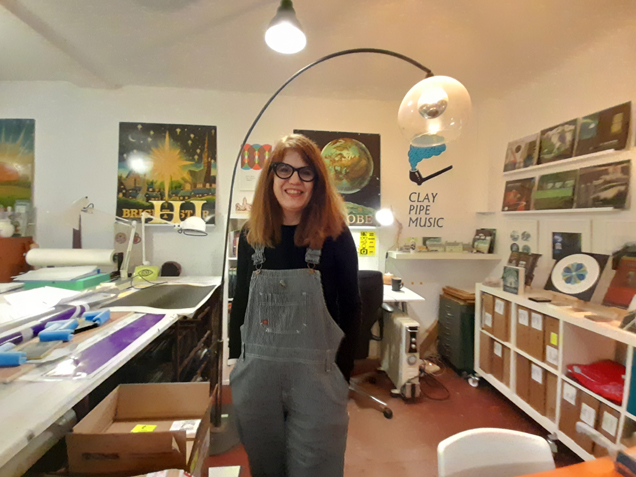
Thanks so much to Frances for her time, as ever. Our previous conversations about Stagdale can be found here:
https://hauntedgeneration.co.uk/2019/05/03/stagdale-echoes-of-war-and-the-fortean-times/
https://hauntedgeneration.co.uk/2021/12/08/frances-castle-stagdale-and-clay-pipe-music/
And all three volumes of Stagdale are now available here:
https://claypipemusic.greedbag.com/
https://claypipemusic.bandcamp.com/
Support the Haunted Generation website with a Ko-fi donation… thanks!
https://ko-fi.com/hauntedgen
 The Haunted Generation
First of all, this is a great interview: I’ve loved the first two volumes of Stagdale, so I’m very happy that part three’s finally with us.
Regarding famous members of ice-cream dynasties, I just wanted to put in a word for the film director Anthony Minghella (Truly Madly Deeply; The Talented Mr Ripley), as it was via Minghella’s outlets on the Isle of Wight that I developed my unwavering loyalty to mint chocolate chip ice-cream.
LikeLike
Fabulous! I’ve been watching a lot of 1980s Grange Hill recently, all script-edited by Anthony Minghella. He did a terrific job on it, and I’m sure his family’s mint choc chip was equally impressive.
Cheers for the kind words too – much appreciated.
LikeLike