(First published in Shindig! magazine #135, January 2023)
WHEN THE MAGIC LADY SINGS
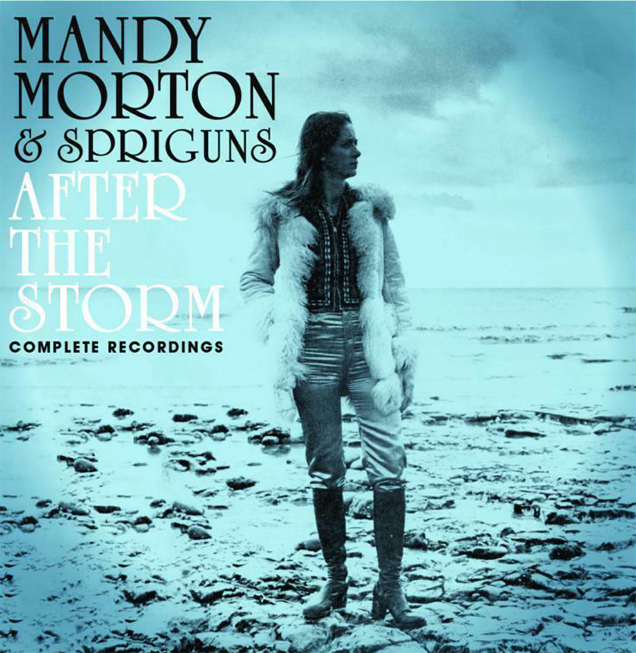
Spriguns of Tolgus were the 1970s folk-rock troubadors that – despite major label backing – never quite achieved mainstream chart success. But a new box set, After The Storm, reveals a band of fragile beauty and underappreciated depth, fuelled by the songwriting talents of frontwoman MANDY MORTON. Looking back wistfully, she talks BOB FISCHER through a decade of music business misogyny, ghost pirates and life-changing sandwiches…
“Deep inside, I’m still the cantankerous old biddy that I was back then.”
Mandy Morton gives a wry smile. It’s a freezing afternoon in mid-winter, perhaps the perfect season to be discussing Spriguns of Tolgus. The band’s earliest recordings, particularly 1974’s home-taped Rowdy Dowdy Day, feel like ideal folk music for frost-ridden days. From a thin mist of evocative, analogue hiss poke the skeletal branches of traditional favourites: ‘Let No Man Steal Your Thyme’, ‘The Jolly Tinker’ and ‘The Keys of Canterbury’. Formed around the core duo of Mandy and her bass-playing husband Mike, the band signed to Decca in 1975, blossoming to reveal their frontwoman as a singer-songwriter with a formidable talent for addressing both personal demons and magical, folklore-fuelled weirdness.
A sumptuous new anthology on Cherry Red Records, After The Storm, collects the band’s entire studio output together with rarities and later solo recordings. It’s the culmination of a year of research on Mandy’s part, rummaging through an attic stuffed with wistful memories. Now an accomplished author, she has also penned the comprehensive booklet included with the box set. The youngest of three children, her story begins with an unhappy Nottinghamshire childhood salvaged by the music of the folk-rock revolution.
“I was born in the early 1950s, and we were still coming out of the Second World War,” she recalls. “My father was a fighter pilot hero, decorated three times by the King, and when he came home… well, it was not a country fit for heroes. He had to work really hard to find his place in life. My mother thought she had married a gung-ho handsome pilot, but really he was a broken man. That reflected in their marriage, and consequently us kids had a hard time. My parents carried on the war between then, and we just kept our heads down.
“So music was a big sticking plaster for me. I’d retire to my bedroom with my Beatles albums, and immerse myself in those. And my inroad to folk music was through artists like James Taylor, Joni Mitchell and The Byrds: it was the pop-folk crossover that attracted me. So while I always stayed faithful to The Beatles, the next stage in my musical appreciation was that West Coast folk-rock sound – which then morphed into Fairport Convention and Steeleye Span.”
In 1968, aged just 15, Mandy left her Nottinghamshire home to join her older sister Gaynor in Cambridge. The sisters played the local pubs as an acoustic duo called Simple Folk, and Mandy took a job in a boutique with a quintessentially ‘60s name: Pussy Cat. It was here, in 1971, that she met the man who would become both her husband and her musical partner for the next decade. Wandering into the shop one spring afternoon came a bashful, floppy-haired student named Mike Morton.
“My sister ran a little cafe downstairs from the boutique and, at lunchtime, all the Cambridge undergraduates came piling in for toasted sandwiches and soup. I’d be upstairs in the boutique, and on that day she chose one of the students to take my lunch up to me. And that was Mike! I remember I was sitting listening to Crosby, Stills and Nash, and he was very shy. But he came back again, and again, and one day he plucked up the courage to ask if I’d go out with him. And we just clicked. I was 17, and Mike had just turned 18.”
They married in January 1972 and holidayed in Cornwall, where the legends of the local “Spriggans” – malevolent sprites with a propensity for spitting from clifftops – combined with the name of the nearby Tolgus tin mine to provide an unforgettable monicker for the duo’s burgeoning musical ambitions. By late 1973, they were running a weekly folk club at Cambridge’s Anchor pub, and their live repertoire was soon immortalised on the hissing tapes of Rowdy Dowdy Day.
“Recorded in the kitchen in our rented house,” smiles Mandy. “With a four-track mixing desk and a reel-to-reel Revox. And once we’d recorded it, I spent every day making the cassettes and printing the labels, all to sell at the Anchor. It was a very home-grown, organic thing. Mike and I had started out as a duo, but people used to join us from the floor, and before too long we found we had a band.”
The album is an evocative snapshot of the era. The playing is heartwarmingly homespun, and Mandy’s vocals lace an affecting frailty with an intriguing hint of steel. The cassette brought them to the attention of a small Leicestershire record label, Alida Star, and their 1975 follow-up album – Jack With A Feather – was recorded in a single day, in a home-built studio with an equally makeshift feel.
“We took off to this tiny cottage in Leicester,” recalls Mandy. “I think they’d recently had a flood because the carpets were soaking wet – you had to beware if you touched your microphone stand! But we cut the whole Jack With a Feather album in one day, using the popular material we’d been singing at the Anchor. The label said ‘That’s fine – and now you can take the tapes and market it however you like’. They handed them over to us, and Mike did the rest. We did a photo session, dressed up as various characters from the album itself…”
The pictures are included with the Cherry Red box set, and show the band – on a sunny day outside a Cambridgeshire leper chapel – gleefully throwing themselves into flamboyant roleplay. Mandy, on horseback sporting floppy hat and flowing frock, assumes the character of the “damsel in distress” from the traditional Irish song, ‘Curragh of Kildare’. “The dress I was wearing was completely torn down the back,” she laughs. “I’d come a cropper two or three times before Starlight, the horse, stood still long enough for the picture to be taken. It’s all for your art, isn’t it?”
The album feels slicker than their raw debut, and boasts contemporary pop flourishes: the opening track, a version of weirdy North-Eastern folk tune ‘Lambton Worm’, is prominently powered by squelchy wah-wah guitar. Perhaps unsurprisingly, such “queer gannings-on” were quickly bringing them to the attention of the mainstream music industry.
“One of our band members, Rick Thomas, had brought a song to us called Seamus The Showman,” recalls Mandy. “It was written by Tim Hart from Steeleye Span, and – when Jack With A Feather came out – I sent Tim a copy out of courtesy. We’d spoken to him a couple of times at Steeleye gigs in the past. He picked up the phone and said ‘Why don’t you come and see me? I want to talk about what you’re up to’. So Mike and I met Tim in his favourite Greek restaurant in Highgate. He said ‘If you want to do something with this music, you need to put it round the record labels and see if anyone is interested. And if you get lucky, I’ll produce your next album…’
“We were walking on air when we left that restaurant, and an appointment was made with the managing director of Decca Records, Sir Edward Lewis. We didn’t realise at the time that he hadn’t seen anybody for years! He was about 75, sitting in his ivory tower at the top of Decca, and one day I suppose he just decided to have a look at somebody from the music industry again. So we went to Decca just before Christmas 1975, and he listened to Jack With a Feather. He said ‘I’m looking for someone that sounds a bit like Steeleye Span’, then picked up the phone and called the A&R department downstairs. ‘I’ve got a couple of people here that need contracts drawing up…’
“Then he shook our hands and said ‘Welcome to Decca Records’. It was absolutely as simple as that. We went downstairs and sat in the A&R department with the two men who had turned the Beatles down: Dick Rowe and Hugh Mendl. And we signed our first recording contract.”
With the band’s name shortened to the more chart-friendly Spriguns (“That was the first thing Hugh Mendl said – ‘Bit of a mouthful, isn’t it?’”), Decca were clearly expecting their newest recruits to emulate Steeleye’s commercial success: Maddy Prior, Tim Hart and the band were enjoying a Christmas Top 5 hit with their Mike Batt-produced version of ‘All Around My Hat’. So were Spriguns keen to make a breakthrough into the giddy world of daytime Radio 1 and Top of the Pops?
“That never occurred to me,” insists Mandy. “We had professional jobs: Mike had a research post at Cambridge University, and I had a full-time job in photography. Really, we didn’t give it a second thought.”
It’s certainly a challenge to imagine Pan’s People grooving to the sounds of the album that followed. 1976’s Revel, Weird and Wild – produced, as intended, by Steeleye’s Tim Hart – was a prog-tinged anthology of magical ballads sparked by Mandy’s own research into the songs collected by 19th century folklorist, Frances James Child. “There were volume after volume of these wonderful ballads,” she explains. “Mike bought me a set for Christmas, and some of them were 40 or 50 verses long. And I spent days in the library of Cecil Sharp House, digging through all sorts of material. I was looking for really magical stories – knights of old, ladies bold, all that stuff.”
And did these peeks beyond the veil extend into real life? Did the Mortons ever enjoy a genuine encounter with the otherworldly?
“Well, I’ve seen candlesticks move across fireplaces by themselves,” smiles Mandy. “And Mike used to have a pirate sitting on the end of his bed when he was a kid. He’d just appear out of nowhere, and Mike looked forward to him coming. So he was obviously in tune with something or other…”
This interest in the supernatural, combined with a dramatic shift from the traditional to the self-penned, makes follow-up 1977 album Time Will Pass feel like a milestone recording. With the exception of traditional Irish ballad ‘Blackwaterside’, every song on the album is credited to Mandy. And they are magnificent, played with muscular vigour on a record with a decidedly heavier feel.
“I realised if the band was going to take off and have a unique place, I needed to do something a little bit different to just collating ballads,” she recalls. “I’d always been interested in ghost stories, and – when I started writing my own material – I drew on that interest. The whole idea of witchcraft, for example… how many women were put to death by witchfinders across the country? The more I looked into the subject, the more I realised what a terrible crusade this was against women. They only had to hiccup in the wrong place, and they were swung over ditches and murdered.”
The album’s lynchpin is the sumptuous ‘White Witch’, an exquisite hymn exuding a fragile magic. “White witch, where do you go when the sunlight goes to Earth? / Do you wander the black night as well, or have you a resting place in Hell?” Mandy’s voice is tremulously vulnerable, accompanied by a lush orchestral arrangement by one-time Nick Drake collaborator, Robert Kirby.
“It was very special to be able to send the bare bones of material to Robert, and have him send back these wonderful manuscripts of music,” she recalls. “And the most exciting thing was coming to the Decca studio to record… they’d hired the forty-piece Top of the Pops orchestra! The producer, Sandy Robertson, put me in a perspex box with my guitar and said ‘I want you to play and sing “White Witch” for them. They’ll be watching you…’ And those forty faces, all so much more professional than I was, watched me in that little box with my small voice, and played along with me and my timings. It was mind-blowing.
“It actually became very popular as a single, and I had a lot of real-life white witches contacting me – they thought I might like to join their covens! That was slightly terrifying. I’ve never practised anything like that. Although there were plenty of people at the time that I wish I’d stuck pins in…”
The Mortons, it seems, were feeling increasingly uneasy with the expectations of a major label.
“Punk and New Wave were coming in, and a lot of things were working against a band like Spriguns,” she explains. “The old guard at Decca were all leaving, and being replaced by young music executives who were very wired to the New Wave sound. And I was thinking, ‘Where are we in all of this? There doesn’t seem to be a place for us’.
“They were pushing us into middle-of-the-road gigs, and Brian Matthew was playing ‘White Witch’ on late night Radio 2. Lovely as that was, I thought, ‘What happened to my aspirations of doing something a bit more rock?’ We were hippies! We didn’t want to go onto the twinset and pearls circuit. So we had a meeting with the new executives at Decca. They were very keen for us to push on with the next album, but I just said no – this isn’t me. The pressures of being with a major label were really beginning to tell on Mike and I. They said ‘OK – we don’t want an artist that’s unhappy. Thank you very much, and goodnight’.”
Retreating to Cambridge, the duo formed their own label – Banshee Records – and began work on their 1978 album Magic Lady. Here, Mandy’s songs reflected her childhood isolation (‘This lady walks in a silent dream where no-one else has been / And we all know and love her well, she’s our Little Inbetween’) with affecting potency. Further poignancy was added by the unexpected death of Sandy Denny.
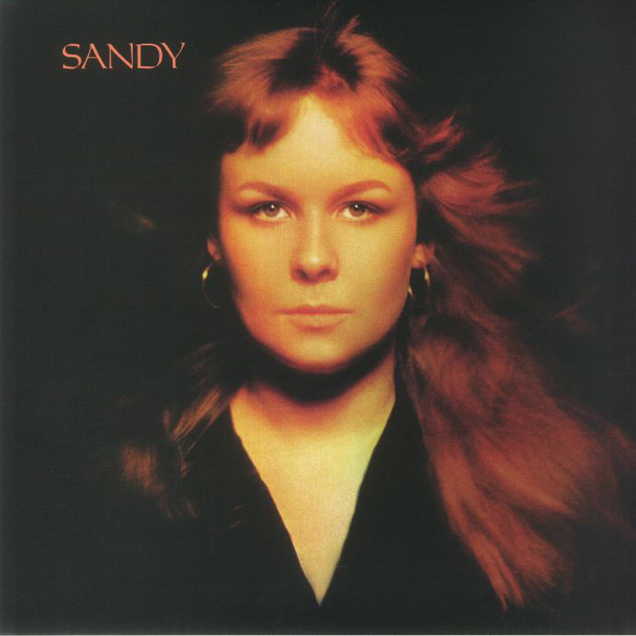
“The original title was Music Prince, which was going to be the first track on the album,” recalls Mandy. “But then in April 1978 a friend of mine, Caroline Pegg, gave me a call and said ‘Did you know Sandy had died?’ And that devastated me. I just couldn’t believe it. For all those years, she’d been so important to my understanding of music. I’d seen her many times onstage, both with Fairport and with Fotheringay, and every now and again I’d managed a conversation with her. There was something very special about Sandy, and looking back… you know she was never going to make old bones. So the title became Magic Lady – dedicated to Sandy herself. And I wrote tributes to her for the beginning and the end of that album.
“If she’d been making music now, she’d have shone brightly for a long time. It’s just a shame that, during that period, she was being pushed from pillar to post by a lot of people who just wanted her music and weren’t interested in her as a woman.”
Predictably, the women of the 1970s folk movement were often taken less than seriously by a male-dominated music industry.
“Not only that,” says Mandy, “but I think a lot of us found that certain record company executives felt it was absolutely fine and appropriate to stick their hand up your skirt. And there were times when I went to meetings at Decca, and the powers-that-be would talk directly to Mike as though I wasn’t in the room. Which was ridiculous – Mike would turn around as we left and say ‘They just don’t get it, do they?’.
“I was known as the Dark Lady of Folk. I stood my ground! But a lot of other women got stuck by the wayside. They were seen as the pretty eye candy at the front of the band, sitting around on stools looking lovely.”
With the British music scene now dominated by a Bee Gees-fuelled disco explosion and the aftermath of punk, Spriguns unexpectedly found their career transported wholesale to Scandinavia. Initially accepting a month’s residency on the Olaf Thon hotel circuit in Oslo (“Steak, chips and beer…”), the band received offers of additional live dates, with a further tour extending into Denmark.
“It gave us an extra few years,” says Mandy. “What we discovered, with great respect, was that the Scandinavian countries were about four years behind the music scene in the UK. So we signed a licensing deal with Polydor Norway, because I was already halfway through writing what was to become the Sea Of Storms album. We recorded that album back in Cambridge, then it was marketed by Polydor in Norway for the whole of Scandinavia.”
Promoted for the first time as a Mandy Morton solo record, Sea of Storms is a mature and accomplished affair – with the wistful synths of the exquisite ‘Ghost Of Christmas Past’ auguring a bold new direction. But it was an album that also marked the end of Mike and Mandy’s marriage.
“There was no switch off, and I think that did for us in the end,” she concedes. “It was hard work. Mike was running the day-to-day band while I was putting the music together, and we could just never close the door on it. The band members were in and out of the house all the time, then we’d all go on tour together and live in each other’s matchboxes. It just took its toll.
“Mike and I split after we’d recorded Sea of Storms. And because we’d grown up together in the ten years we were married, it just didn’t feel the same. I went into the studio and recorded another album called Valley of Light, which was supposed to be quite uplifting and poppy. But I was never happy taking the band out without Mike. He’d been that permanent presence, and it was like losing my right hand. We decided in a very sensible way that we wanted to go our separate ways, and we remained friends, but the band wasn’t the same any more.”
Following a short illness, Mike died in 1995.
“He was completely and totally passionate about my music,” says Mandy. “Amazingly supportive. I’d write a song in the middle of the night, and he’d get up at 3am and put a bassline to it. It was a real partnership, and I miss him dreadfully.”
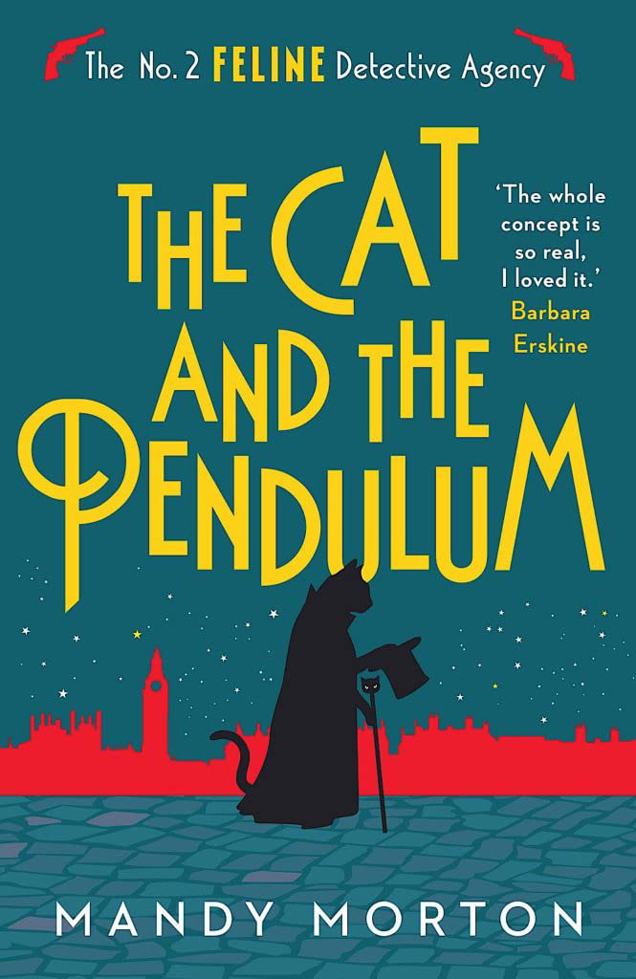
By the mid-1980s, Mandy had retired from music and accepted an offer to work as a presenter for BBC Radio Cambridgeshire. She spent over 25 years with the station, and has since found success as an author. Initially intended to raise money for a local charity, her ongoing series of cat-based crime novels – The No 2 Feline Detective Agency – has now reached double figures. But has the success of Cherry Red’s box set, and the renewed interest in Spriguns, tempted her back to the musical fold? She is swift to respond in the negative.
“Not at all,” she insists. “It was so fast and furious and full… and I’ve done it. Got the t-shirt. It was gut-wrenching when Mike and I split, and it took me several years to come to terms with that. And around the same time, my father was killed in a car crash. I really did go through some stuff, and I don’t think I’d ever want to go back to that.
“I hadn’t listened to my music for years. And a lot of it was very sad, because it was about Mike and me. It was almost a eulogy to our life together, and some of the songs brought back some not-so-happy memories. To do with my parents, and with Mike and I splitting up. It’s very, very personal.”
Is she really as cantankerous as she makes out, though? Surely not. It’s been a fascinating conversation, and she now seems reassuringly at ease with both herself and her past.
“It’s been an interesting life,” she smiles. “And it continues to be interesting, in a much more measured and pleasant way! I’ve got nothing to prove, and I couldn’t care less. There’s that poem ‘When I am an old woman, I shall wear purple’. Well I don’t feel particularly old, but I can put on purple when I need to. I find it very easy to say, ‘Actually, I don’t give a fuck’. And everyone says ‘Great, that’s groovy…’
“But so many people that I’ve worked with are no longer here, and that’s really sad. So we have to celebrate our time while we can.”

After The Storm is available here:
https://www.cherryred.co.uk/product/mandy-morton-spriguns-after-the-storm-complete-recordings-6cd-dvd-box-set/
Shindig! is a magazine dedicated to the stranger corners of psych, prog and acid-folk. Check it out here…
https://www.shindig-magazine.com/
Or subscribe here?
https://www.silverbackpublishing.rocks/product/subscription/
Support the Haunted Generation website with a Ko-fi donation… thanks!
https://ko-fi.com/hauntedgen
 The Haunted Generation